
Free WHS Inspection (Animal Shelter) Template
Download our Free WHS Inspection (Animal Shelter) Template.
Free WHS Inspection (Animal Shelter) Template
DOCX • 129 KB + PDF
Updated Oct 2026
No signup required
Purpose of the Free WHS Inspection (Animal Shelter) Template
Animal shelters present a unique combination of workplace hazards, from unpredictable animal behaviour to chemical exposure and manual tasks. This Free WHS Inspection (Animal Shelter) Template provides a structured starting point for systematically identifying and controlling these risks.
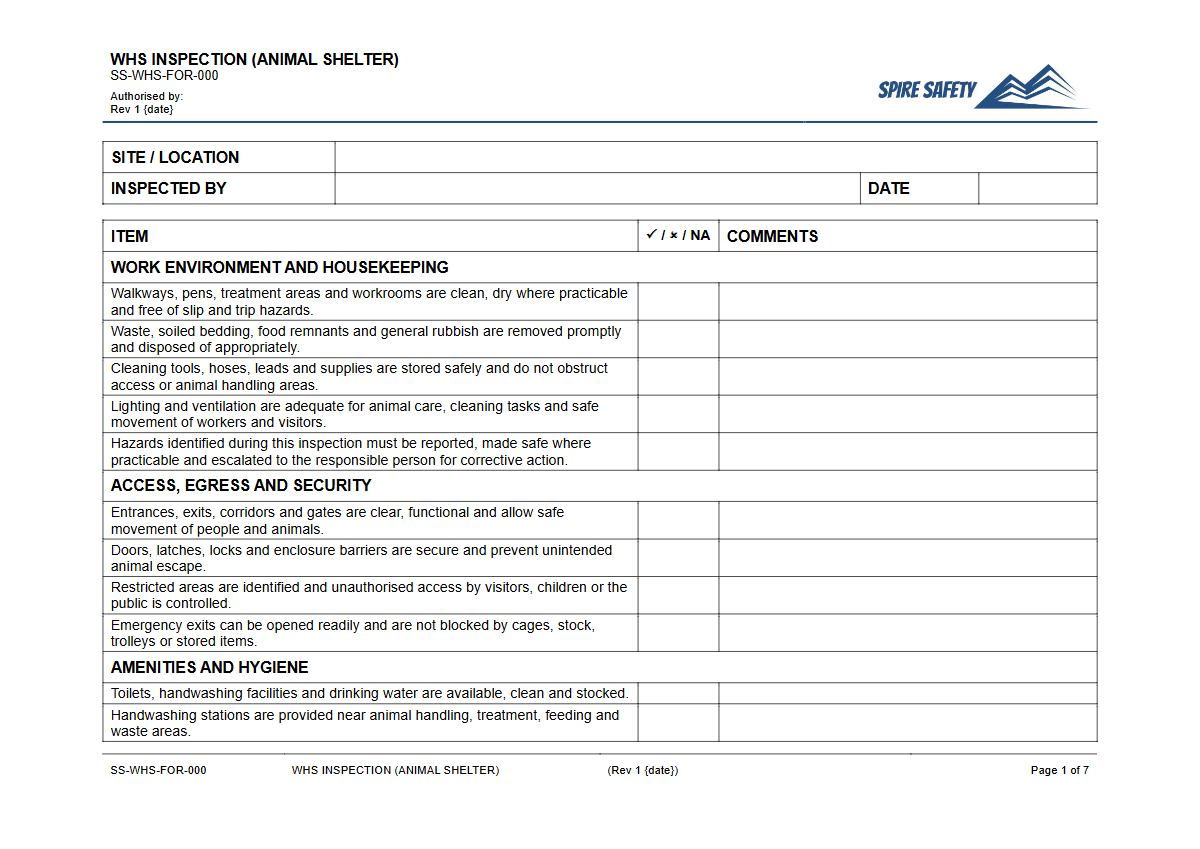
Regular inspections are a fundamental part of proactive safety management, helping your organisation meet its duty of care obligations and prevent incidents before they occur. The template prompts a review of key areas including animal enclosures, hygiene and waste management, chemical storage, staff amenities, and general facility condition.
Using a formal checklist ensures that inspections are consistent, thorough, and recorded. This documentation is vital for demonstrating due diligence and forms an essential part of a robust WHS management system. It helps you track corrective actions, identify recurring problems, and continuously improve safety performance in your facility.
Video walkthrough
How to use the Free WHS Inspection (Animal Shelter) Template
This template is designed for ease of use and customisation. First, download the document in your preferred format (DOCX for easy editing or PDF).
Before you begin, it is essential to tailor the checklist to your specific environment. Walk through your shelter and add or remove items to reflect the unique equipment, layout, animal types, and work processes at your site. For example, if you prepare specialised food, you may need to add checks from our free Pre-Start Checklist for Feed Mixers.
Once customised, schedule the inspection and assign it to a competent person. During the inspection, walk through the designated areas and assess each item on the checklist.
Note any non-conformances, hazards, or areas for improvement in the comments section, assigning a priority level. After completion, ensure all identified corrective actions are assigned to a responsible person with a clear deadline.
Finally, file the completed record for future reference and trend analysis.
Important Note: This document is a template, not a finished safety document. We have designed it as a comprehensive starting point, and you must customise it to reflect the specific hazards, equipment, and procedures present in your unique workplace.
When to use this Inspection Template
The frequency of inspections should be determined by a risk assessment, but a comprehensive workplace inspection is typically conducted monthly or quarterly. More frequent checks may be necessary for high-risk areas, such as quarantine zones or areas with known equipment issues.
In addition to scheduled inspections, this template should be used whenever significant changes occur, such as after an incident or near miss, when introducing new animal species or handling procedures, or following major facility modifications. This proactive approach helps ensure that new risks are identified and managed promptly.
Integrating these checks with a program of regular WHS compliance auditing can provide a comprehensive overview of your safety performance.
Who should use this Inspection Template
This inspection should be carried out by a person with the knowledge and competence to recognise hazards specific to an animal shelter. This could include a Shelter Manager, Team Leader, or a Health and Safety Representative (HSR).
For the inspection to be effective, it is highly beneficial to involve workers who perform the day-to-day tasks. Their direct experience provides invaluable insight into the practical risks associated with animal handling, cleaning, and facility maintenance.
For larger organisations with extensive grounds, you may assign different sections to different people, such as having a groundskeeper use a specific Pre-Start Checklist (Lawn Tractor) Template for their equipment. Regardless of who performs the inspection, the PCBU (Person Conducting a Business or Undertaking) remains ultimately responsible for ensuring it is completed and that any identified actions are implemented.
The checklist covers a range of common hazards, but your own risk assessment might identify others. For example, you may need to add specific checks related to the security and function of food storage areas, which could be guided by our freezer pre-start checklist. By exploring our free WHS resources library, you can find other tools to supplement your safety processes.
Common mistakes
Common mistakes to avoid
- Failing to customise the template for site-specific animals, chemicals, and equipment.
- Treating the inspection as a paperwork exercise without implementing corrective actions.
- Not involving workers who perform the day-to-day tasks in the inspection process.
- Poor record-keeping, making it difficult to track hazard trends or demonstrate due diligence.
Legal references
Legal considerations
The following legal requirements may be relevant to this type of work.
- Work Health and Safety Act (Harmonised) — Provides the primary duties for protecting workers and other people from work health and safety risks.
- Work Health and Safety Regulations (Harmonised) — Sets out requirements supporting the management of workplace hazards and risks.
The following codes may be relevant to this type of work.
- Managing WHS Risks Code of Practice — Provides practical guidance on identifying hazards, assessing risks and applying effective controls.
- Work Health and Safety Consultation, Cooperation and Coordination Code of Practice — Provides practical guidance on consulting workers and coordinating with other duty holders.
- Managing the Work Environment and Facilities Code of Practice — Provides practical guidance on safe work environments, workplace facilities and related controls.
Did you know
Zoonotic Risk
The Australian Veterinary Association notes there are over 80 potential zoonotic diseases in Australia, highlighting the importance of strict hygiene protocols in animal handling environments.
Manual Handling Injuries
Safe Work Australia data consistently shows that hazardous manual tasks are a leading cause of serious workers' compensation claims, a significant risk when lifting and restraining animals or moving heavy supplies.
FAQ
Frequently asked questions
01What's the difference between an inspection and a risk assessment?
02How often should we inspect our animal shelter?
03Can this template be used for mobile adoption events?
04What are zoonotic diseases?
Share this resource
Free WHS Inspection (Animal Shelter) Template
Browse Categories
How To Use It
- 1Download and open in Word or PDF.
- 2Replace the placeholders with your business details.
- 3Get it reviewed by a WHS specialist before rollout.
Need it customised?
Our WHS consultants can adapt this template to your site, run a gap analysis, or audit what you already have in place.
Book a Free Consultation WHS consulting servicesor call 1300 156 382