
Free WHS Inspection (Aquatic Centre) Template
Regularly inspect your aquatic centre for WHS hazards like slips, trips, and water safety. Our Free WHS Inspection (Aquatic Centre) Template helps.
Free WHS Inspection (Aquatic Centre) Template
DOCX • 128 KB + PDF
Updated Oct 2026
No signup required
Purpose of the Free WHS Inspection (Aquatic Centre) Template
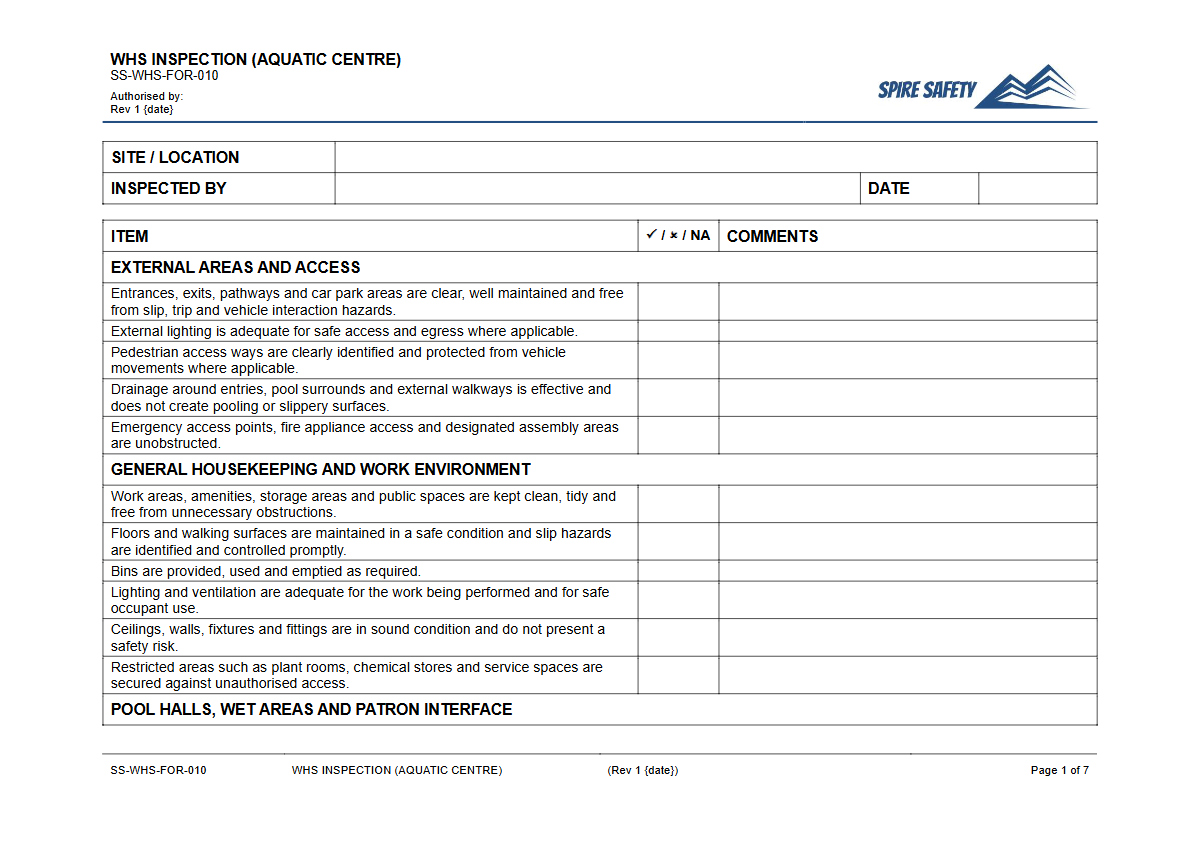
This Free WHS Inspection (Aquatic Centre) Template provides a structured starting point for systematically identifying and managing health and safety risks in your facility. Aquatic centres present a unique combination of hazards, including slips and trips on wet surfaces, risks associated with hazardous chemicals for water treatment, drowning hazards, and mechanical and electrical risks within plant rooms.
Regular, documented inspections are a fundamental part of a proactive approach to safety, helping your organisation meet its primary duty of care under WHS legislation.
Using a standardised template ensures that inspections are consistent, thorough, and recorded. It helps move beyond ad-hoc checks to a formal process that can be reviewed and audited.
This document covers key areas common to aquatic facilities, such as pool decks, change rooms, first aid facilities, plant rooms, and chemical storage, providing prompts to check for potential hazards and non-compliances before they lead to an incident.
Video walkthrough
How to use the Free WHS Inspection (Aquatic Centre) Template
To begin, download the template in your preferred format (DOCX for easy editing or PDF). The key to an effective inspection is customisation.
This template is a comprehensive guide, but every workplace is different. Walk through your facility and adapt the checklist to reflect your specific layout, equipment, and operational procedures.
You may need to add sections for unique features like water slides, wave pools, saunas, or onsite cafés. It is critical that you customise this document to reflect the specific hazards and control measures relevant to your site.
We provide this template as a starting point, and its effectiveness depends on your thorough customisation and implementation. Integrating this inspection process into your broader WHS management systems is crucial for ensuring findings are actioned and tracked.
The Inspection Process:
- Schedule: Determine the frequency of inspections (e.g., daily, weekly, monthly) for different areas based on risk.
- Assign: Nominate and train a competent person, such as a Duty Manager or WHS Representative, to conduct the inspection.
- Conduct: The inspector should walk through the designated areas, using the checklist to identify hazards or deficiencies. They should note any issues clearly.
- Report: Document all findings, including positive observations and areas needing improvement. For any identified hazard, note the required corrective action, assign responsibility, and set a due date.
- Review: Management and the WHS Committee should review completed inspection reports to identify trends, verify corrective actions are completed, and assess the overall effectiveness of safety controls.
For specialised equipment like pool access lifts, a dedicated pre-start check is often best practice. You can use our Free Pre-Start Checklist (Patient Hoist) Template as a foundation for developing this.
When to use it
Regular inspections should be part of your routine operational schedule. The frequency will vary depending on the area and associated risk level. For example:
- Daily: High-traffic areas like change rooms, pool surrounds, and entryways for slip/trip hazards and general tidiness.
- Weekly: Plant rooms, chemical stores, and first aid equipment to ensure they are secure, stocked, and functioning correctly.
- Monthly: Checks on less-used areas, review of signage, and inspection of structural elements.
Beyond scheduled checks, this template should be used after an incident or near miss, after the introduction of new equipment or procedures, or before a major event or peak season. These inspections supplement, but do not replace, the need for formal WHS compliance auditing, which provides a more in-depth, periodic review of your entire safety system.
Who should use it
This template is designed for use by various personnel within an aquatic or leisure facility. Primary users include:
- Facility Managers and Centre Managers: For overseeing the inspection program, reviewing reports, and ensuring resources are allocated for corrective actions.
- Duty Managers and Team Leaders: For conducting and signing off on routine daily and weekly inspections.
- WHS/HSR Representatives and Committee Members: For participating in inspections and reviewing findings as part of their function.
- Maintenance and Plant Room Staff: For conducting specific technical checks on equipment and infrastructure. A specific pre-start for plant room lifting devices is recommended; our Free Pre-Start Checklist (Electric Hoist) Template can be adapted for this purpose.
If you require expert assistance in customising this template or developing a comprehensive safety plan for your facility, our WHS consulting team can provide tailored support. Explore our complete free WHS resources library for other useful checklists and forms.
Common mistakes
Common mistakes to avoid
- Failing to customise the template for the specific facility layout and equipment.
- Treating the inspection as a 'tick-and-flick' exercise without genuinely looking for hazards.
- Not training staff on how to conduct a thorough inspection and what to look for.
- Failing to follow up on identified issues and close out corrective actions in a timely manner.
Legal references
Legal considerations
The following legal requirements may be relevant to this type of work.
- Work Health and Safety Act (Harmonised) — Provides the primary duties for protecting workers and other people from work health and safety risks.
- Work Health and Safety Regulations (Harmonised) — Sets out requirements supporting the management of workplace hazards and risks.
The following codes may be relevant to this type of work.
- Managing WHS Risks Code of Practice — Provides practical guidance on identifying hazards, assessing risks and applying effective controls.
- Work Health and Safety Consultation, Cooperation and Coordination Code of Practice — Provides practical guidance on consulting workers and coordinating with other duty holders.
- Managing the Work Environment and Facilities Code of Practice — Provides practical guidance on safe work environments, workplace facilities and related controls.
Did you know
Slips and Trips
Slips, trips, and falls are a leading cause of workplace injury in Australia, and the risk is significantly elevated in the constantly wet environment of an aquatic centre.
Chemical Safety
Incorrect handling and storage of pool chemicals like chlorine can lead to dangerous chemical reactions, toxic gas release, or severe burns. A dedicated, well-ventilated, and secure storage area is a legal requirement.
FAQ
Frequently asked questions
01What are the most common WHS hazards in an aquatic centre?
02How often should I inspect my aquatic centre?
03Is this WHS inspection template compliant with Australian safety laws?
04Can I use this inspection template for the pool plant room?
Share this resource
Free WHS Inspection (Aquatic Centre) Template
Browse Categories
How To Use It
- 1Download and open in Word or PDF.
- 2Replace the placeholders with your business details.
- 3Get it reviewed by a WHS specialist before rollout.
Need it customised?
Our WHS consultants can adapt this template to your site, run a gap analysis, or audit what you already have in place.
Book a Free Consultation WHS consulting servicesor call 1300 156 382