
Free WHS Inspection (Water Depot) Template
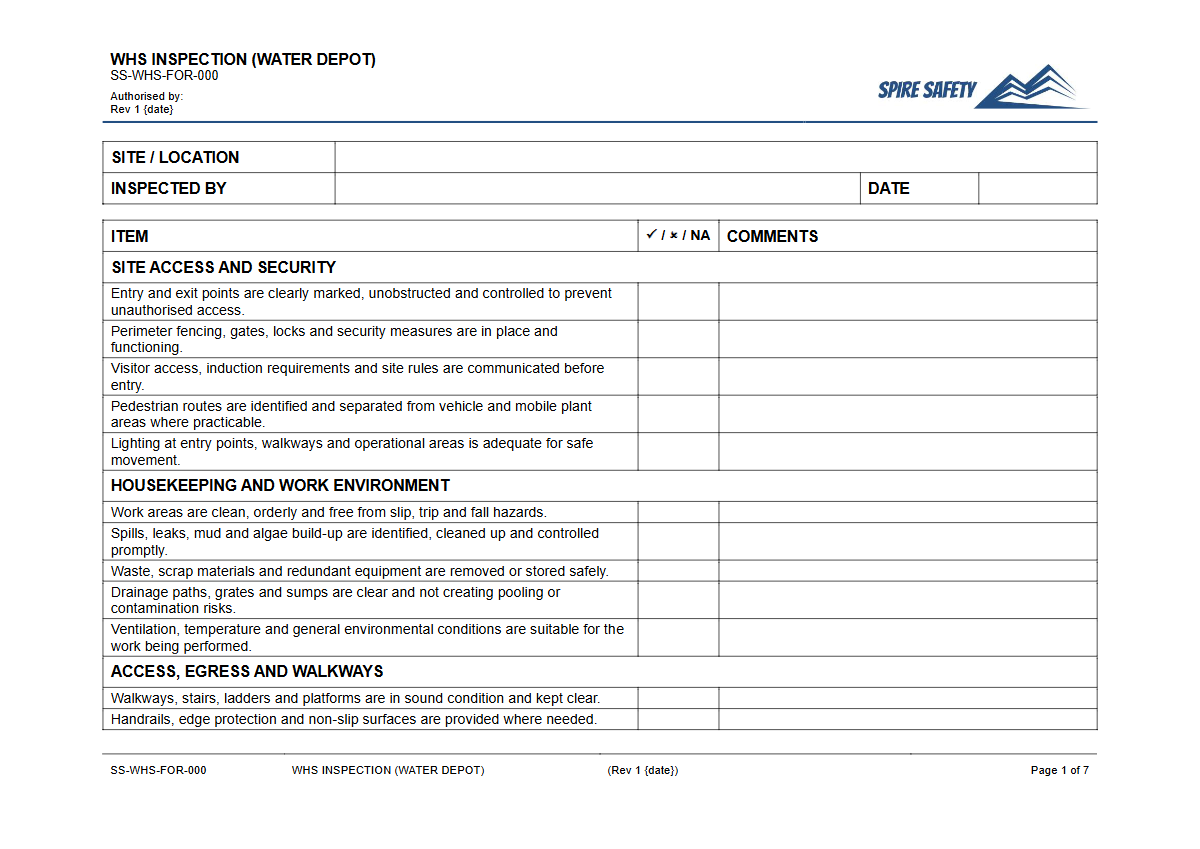
Download our free WHS Inspection (Water Depot) Template. A structured starting point for identifying hazards and managing WHS risks in water depot operations.
Free WHS Inspection (Water Depot) Template
DOCX • 128 KB + PDF
Updated Oct 2026
No signup required
Purpose of the Free WHS Inspection (Water Depot) Template
Water depots present a unique combination of workplace hazards, including vehicle movements, hazardous chemical storage, manual handling, and risks of slips, trips, and falls on wet surfaces. Systematically managing these risks is crucial for ensuring the health and safety of your workers.
Our Free WHS Inspection (Water Depot) Template provides a structured starting point for your organisation to conduct thorough workplace inspections. It helps you proactively identify potential hazards, assess risks, and implement effective control measures, forming a key part of your safety management activities.
This template is designed to guide you through a comprehensive check of key areas within a water depot, such as traffic management, chemical storage areas, plant and equipment, emergency procedures, and general site conditions. Using this document helps formalise your safety processes and demonstrates a commitment to maintaining a safe work environment, aligned with Australian WHS principles.
Video walkthrough
How to use the Free WHS Inspection (Water Depot) Template
Begin by downloading the template in your preferred format, DOCX for easy editing or PDF for straightforward printing. The next step is crucial for its effectiveness.
Please note: This template provides a solid foundation based on Australian WHS practice. However, it must be customised to address the specific layout, equipment, substances, and procedures of your unique water depot.
We recommend a consultation process with your workers and health and safety representatives (HSRs) to ensure all relevant risks are covered and the checklist is practical for your site.
Once customised, the template can be used by a competent person to conduct the physical inspection. They should walk through the site, observing work practices, checking equipment, and examining the environment against the checklist items. For specific mobile plant, ensure operators are not only trained but also have their skills periodically checked using a Verification of Competency for water carts.
Any identified hazards, non-conformances, or areas for improvement should be clearly documented on the form. This includes assigning corrective actions to specific individuals with clear due dates.
For fixed plant and access points, specialised checks may be needed; for example, you might use a dedicated pre-start checklist for a boom gate to supplement this general inspection.
When to use this Inspection Template
Workplace inspections should be conducted at regular, planned intervals to ensure ongoing safety. The frequency may depend on the level of risk, the type of work being performed, and any legislative requirements.
A common schedule is monthly or quarterly. Additionally, an inspection should be carried out whenever there is a significant change to the workplace, such as the introduction of new equipment, changes to the layout, or following an incident or near miss.
These routine checks are a fundamental activity within a broader WHS management system, providing valuable data that informs risk assessments and safety performance reviews. Consistent use of the inspection template helps track trends and verify that control measures remain effective over time.
The scope of your inspections should cover all areas of the depot, not just primary operational zones. This includes amenities and staff facilities, where different hazards may be present.
Some items may require their own specific checks, such as using a separate pre-start checklist for freezers in a lunchroom or storage area.
Who should use it
Workplace inspections should be carried out by a person or team with the knowledge and competence to identify hazards relevant to a water depot environment. This could include a site supervisor, manager, an elected Health and Safety Representative (HSR), or a member of your WHS committee.
Involving workers directly in the inspection process is highly beneficial, as they have firsthand experience with the tasks and associated risks.
While this template is an excellent tool for internal reviews, it is not a substitute for formal WHS compliance auditing, which provides an independent and more in-depth assessment of your entire safety system against legal and other requirements. Using this template effectively, however, prepares your organisation for such audits and fosters a stronger safety culture.
This resource is one of many tools designed to support your organisation's safety efforts. For more checklists, statements, and forms, browse our complete free WHS resources library to find documents that suit your operational needs.
Common mistakes
Common mistakes to avoid
- Failing to customise the template to the specific hazards of your depot.
- Completing the checklist without physically observing the work areas ('pencil-whipping').
- Not assigning clear corrective actions or follow-up dates for identified hazards.
- Neglecting to communicate the inspection findings and actions to the relevant workers.
Legal references
Legal considerations
The following legal requirements may be relevant to this type of work.
- Work Health and Safety Act (Harmonised) — Provides the primary duties for protecting workers and other people from work health and safety risks.
- Work Health and Safety Regulations (Harmonised) — Sets out requirements supporting the management of workplace hazards and risks.
The following codes may be relevant to this type of work.
- Managing WHS Risks Code of Practice — Provides practical guidance on identifying hazards, assessing risks and applying effective controls.
- Work Health and Safety Consultation, Cooperation and Coordination Code of Practice — Provides practical guidance on consulting workers and coordinating with other duty holders.
- Managing the Work Environment and Facilities Code of Practice — Provides practical guidance on safe work environments, workplace facilities and related controls.
Did you know
Inspection Involvement
Workplace inspections are significantly more effective when workers are involved. A study found that worker participation in safety committees and inspections can lead to a substantial reduction in injury rates.
Slips, Trips & Falls
Slips, trips, and falls are a leading cause of serious workplace injuries in Australia, particularly in environments where wet surfaces are common, such as water depots. Regular inspections are a key control for identifying these hazards.
FAQ
Frequently asked questions
01What is the difference between a workplace inspection and a WHS audit?
02How often should a water depot be inspected for safety?
03What are the most common hazards in a water depot?
04Can I use a digital app or software for this inspection?
Share this resource
Free WHS Inspection (Water Depot) Template
Browse Categories
How To Use It
- 1Download and open in Word or PDF.
- 2Replace the placeholders with your business details.
- 3Get it reviewed by a WHS specialist before rollout.
Need it customised?
Our WHS consultants can adapt this template to your site, run a gap analysis, or audit what you already have in place.
Book a Free Consultation WHS consulting servicesor call 1300 156 382