
Free WHS Inspection (Waste Depot) Template
Download our Free WHS Inspection (Waste Depot) Template to formalise safety checks at your facility.
Free WHS Inspection (Waste Depot) Template
DOCX • 128 KB + PDF
Updated Oct 2026
No signup required
Purpose of the Free WHS Inspection (Waste Depot) Template
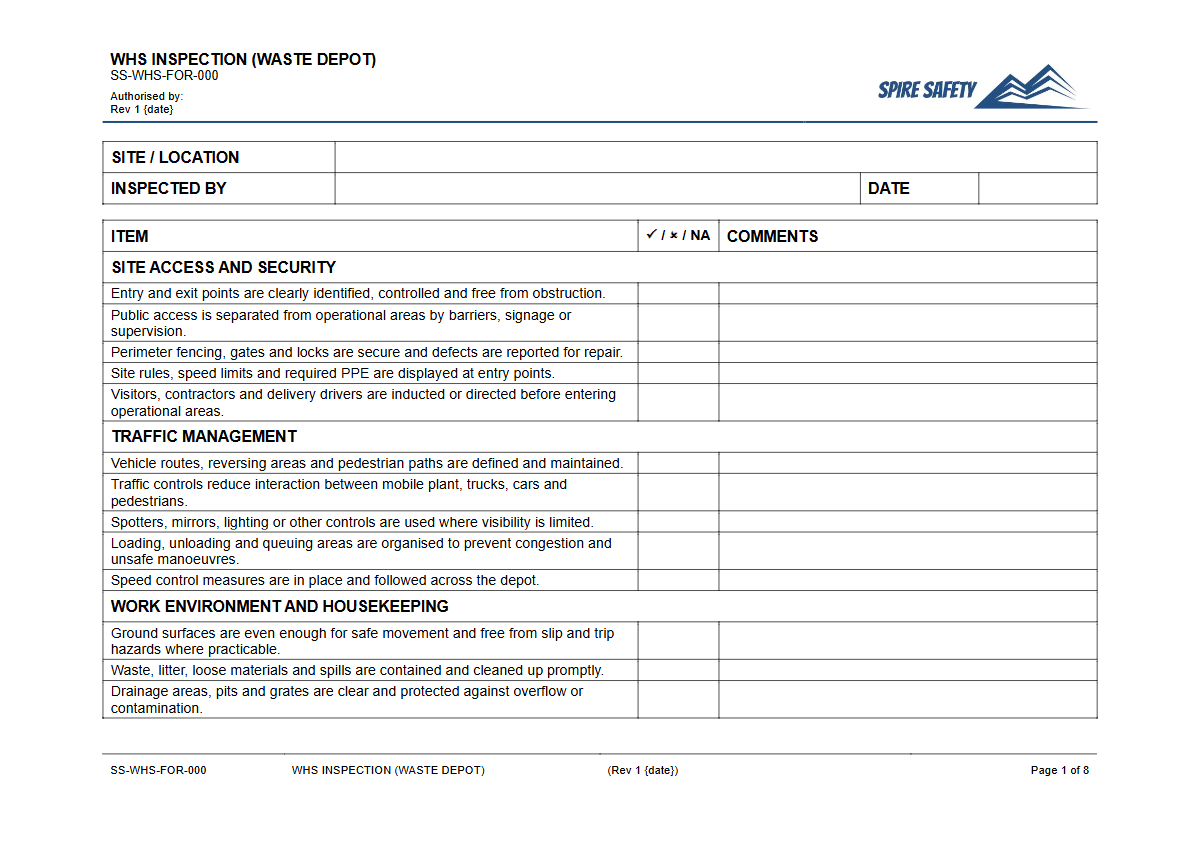
Conducting regular, thorough safety inspections is crucial for managing the unique and varied risks present in a waste depot environment. This Free WHS Inspection (Waste Depot) Template provides a structured starting point for systematically identifying hazards and assessing control measures across your facility.
It's designed to help Persons Conducting a Business or Undertaking (PCBUs), managers, and safety officers formalise their inspection process, ensuring key areas are not overlooked. Using a standardised template helps create consistent records, track corrective actions, and demonstrate a proactive approach to WHS management.
The template covers a broad range of potential hazards common to waste transfer stations, recycling centres, and landfill sites, including traffic management, plant and equipment safety, hazardous substances, manual handling, and emergency preparedness. For organisations looking to embed such processes into a broader framework, implementing formal WHS management systems can provide a comprehensive structure for continuous improvement.
Video walkthrough
How to use the Free WHS Inspection (Waste Depot) Template
Our Free WHS Inspection (Waste Depot) Template is provided in both DOCX and PDF formats for your convenience. The DOCX version is fully editable, allowing you to tailor it to the specific layout, equipment, and processes of your workplace.
Before use, it is essential that you review and customise the checklist to reflect your site-specific risks. This may involve adding sections for specialised plant, specific chemical storage areas, or unique operational procedures.
To use the template effectively:
- Download the DOCX file and open it in a word processor.
- Walk through your site and identify any unique hazards or operational areas not already covered.
- Add, remove, or modify checklist items to ensure they are relevant and comprehensive for your depot. This should be done in consultation with workers and health and safety representatives (HSRs).
- Once customised, use the template to conduct your physical inspection, noting any non-conformances or areas for improvement.
- Assign responsibility and set deadlines for any corrective actions identified.
- File the completed inspection report as a WHS record.
Important Note: This document is a template only. We are not WHS consultants and cannot guarantee that this template covers all hazards and risks at your specific site.
You must customise it to suit your unique circumstances, equipment, and legal obligations.
When to use this Inspection template
The frequency of general workplace inspections depends on the level of risk and the nature of operations at your waste depot. It is best practice to establish a regular schedule, such as monthly or quarterly, for comprehensive site-wide inspections.
This routine helps in identifying gradual deterioration of controls or new hazards that may have emerged since the last check. For daily checks of specific equipment like site access controls, consider using a dedicated checklist, such as our free Pre-Start Checklist (Boom Gate) Template.
In addition to scheduled inspections, this template should be used following an incident, after significant changes to the workplace (like the introduction of new machinery or processes), or when concerns are raised by workers. Regular reviews ensure your safety management practices remain relevant and effective.
For a deeper evaluation of your overall safety posture, engaging professional WHS compliance auditing services can provide an independent and expert assessment.
Who should use this Inspection template
This inspection template is designed for use by a range of personnel responsible for workplace health and safety, from site managers to WHS committee members. It is also a useful tool for Health and Safety Representatives (HSRs) conducting their own inspections.
To be effective, the process should involve those who are familiar with the work, as they have direct experience with the tasks and associated risks. For example, maintenance staff can provide valuable input on checks related to workshop equipment, which can be formalised using documents like a Free Pre-Start Checklist (Electric Hoist) Template.
Involving workers in the customisation and execution of inspections is invaluable. For those wanting to explore a wider range of safety documentation for different tasks and equipment, our free WHS resources library offers a variety of templates and checklists to support your safety efforts across the business.
Common mistakes
Common mistakes to avoid
- Using a generic checklist without customising it for the depot's specific layout, plant, and waste types.
- Failing to document and track corrective actions, leaving identified hazards unresolved.
- Conducting the inspection without consulting the workers who perform the day-to-day tasks.
- Treating the inspection as a 'tick-and-flick' exercise rather than a genuine effort to identify risks.
Legal references
Legal considerations
The following legal requirements may be relevant to this type of work.
- Work Health and Safety Act (Harmonised) — Provides the primary duties for protecting workers and other people from work health and safety risks.
- Work Health and Safety Regulations (Harmonised) — Sets out requirements supporting the management of workplace hazards and risks.
The following codes may be relevant to this type of work.
- Managing WHS Risks Code of Practice — Provides practical guidance on identifying hazards, assessing risks and applying effective controls.
- Work Health and Safety Consultation, Cooperation and Coordination Code of Practice — Provides practical guidance on consulting workers and coordinating with other duty holders.
- Managing the Work Environment and Facilities Code of Practice — Provides practical guidance on safe work environments, workplace facilities and related controls.
Did you know
A High-Risk Industry
According to Safe Work Australia, the waste collection, treatment, and disposal services industry has one of the highest rates of serious workers' compensation claims, highlighting the critical need for robust safety inspections.
Hidden Dangers
Spontaneous combustion is a significant fire risk in waste depots, caused by heat generated from the decomposition of organic matter or chemical reactions between mixed waste.
FAQ
Frequently asked questions
01What hazards are unique to a waste depot inspection?
02How often should waste depot inspections be conducted?
03Is this waste depot inspection template suitable for all types of waste?
04What's the difference between a plant pre-start check and a site inspection?
Share this resource
Free WHS Inspection (Waste Depot) Template
Browse Categories
How To Use It
- 1Download and open in Word or PDF.
- 2Replace the placeholders with your business details.
- 3Get it reviewed by a WHS specialist before rollout.
Need it customised?
Our WHS consultants can adapt this template to your site, run a gap analysis, or audit what you already have in place.
Book a Free Consultation WHS consulting servicesor call 1300 156 382