
Free WHS Inspection (Waste Transfer) Template
Download our free WHS Inspection (Waste Transfer) Template. A structured DOCX & PDF to formalise your inspection process and manage risks. Get started today.
Free WHS Inspection (Waste Transfer) Template
DOCX • 127 KB + PDF
Updated Oct 2026
No signup required
Purpose of the Free WHS Inspection (Waste Transfer) Template
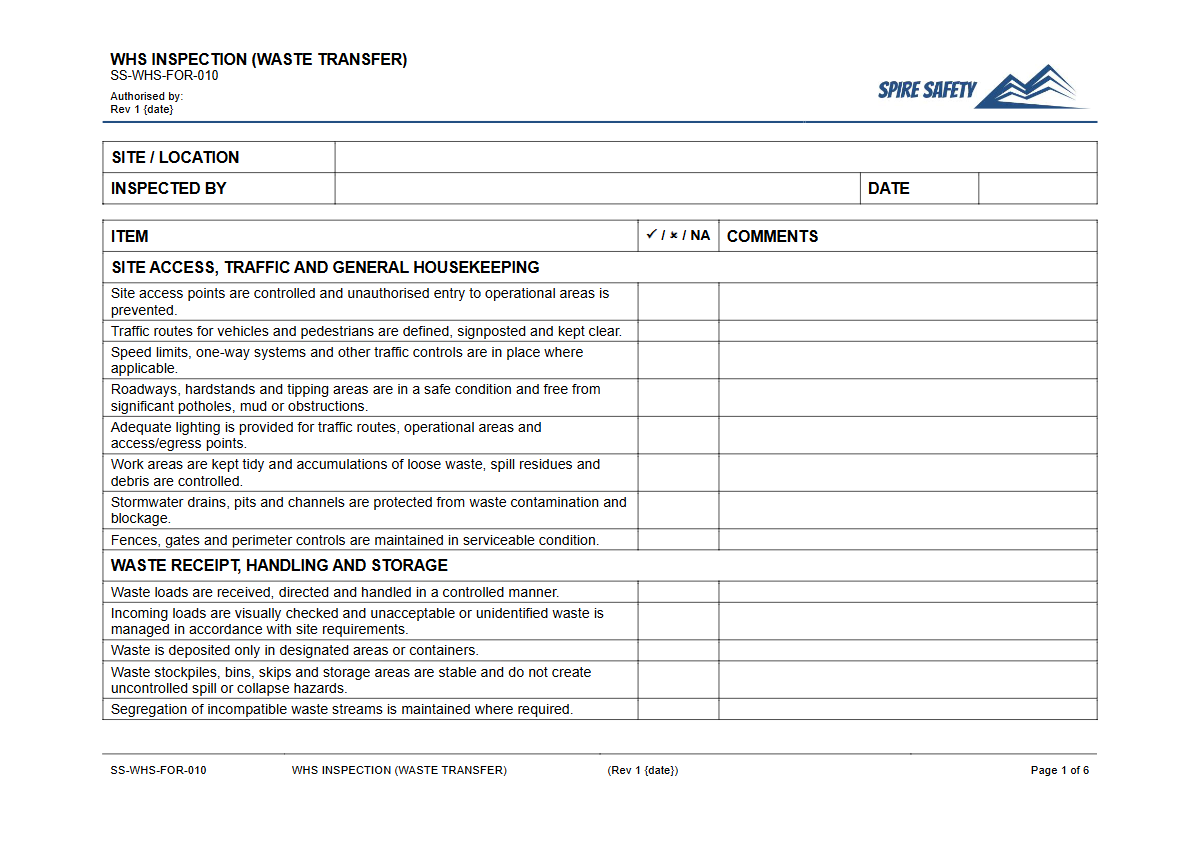
Waste transfer stations are dynamic, high-risk environments. This free WHS Inspection (Waste Transfer) Template provides a structured starting point for organisations to systematically identify and control hazards.
Regular, documented inspections are a critical component of any safety management system, helping to prevent incidents, injuries, and illness associated with waste handling operations. Using this template helps formalise the process of checking for risks related to traffic management, mobile plant, hazardous substances, manual tasks, and site security.
The goal is to move beyond reactive measures and proactively manage the health and safety of everyone on site. A consistent inspection regime demonstrates a commitment to safety and provides valuable data for risk assessments and continuous improvement.
Integrating these inspections into your broader framework is key to building a robust safety culture. These activities should be a documented part of your overall WHS management systems.
Key Inspection Areas
This template prompts users to check a range of critical areas common to waste transfer facilities, including:
- Traffic Management: Signage, speed limits, separation of vehicles and pedestrians, and traffic flow.
- Plant and Equipment: Condition of loaders, excavators, conveyors, and compactors. Includes checks for guards, emergency stops, and fluid leaks.
- Hazardous Materials: Proper storage, labelling, and handling of chemicals, asbestos, and other hazardous waste.
- Site Conditions: Housekeeping, lighting, fire safety equipment, and structural integrity of pits and bays.
- Worker Behaviour: Correct use of personal protective equipment (PPE), adherence to safe work procedures, and operator competency.
Your inspection process should cover all equipment on site, from heavy machinery to site access controls. For specific items, you might use a dedicated checklist, such as a boom gate pre-start checklist, to supplement the general site inspection.
Video walkthrough
How to use the Free WHS Inspection (Waste Transfer) Template
Using this resource effectively involves more than just filling out a form. Follow these steps to integrate it properly into your safety processes:
- Download and Customise: Download the template in your preferred format (DOCX or PDF). The Word document is fully editable.
- Site-Specific Adaptation: Customise the checklist to reflect the specific layout, equipment, materials, and processes of your waste transfer station. Add or remove items to ensure it is relevant and comprehensive for your operations.
- Train Your Team: Ensure anyone conducting an inspection is trained on how to use the template, what to look for, and how to recognise hazards.
- Conduct Inspections: Perform inspections at the scheduled frequency, documenting all findings clearly.
- Review and Act: Review completed inspections promptly. Assign corrective actions for any identified issues and track them to completion.
Important: This is a template, not a finished document. We have provided a solid starting point, but you must customise it to suit the unique risks and operational context of your specific workplace. This might involve adding checks for specialised machinery, for which you can find examples like our electric hoist pre-start checklist.
Following Up on Findings
An inspection is only effective if its findings lead to action. Establish a clear process for addressing identified hazards.
This should involve assigning responsibility for corrective actions, setting realistic deadlines, and verifying that the controls have been implemented effectively. If you encounter complex issues or require expert guidance on risk control, engaging external WHS consulting services can provide valuable support.
When to use it
The frequency of inspections should be determined by your risk assessment. High-risk areas or activities may require daily or pre-shift checks, while other parts of the site might be inspected weekly or monthly.
It is also best practice to conduct an inspection after an incident or near miss, when new equipment is introduced, or when work procedures change. These routine workplace inspections are a key part of monitoring controls, and differ from periodic, in-depth WHS compliance auditing which assesses the entire safety system.
Who should use it
This Inspection template is designed for use by competent personnel responsible for workplace safety. This can include:
- Site Supervisors and Managers
- Health and Safety Representatives (HSRs)
- WHS Officers or Advisors
- Trained and experienced workers or team leaders
The key is that the person conducting the inspection has the knowledge and training to identify hazards accurately. A comprehensive safety program ensures even administrative areas are covered; you might even use a pre-start checklist for an envelope sealer in the site office to reinforce that all equipment safety is considered.
If this resource is useful, you may find other helpful documents in our complete free WHS resources library, which includes a wide range of templates, checklists, and guides.
Common mistakes
Common mistakes to avoid
- Failing to customise the template for the specific site, equipment, and tasks.
- Conducting 'tick-and-flick' inspections without genuine observation or worker consultation.
- Not following up on identified hazards or implementing corrective actions in a timely manner.
- Neglecting to train inspectors on how to properly identify hazards and assess risks.
Legal references
Legal considerations
The following legal requirements may be relevant to this type of work.
- Work Health and Safety Act (Harmonised) — Provides the primary duties for protecting workers and other people from work health and safety risks.
- Work Health and Safety Regulations (Harmonised) — Sets out requirements supporting the management of workplace hazards and risks.
The following codes may be relevant to this type of work.
- Managing WHS Risks Code of Practice — Provides practical guidance on identifying hazards, assessing risks and applying effective controls.
- Work Health and Safety Consultation, Cooperation and Coordination Code of Practice — Provides practical guidance on consulting workers and coordinating with other duty holders.
- Managing the Work Environment and Facilities Code of Practice — Provides practical guidance on safe work environments, workplace facilities and related controls.
Did you know
A High-Risk Industry
According to Safe Work Australia, the Waste Collection, Treatment and Disposal Services industry has one of the highest rates of serious workers' compensation claims in the country.
Hierarchy of Control
When addressing risks found during an inspection, the most effective controls are eliminating the hazard or substituting it with a safer alternative, rather than relying solely on PPE.
FAQ
Frequently asked questions
01What are the common hazards at a waste transfer station?
02How often should I conduct a waste transfer station inspection?
03Who is responsible for fixing hazards found during an inspection?
04Can this template be used as a formal WHS audit?
Share this resource
Free WHS Inspection (Waste Transfer) Template
Browse Categories
How To Use It
- 1Download and open in Word or PDF.
- 2Replace the placeholders with your business details.
- 3Get it reviewed by a WHS specialist before rollout.
Need it customised?
Our WHS consultants can adapt this template to your site, run a gap analysis, or audit what you already have in place.
Book a Free Consultation WHS consulting servicesor call 1300 156 382