
Free WHS Inspection (Vehicle Workshop) Template
Download our free WHS Inspection (Vehicle Workshop) Template to formalise safety checks for hoists, tools, and work areas. A structured starting point.
Free WHS Inspection (Vehicle Workshop) Template
DOCX • 128 KB + PDF
Updated Oct 2026
No signup required
Purpose of the Free WHS Inspection (Vehicle Workshop) Template
A vehicle workshop is a dynamic environment with numerous health and safety risks, from moving vehicles and heavy machinery to hazardous chemicals and electrical equipment. This Free WHS Inspection (Vehicle Workshop) Template provides a structured starting point for systematically identifying, assessing, and controlling these hazards.
Using this template helps your organisation formalise its safety processes, demonstrate due diligence, and create a safer working environment for mechanics, technicians, and visitors. It encourages a proactive approach to safety, moving beyond simple compliance to build a positive safety culture.
Video walkthrough
How to use the Free WHS Inspection (Vehicle Workshop) Template
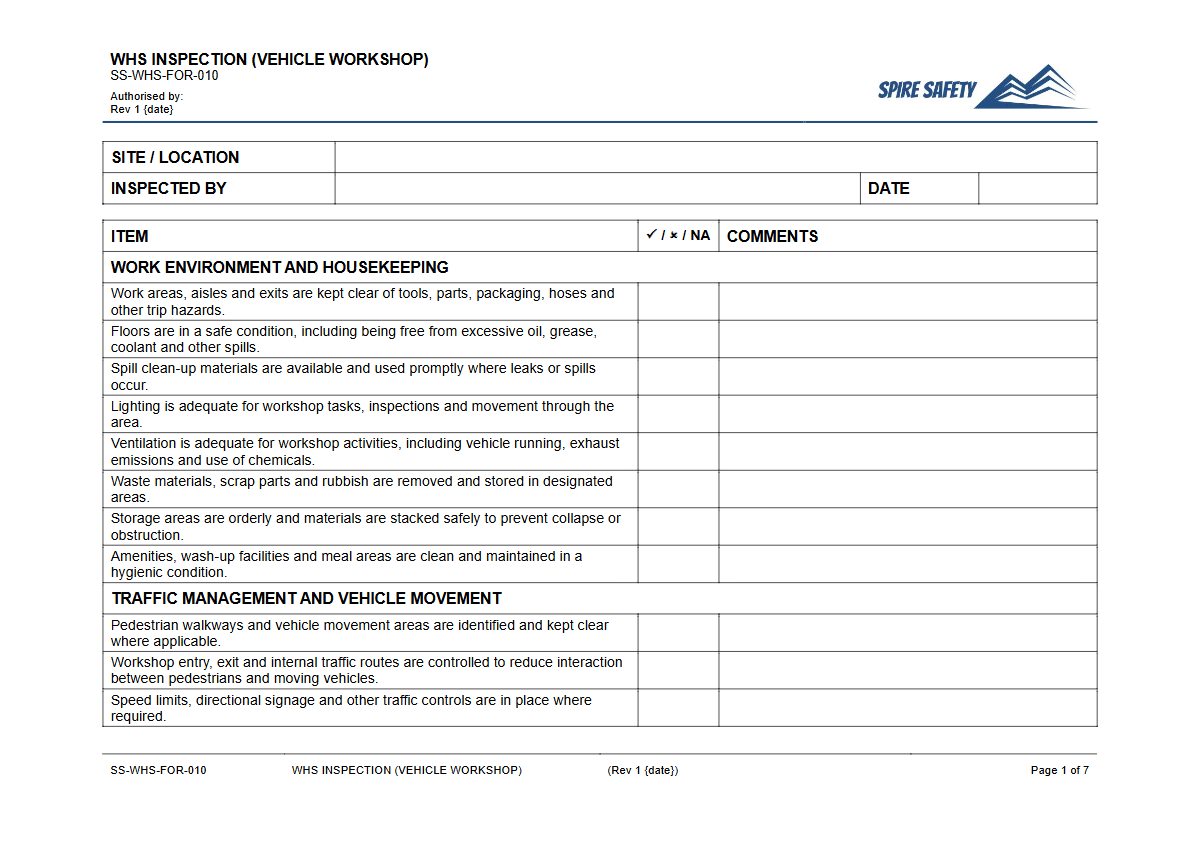
Download the template in your preferred format (DOCX or PDF) to begin. The document is structured to cover key areas of a typical vehicle workshop, including general housekeeping, equipment safety, chemical storage, and emergency procedures.
The primary user should walk through the workshop, observing conditions and work practices, and noting any non-conformances or potential hazards on the checklist. For each item, record observations and recommend corrective actions with assigned responsibilities and due dates.
This creates a clear action plan for risk mitigation.
Important: This template is a guide and must be customised to your specific workplace. The types of vehicles serviced, the equipment used (such as specific vehicle hoists), and the layout of your workshop will all influence the inspection criteria.
We strongly recommend that a competent person reviews and adapts the document to align with your site's unique operational risks before its first use. For example, while this checklist covers general machinery, specific items may require their own detailed checks, such as our Free Pre-Start Checklist (Electric Hoist) Template.
What a Vehicle Workshop Inspection Covers
A thorough inspection should assess all aspects of the workshop environment to ensure risks are controlled. This template provides sections to guide your review across several critical areas:
- General Environment & Housekeeping: Assesses the condition of floors to prevent slips and trips from oil or coolant spills, adequacy of lighting, and clear access to walkways and emergency exits.
- Plant & Equipment: Checks the condition of vehicle hoists, jacks, power tools, and diagnostic equipment. This includes verifying that machine guarding is in place, emergency stops are functional, and equipment is maintained according to manufacturer specifications.
- Hazardous Chemicals & Dangerous Goods: Reviews the storage and handling of oils, solvents, paints, and other chemicals. This includes checking for correct labelling, availability of Safety Data Sheets (SDS), and use of appropriate personal protective equipment (PPE).
- Electrical Safety: Involves inspecting power leads, outlets, and equipment for damage, and ensuring that electrical testing and tagging are up to date.
- Fire & Emergency Preparedness: Verifies that fire extinguishers are accessible and serviced, first aid kits are stocked, and emergency contact numbers are clearly displayed.
These regular checks form an essential part of effective WHS management systems, providing valuable data for ongoing risk assessment and safety improvement initiatives.
When to Conduct a Workshop Inspection
Regular, scheduled inspections are crucial for maintaining a safe workplace. The frequency depends on the size of your operation and the level of risk involved, but a monthly or quarterly schedule is a common starting point.
In addition to this routine, inspections should also be conducted whenever there is a significant change in the workplace, such as the introduction of new heavy machinery, after an incident or near miss occurs, or before commencing a major, non-routine project. This proactive scheduling helps ensure safety controls remain effective and relevant.
These internal checks can also help prepare your business for a more formal WHS compliance auditing process.
Who Should Use This Inspection Template
This template is designed for use by individuals with responsibility for workplace safety. This typically includes Workshop Managers, Supervisors, and Health and Safety Representatives (HSRs).
To be most effective, the inspection process should be consultative, involving the workers who use the equipment and perform the tasks daily. Their direct experience provides invaluable insight into potential hazards and the practicality of existing safety controls.
The completed inspection report should be reviewed by management to ensure that resources are allocated for any required corrective actions.
You can find more tools and checklists to support your safety processes in our complete free WHS resources library, covering a wide range of equipment and safety procedures.
Common mistakes
Common mistakes to avoid
- Using a generic checklist without customising it for the workshop's specific layout, vehicles, and equipment.
- Failing to document and assign corrective actions, leaving identified hazards unresolved.
- Not involving experienced mechanics and technicians in the inspection process.
- Completing the checklist as a paper-filling exercise rather than a genuine search for hazards.
Legal references
Legal considerations
The following legal requirements may be relevant to this type of work.
- Work Health and Safety Act (Harmonised) — Provides the primary duties for protecting workers and other people from work health and safety risks.
- Work Health and Safety Regulations (Harmonised) — Sets out requirements supporting the management of workplace hazards and risks.
The following codes may be relevant to this type of work.
- Managing WHS Risks Code of Practice — Provides practical guidance on identifying hazards, assessing risks and applying effective controls.
- Work Health and Safety Consultation, Cooperation and Coordination Code of Practice — Provides practical guidance on consulting workers and coordinating with other duty holders.
- Managing the Work Environment and Facilities Code of Practice — Provides practical guidance on safe work environments, workplace facilities and related controls.
Did you know
Hidden Dangers
According to Safe Work Australia, mechanics and vehicle repairers face high rates of musculoskeletal injuries from manual tasks and significant health risks from exposure to hazardous substances like asbestos in brake linings, isocyanates in paints, and various solvents.
Common Injuries
Slips, trips, and falls are one of the most frequent causes of injury in vehicle workshops. These incidents are often caused by preventable issues like oil or fluid spills, trailing electrical leads, and poor general housekeeping.
FAQ
Frequently asked questions
01What is the difference between a pre-start checklist and a workshop inspection?
02How often should a vehicle workshop be inspected for WHS?
03Who is responsible for fixing hazards found during an inspection?
04Can this template be used for WHS compliance?
Share this resource
Free WHS Inspection (Vehicle Workshop) Template
Browse Categories
How To Use It
- 1Download and open in Word or PDF.
- 2Replace the placeholders with your business details.
- 3Get it reviewed by a WHS specialist before rollout.
Need it customised?
Our WHS consultants can adapt this template to your site, run a gap analysis, or audit what you already have in place.
Book a Free Consultation WHS consulting servicesor call 1300 156 382