
Free WHS Inspection (Vet Clinic) Template
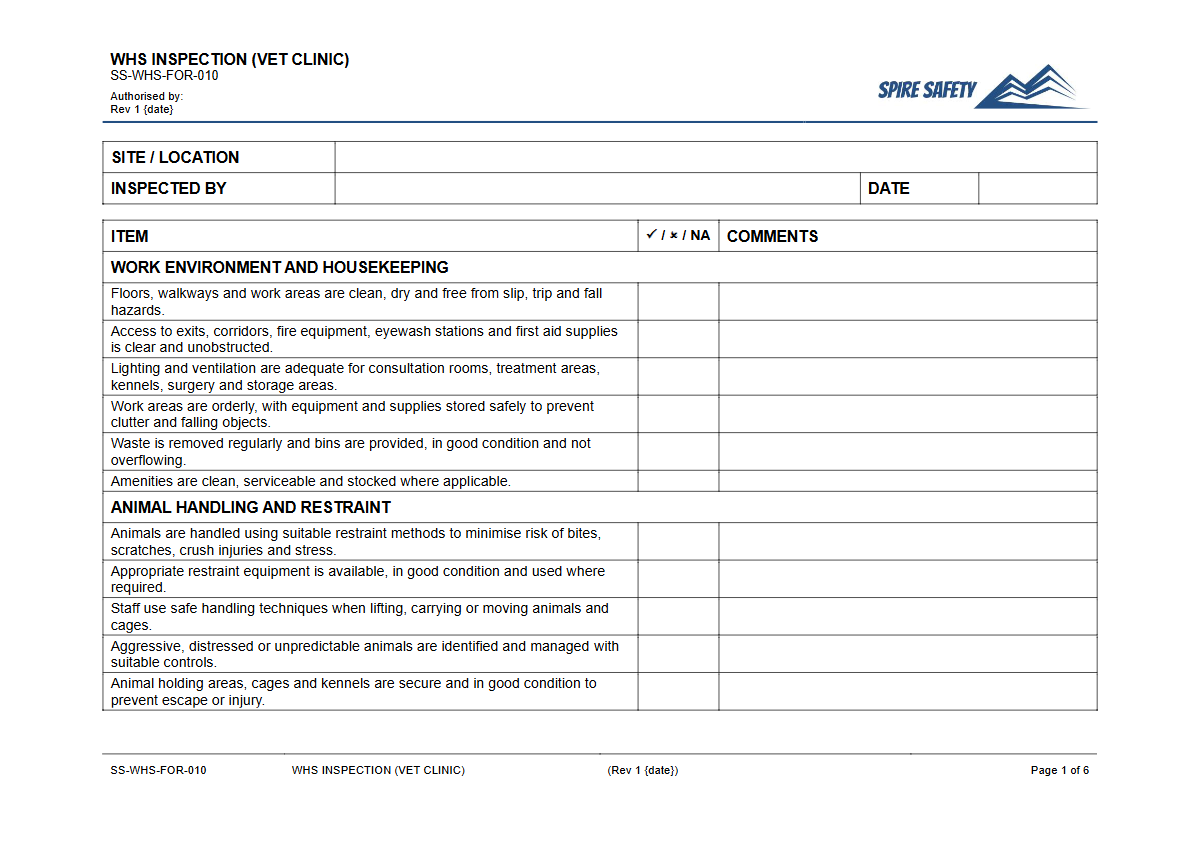
Download our free WHS Inspection (Vet Clinic) Template to identify and manage hazards in your practice. A structured starting point for better safety.
Free WHS Inspection (Vet Clinic) Template
DOCX • 127 KB + PDF
Updated Oct 2026
No signup required
Purpose of the Free WHS Inspection (Vet Clinic) Template
Managing workplace health and safety in a veterinary clinic presents unique challenges, from animal handling to hazardous substances. To help your practice systematically identify and control these risks, Spire Safety offers this free WHS Inspection (Vet Clinic) Template.
This structured document, aligned with Australian WHS principles, provides a robust starting point for developing comprehensive safety inspections. It's an essential tool for integrating safety checks into your broader WHS management systems.
The primary purpose of this Inspection template is to provide a formalised process for examining your clinic's work environment, equipment, and procedures. It helps you proactively identify hazards before they cause an incident, injury, or illness.
A regular, documented inspection process demonstrates a commitment to safety and is a key part of your due diligence as a PCBU (Person Conducting a Business or Undertaking). Using this template helps to standardise your safety audits, ensuring all critical areas—from reception and consult rooms to surgical suites and kennels—are consistently reviewed.
It covers a range of common veterinary hazards, including ergonomics, chemical safety, equipment maintenance, and emergency preparedness.
Video walkthrough
How to use the Free WHS Inspection (Vet Clinic) Template
Our free WHS Inspection (Vet Clinic) Template is provided as a fully editable DOCX file, with a PDF version also available for easy printing. To get the most value, follow these steps:
- Download the template and open the DOCX file.
- Review the pre-listed checkpoints and assess their relevance to your specific practice.
- Important: You must customise this document. We cannot know the specific hazards of your workplace. Add, remove, or modify checklist items to reflect your clinic’s unique layout, the types of animals you treat, the equipment you use (e.g., X-ray machines, autoclaves, anaesthetic machines), and the specific tasks your staff perform.
- Walk through the workplace, using the customised checklist to record observations. Note any non-conformances or areas for improvement.
- Assign responsibility and set deadlines for any corrective actions required.
- File the completed inspection report and review findings with your health and safety committee or management team.
When to use it
Regular workplace inspections are crucial for maintaining a safe environment. This Inspection should be conducted at scheduled intervals, such as quarterly or half-yearly, depending on the size and risk profile of your clinic. Additionally, it should be used:
- After an incident, accident, or near-miss to identify contributing factors.
- When there are changes to the workplace, such as new equipment, new procedures, or clinic renovations.
- When new information about a hazard becomes available.
- As part of regular reviews of your safety procedures.
A consistent inspection schedule helps create a proactive safety culture and provides valuable data for continuous improvement. The records generated also form an important part of your evidence for compliance, which can be reviewed during a formal WHS compliance auditing process.
Who should use it
This template is designed for use by anyone responsible for health and safety in a veterinary practice. This can include:
- Practice Owners and Managers (PCBUs)
- Designated Health and Safety Representatives (HSRs)
- Members of a Health and Safety Committee (HSC)
- Supervisors or lead veterinarians/nurses
Involving a team in the inspection process is highly beneficial. A combination of management and workers brings different perspectives, helping to identify a wider range of hazards and develop more practical solutions.
For specific pieces of high-risk equipment, such as those used for large animal handling, dedicated checks should be integrated into daily routines; our Pre-Start Checklist (Patient Hoist) Template is a good example of this.
The checklist prompts you to consider various areas. For instance, when inspecting storage areas, you might assess the safety of chemical storage, but also the condition of equipment like refrigerators and freezers.
For a more detailed daily check on specific cold storage units, consider using our Free Pre-Start Checklist (Freezer) Template to complement this broader inspection.
For veterinary practices that deal with livestock or farm animals, the risks associated with feed preparation and storage are significant. Your inspection should cover the machinery used in these processes.
To formalise daily checks on such equipment, you could adapt our free Pre-Start Checklist (Feed Mixer) Template for your specific needs.
By systematically working through this Inspection and following up on the findings, you build a stronger, safer workplace for your team and ensure the best possible care for your animal patients. If this resource is helpful, you may wish to browse our complete free WHS resources library for other templates and guides.
Common mistakes
Common mistakes to avoid
- Forgetting to inspect administrative and reception areas for hazards like trip hazards or poor ergonomics.
- Using a generic checklist without customising it for specific clinic risks (e.g., radiography, specialised surgical equipment).
- Failing to assign clear responsibility and deadlines for corrective actions identified during the inspection.
- Not reviewing inspection findings over time to identify trends or recurring safety issues.
Legal references
Legal considerations
The following legal requirements may be relevant to this type of work.
- Work Health and Safety Act (Harmonised) — Provides the primary duties for protecting workers and other people from work health and safety risks.
- Work Health and Safety Regulations (Harmonised) — Sets out requirements supporting the management of workplace hazards and risks.
The following codes may be relevant to this type of work.
- Managing WHS Risks Code of Practice — Provides practical guidance on identifying hazards, assessing risks and applying effective controls.
- Work Health and Safety Consultation, Cooperation and Coordination Code of Practice — Provides practical guidance on consulting workers and coordinating with other duty holders.
- Managing the Work Environment and Facilities Code of Practice — Provides practical guidance on safe work environments, workplace facilities and related controls.
Did you know
Zoonotic Disease Risk
Veterinarians and their staff are at a higher risk of contracting zoonotic diseases—illnesses passed from animals to humans. Over 60% of known infectious diseases in people can be spread from animals.
Musculoskeletal Strain
Lifting and restraining animals is a leading cause of musculoskeletal disorders (MSDs) among veterinary staff, making proper manual handling training and equipment essential for injury prevention.
FAQ
Frequently asked questions
01What are the biggest WHS risks in a vet clinic?
02How often should a vet clinic be inspected for WHS?
03Is this WHS inspection template enough for my vet practice?
04What is a PCBU's duty regarding workplace inspections?
Share this resource
Free WHS Inspection (Vet Clinic) Template
Browse Categories
How To Use It
- 1Download and open in Word or PDF.
- 2Replace the placeholders with your business details.
- 3Get it reviewed by a WHS specialist before rollout.
Need it customised?
Our WHS consultants can adapt this template to your site, run a gap analysis, or audit what you already have in place.
Book a Free Consultation WHS consulting servicesor call 1300 156 382