
Free WHS Inspection (Truck Depot) Template
Download our free WHS Inspection Template for Truck Depots. This structured DOCX & PDF checklist helps you formalise safety inspections and manage risks.
Free WHS Inspection (Truck Depot) Template
DOCX • 128 KB + PDF
Updated Oct 2026
No signup required
Purpose of the Free WHS Inspection (Truck Depot) Template
A truck depot is a dynamic and high-risk environment, with constant movement of heavy vehicles, people, and goods. This Free WHS Inspection (Truck Depot) Template provides a structured starting point for systematically identifying and managing health and safety hazards specific to transport and logistics operations.
Regular, documented inspections are a cornerstone of any proactive safety strategy, helping your organisation meet its duty of care by identifying unsafe conditions and behaviours before they lead to an incident.
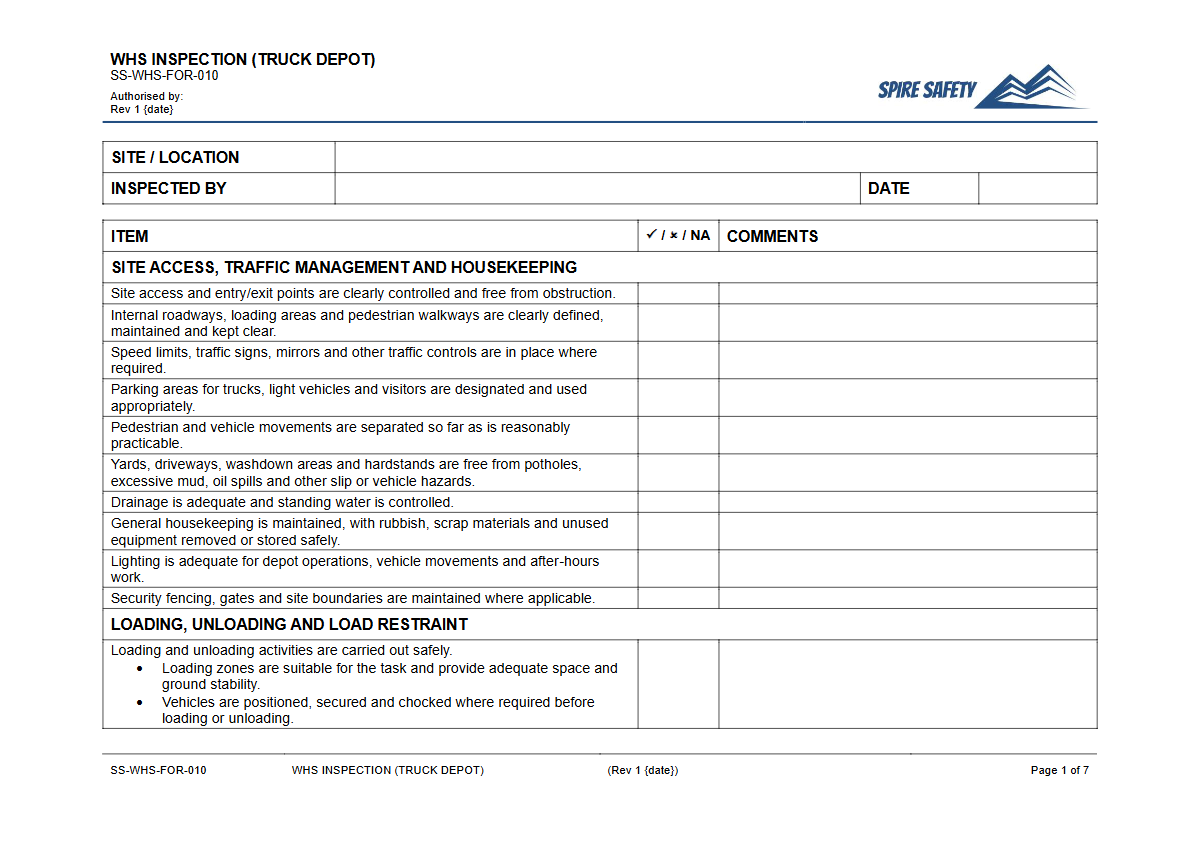
Using this template helps formalise the inspection process, moving beyond ad-hoc checks to a scheduled, comprehensive review. It prompts you to examine critical areas such as traffic management, pedestrian segregation, loading and unloading procedures, workshop safety, storage of goods, and emergency preparedness.
Integrating these regular checks is a fundamental part of building effective WHS management systems that protect your workers and your business.
Video walkthrough
How to use the Free WHS Inspection (Truck Depot) Template
This resource is available as an editable DOCX file, allowing for full customisation, and a PDF for immediate use. The template is logically structured to guide you through a thorough walkthrough of a typical truck depot, with sections covering key operational areas and common hazards.
To use it effectively, download the DOCX version and begin tailoring it to your specific site.
IMPORTANT: This document is a template and must be customised to your specific workplace. Every truck depot is unique in its layout, equipment, traffic flow, and operational procedures.
We strongly recommend you walk through your site and add, remove, or modify checklist items to ensure it accurately reflects the hazards and control measures relevant to your operations. This is not a finished safety document.
For each item, the inspector notes whether it is compliant, non-compliant, or not applicable, and records observations. Crucially, any non-compliance must have a corresponding corrective action, an assigned responsible person, and a due date for completion.
This creates a clear action plan for rectifying safety issues. For high-risk tasks identified, consider developing detailed procedures like a Safe Work Method Statement for Truck Operation.
A Proactive Approach to Depot Safety
An effective depot inspection goes beyond simply ticking boxes. It's an active process of observation and engagement.
Look for potential conflicts between pedestrians and vehicles, assess the condition of safety signage, check that loading bay equipment is in good working order, and ensure housekeeping standards are being maintained to prevent slips, trips, and falls. The goal is to identify both current deficiencies and latent conditions that could contribute to a future incident.
Many depots utilise specialised equipment that requires its own safety verification. For example, if your depot uses elevated work platforms for maintenance, you may also need a Verification of Competency for truck-mounted cherry pickers to ensure operators are competent.
Likewise, a structured checklist for specific site infrastructure, like our free Pre-Start Checklist (Boom Gate) Template, can complement this general depot inspection by focusing on critical equipment.
When to use this Inspection Template
Formal depot inspections should be conducted on a regular schedule determined by your risk assessment—for example, monthly or quarterly. Additionally, this inspection should be performed:
- After any significant incident, accident, or near-miss to identify contributing factors.
- When significant changes are made to the depot's layout, traffic management plan, or work processes.
- Following the introduction of new plant, equipment, or vehicles.
- As part of a periodic review of your overall safety management system.
Who should use this Inspection Template
This template is designed for use by individuals with responsibility for workplace health and safety. This typically includes:
- Depot Managers and Site Supervisors
- WHS Managers or Safety Officers
- Health and Safety Representatives (HSRs)
- Members of the WHS Committee
While a manager or safety professional may lead the inspection, it's vital to consult with workers and operators throughout the process. Their firsthand experience provides invaluable insight into daily hazards and the practicality of existing controls. The findings can also serve as a valuable input for third-party verification activities such as WHS compliance auditing.
This template is one of many tools designed to support your safety efforts. For more documents to help streamline your WHS processes, browse our complete free WHS resources library.
Common mistakes
Common mistakes to avoid
- Failing to customise the template to the specific layout and risks of the depot.
- Not assigning clear responsibility and deadlines for corrective actions found during the inspection.
- Completing the checklist as a 'tick-and-flick' exercise without genuine observation.
- Forgetting to consult with workers and HSRs who have hands-on knowledge of the risks.
Legal references
Legal considerations
The following legal requirements may be relevant to this type of work.
- Work Health and Safety Act (Harmonised) — Provides the primary duties for protecting workers and other people from work health and safety risks.
- Work Health and Safety Regulations (Harmonised) — Sets out requirements supporting the management of workplace hazards and risks.
The following codes may be relevant to this type of work.
- Managing WHS Risks Code of Practice — Provides practical guidance on identifying hazards, assessing risks and applying effective controls.
- Work Health and Safety Consultation, Cooperation and Coordination Code of Practice — Provides practical guidance on consulting workers and coordinating with other duty holders.
- Managing the Work Environment and Facilities Code of Practice — Provides practical guidance on safe work environments, workplace facilities and related controls.
Did you know
Traffic Management
According to Safe Work Australia, the most common cause of fatalities in the transport industry involves vehicle collisions. A well-planned traffic management plan, regularly reviewed through inspections, is a critical control.
Consultation is Key
Under model WHS laws, PCBUs have a duty to consult with workers on health and safety matters. Involving your team in depot inspections is not just good practice—it's a legal requirement.
FAQ
Frequently asked questions
01What is the main purpose of a truck depot inspection?
02How often should we inspect our truck depot?
03Who is responsible for conducting a truck depot inspection?
04Can I use this template for other types of workplaces?
Share this resource
Free WHS Inspection (Truck Depot) Template
Browse Categories
How To Use It
- 1Download and open in Word or PDF.
- 2Replace the placeholders with your business details.
- 3Get it reviewed by a WHS specialist before rollout.
Need it customised?
Our WHS consultants can adapt this template to your site, run a gap analysis, or audit what you already have in place.
Book a Free Consultation WHS consulting servicesor call 1300 156 382