
Free WHS Inspection (Shipyard) Template
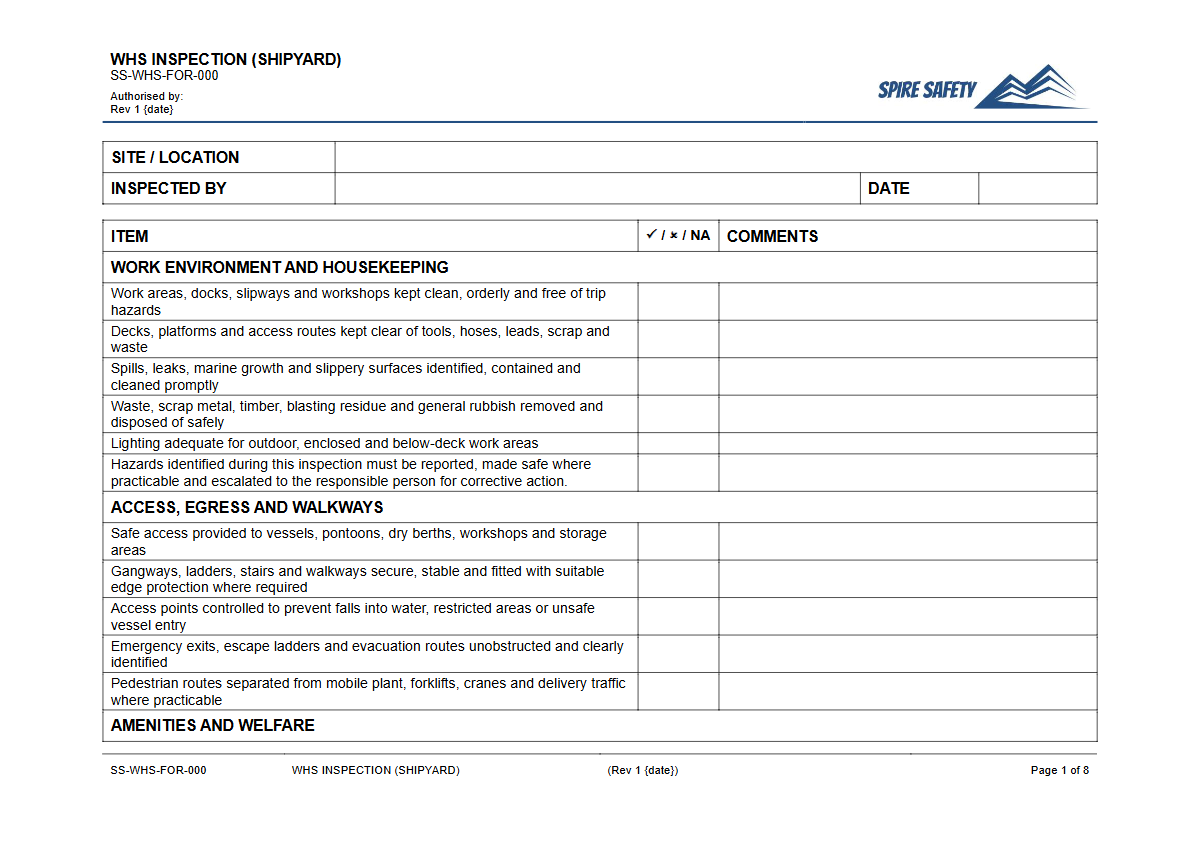
Download our free WHS Inspection (Shipyard) Template to formalise safety checks for high-risk maritime environments.
Free WHS Inspection (Shipyard) Template
DOCX • 129 KB + PDF
Updated Oct 2026
No signup required
Purpose of the Free WHS Inspection (Shipyard) Template
Shipyards are dynamic, high-risk environments with a unique combination of hazards, from heavy lifting and hot work to confined spaces and working over water. Our Free WHS Inspection (Shipyard) Template provides a structured starting point for systematically identifying and managing these risks.
By formalising your inspection process, you can enhance hazard reporting, promote a stronger safety culture, and create a safer working environment for everyone on site. This template is designed to help you document checks on critical equipment, work areas, and safety procedures.
A systematic inspection program is a cornerstone of proactive risk management. It allows your organisation to move beyond reactive incident response, enabling you to find and fix hazards before they cause harm.
This process helps demonstrate due diligence and a commitment to meeting your duties under Australian WHS legislation. Regular checks should cover a broad range of items, from the condition of scaffolding and gangways to the functionality of lifting equipment.
Using a specific form like our free pre-start checklist for electric hoists for key plant is a great supplement to a general site inspection.
Video walkthrough
How to use the Free WHS Inspection (Shipyard) Template
This downloadable document is provided in both DOCX and PDF formats, allowing for easy customisation. To get started, download the template and integrate it into your safety management system.
We recommend a collaborative approach: involve your WHS committee, supervisors, and workers who perform the tasks to review and modify the checklist. Their firsthand experience is invaluable for identifying site-specific risks that a generic template might miss.
Important: This document is a template only. You must customise it to address the specific hazards, equipment, and operating procedures present in your shipyard.
We recommend consulting with workers and WHS professionals during this process to ensure all relevant risks are covered.
Once customised, ensure all personnel who will conduct inspections are trained on its proper use. This includes understanding what each checkpoint entails and knowing the correct procedure for reporting hazards and non-conformances.
A tailored inspection checklist is a key component of a comprehensive safety framework. Developing effective WHS management systems ensures that inspections are not just a tick-box exercise, but an integral part of your continuous improvement cycle.
When to use this Inspection resource
The frequency and timing of your shipyard inspections should be determined by a risk assessment. Generally, inspections should be conducted:
- Routinely: Scheduled daily, weekly, or monthly, depending on the area and the level of risk. High-traffic areas, critical infrastructure like dry docks, and active worksites warrant more frequent checks.
- Before high-risk tasks: Prior to commencing specific activities such as major vessel lifts, complex scaffolding erection, or critical hot work.
- After an incident: Following an accident, injury, or near miss to identify contributing factors and prevent recurrence.
- Following changes: When new equipment is introduced, work processes are altered, or significant site modifications are made.
Regular inspections form the basis of your safety monitoring, but they should be complemented by periodic, in-depth reviews. Professional WHS compliance auditing can validate your processes and identify systemic gaps that routine checks might miss.
Who should use it
Inspections should be carried out by competent persons who have the knowledge and experience to identify hazards specific to a shipyard environment. This may include:
- Site Supervisors or Foremen
- WHS Officers or Advisors
- Members of the Health and Safety Committee
- Experienced workers designated for the task
The findings of the inspection must be communicated to management or the person responsible for allocating resources for corrective actions. The entire process, from hazard identification to final close-out of corrective actions, requires clear lines of responsibility.
For complex sites, obtaining expert advice can be invaluable. A WHS consulting service can help you establish robust inspection protocols and train your team to implement them effectively.
This Inspection template is one of many tools available to support workplace safety. Explore our complete free WHS resources library for more templates, checklists, and guides to help strengthen your safety program.
Common mistakes
Common mistakes to avoid
- Failing to customise the template for specific site hazards, vessels, and equipment.
- Inspectors 'pencil-whipping' the checklist without performing a thorough visual and functional check.
- Not assigning clear responsibility or deadlines for corrective actions found during an inspection.
- Using untrained or inexperienced personnel to conduct complex safety inspections.
Legal references
Legal considerations
The following legal requirements may be relevant to this type of work.
- Work Health and Safety Act (Harmonised) — Provides the primary duties for protecting workers and other people from work health and safety risks.
- Work Health and Safety Regulations (Harmonised) — Sets out requirements supporting the management of workplace hazards and risks.
The following codes may be relevant to this type of work.
- Managing WHS Risks Code of Practice — Provides practical guidance on identifying hazards, assessing risks and applying effective controls.
- Work Health and Safety Consultation, Cooperation and Coordination Code of Practice — Provides practical guidance on consulting workers and coordinating with other duty holders.
- Managing the Work Environment and Facilities Code of Practice — Provides practical guidance on safe work environments, workplace facilities and related controls.
Did you know
A High-Hazard Industry
Shipyards consistently rank among the most hazardous industries due to the unique combination of construction, manufacturing, and maritime risks in one location.
Model WHS Laws
In Australia, the model Work Health and Safety (WHS) laws provide a framework for managing workplace risks, including those in shipyards, by imposing a primary duty of care on PCBUs.
FAQ
Frequently asked questions
01What should be included in a shipyard WHS inspection?
02How often should shipyard inspections be conducted?
03Is this template suitable for marine vessel inspections too?
04Who is responsible for actioning items from an inspection?
Share this resource
Free WHS Inspection (Shipyard) Template
Browse Categories
How To Use It
- 1Download and open in Word or PDF.
- 2Replace the placeholders with your business details.
- 3Get it reviewed by a WHS specialist before rollout.
Need it customised?
Our WHS consultants can adapt this template to your site, run a gap analysis, or audit what you already have in place.
Book a Free Consultation WHS consulting servicesor call 1300 156 382