
Free WHS Inspection (Shearing Shed) Template
Formalise safety checks and manage hazards in your shearing shed with our free WHS Inspection Template.
Free WHS Inspection (Shearing Shed) Template
DOCX • 128 KB + PDF
Updated Oct 2026
No signup required
Purpose of the Free WHS Inspection (Shearing Shed) Template
Shearing sheds are high-risk work environments, combining heavy machinery, unpredictable animals, and physically demanding tasks. A systematic safety inspection is a crucial part of managing Work Health and Safety (WHS) obligations on any rural property.
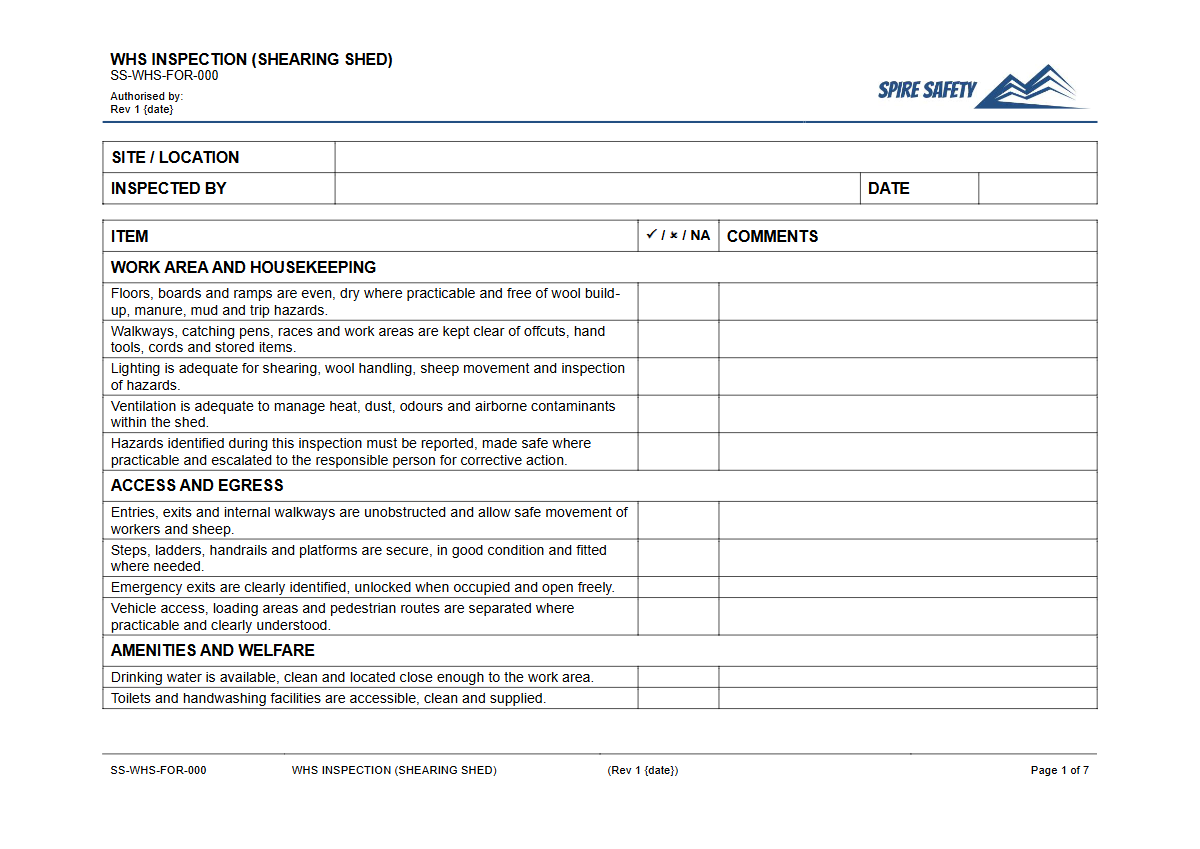
This Free WHS Inspection (Shearing Shed) Template provides a structured starting point for identifying and controlling hazards before they cause injury or illness.
Using this Inspection checklist helps a Person Conducting a Business or Undertaking (PCBU) demonstrate due diligence by proactively managing risks. The template prompts a review of key areas known for causing incidents, including:
- Mechanical Hazards: Guarding on wool presses, grinding machines, and overhead gear.
- Electrical Safety: Condition of cords, outlets, lighting, and RCD (safety switch) testing.
- Slips, Trips, and Falls: Condition of flooring, steps, ramps, and general housekeeping.
- Hazardous Manual Tasks: Ergonomic risks associated with catching and dragging sheep, fleece handling, and operating equipment.
- Biological Hazards: Controls for zoonotic diseases like Q fever, and general hygiene facilities.
- Emergency Preparedness: Accessibility of first aid kits, fire extinguishers, and emergency contact information.
By formalising this process, you create a clear record of your safety management activities. Regular inspections are a fundamental component of any farm safety plan and can be supported by tailored expert WHS consulting services to ensure your approach is comprehensive and effective.
Video walkthrough
How to use the Free WHS Inspection (Shearing Shed) Template
This template is designed to be a practical tool for on-the-ground use. Start by downloading the DOCX file, which can be easily edited to match your specific operational needs.
The PDF version is also provided for quick printing and use.
To conduct the Inspection:
- Customise the Checklist: Walk through your shearing shed and add or remove items on the checklist to reflect the specific plant, equipment, and layout of your facility. A shed with an electric press will have different risks than one with a manual press.
- Involve Your Team: Conduct the inspection with input from shearers, rouseabouts, and anyone else working in the shed. They have direct experience with the equipment and work processes and can provide valuable insights into potential hazards.
- Perform the Inspection: Systematically go through each item on your customised list. Check the condition, record your findings (e.g., 'OK', 'Action Required'), and take photos of any non-compliant or hazardous situations.
- Document and Action: For any issues identified, assign a person responsible for the corrective action and set a clear deadline for completion. Keep the completed inspection record as part of your WHS documentation.
Please note: This document is a template and must be customised to suit the specific layout, plant, equipment, and work processes of your shearing shed. We recommend involving your team in the customisation process to ensure all relevant hazards are covered.
Consistent daily checks on specific items can be managed with dedicated forms, such as our free Pre-Start Checklist (Feed Mixer) Template, which can be adapted for various pieces of farm machinery.
When to use it
The timing and frequency of inspections should be based on risk. A shearing shed inspection is not a one-off event. It should be conducted at several key moments:
- Pre-Season: A thorough inspection must be completed before the shearing team arrives. This ensures the shed and all equipment are safe, clean, and ready for operation.
- During Shearing: Conduct brief weekly or daily checks on critical items, especially if the shearing period is long. This helps identify issues that arise from use, such as damaged equipment or poor housekeeping.
- Post-Incident: If an incident or near miss occurs, a specific inspection should be performed as part of the investigation to identify and rectify the root cause.
- After Major Repairs or Alterations: If new equipment is installed or significant changes are made to the shed, an inspection is needed to ensure no new hazards have been introduced.
Integrating these checks into your schedule helps move beyond simple compliance towards a proactive safety culture. These operational checks can supplement more formal, periodic WHS compliance audits that provide a broader review of your safety systems.
Who should use it
The ultimate responsibility for workplace safety lies with the PCBU, which can be the farm owner, a farm manager, or the shearing contractor. This person should ensure the inspections are completed by a competent individual.
This may be:
- The farm owner or manager.
- A designated farm safety officer or representative.
- The lead shearer or shed overseer.
Regardless of who physically fills out the form, the process should be collaborative. The most effective inspections involve consultation with the workers who use the shed every day.
Their direct feedback is invaluable for identifying practical risks and effective controls. This template serves as a critical tool within a robust WHS management system, helping to formalise procedures and document safety efforts across the entire operation. You can find more templates and checklists to support your system in our free WHS resources library.
Common mistakes
Common mistakes to avoid
- Failing to customise the template to the specific machinery and layout of the shed.
- Performing an inspection before the season but failing to conduct follow-up checks during shearing.
- Not involving the shearers and rouseabouts in the inspection process, missing valuable insights.
- Identifying hazards but failing to document, assign, and track corrective actions through to completion.
Legal references
Legal considerations
The following legal requirements may be relevant to this type of work.
- Work Health and Safety Act (Harmonised) — Provides the primary duties for protecting workers and other people from work health and safety risks.
- Work Health and Safety Regulations (Harmonised) — Sets out requirements supporting the management of workplace hazards and risks.
The following codes may be relevant to this type of work.
- Managing WHS Risks Code of Practice — Provides practical guidance on identifying hazards, assessing risks and applying effective controls.
- Work Health and Safety Consultation, Cooperation and Coordination Code of Practice — Provides practical guidance on consulting workers and coordinating with other duty holders.
- Managing the Work Environment and Facilities Code of Practice — Provides practical guidance on safe work environments, workplace facilities and related controls.
Did you know
Noise Hazard
The noise inside a shearing shed can easily exceed 85 decibels (dB), the level at which hearing protection becomes mandatory under Australian WHS regulations. A single shearing handpiece can operate at over 100 dB.
Manual Task Risk
Catching and dragging a single sheep is a hazardous manual task. A shearer may perform this action over 100 times a day, creating significant cumulative risk for musculoskeletal injuries, particularly to the back and shoulders.
FAQ
Frequently asked questions
01What are the biggest WHS risks in a shearing shed?
02How often should a shearing shed be inspected for safety?
03Is this shearing shed inspection template suitable for all states in Australia?
04Can I use this inspection template for other farm buildings?
Share this resource
Free WHS Inspection (Shearing Shed) Template
Browse Categories
How To Use It
- 1Download and open in Word or PDF.
- 2Replace the placeholders with your business details.
- 3Get it reviewed by a WHS specialist before rollout.
Need it customised?
Our WHS consultants can adapt this template to your site, run a gap analysis, or audit what you already have in place.
Book a Free Consultation WHS consulting servicesor call 1300 156 382