
Free WHS Inspection (School) Template
Download our Free WHS Inspection (School) Template to systematically identify and manage hazards in educational environments.
Free WHS Inspection (School) Template
DOCX • 128 KB + PDF
Updated Oct 2026
No signup required
Purpose of the Free WHS Inspection (School) Template
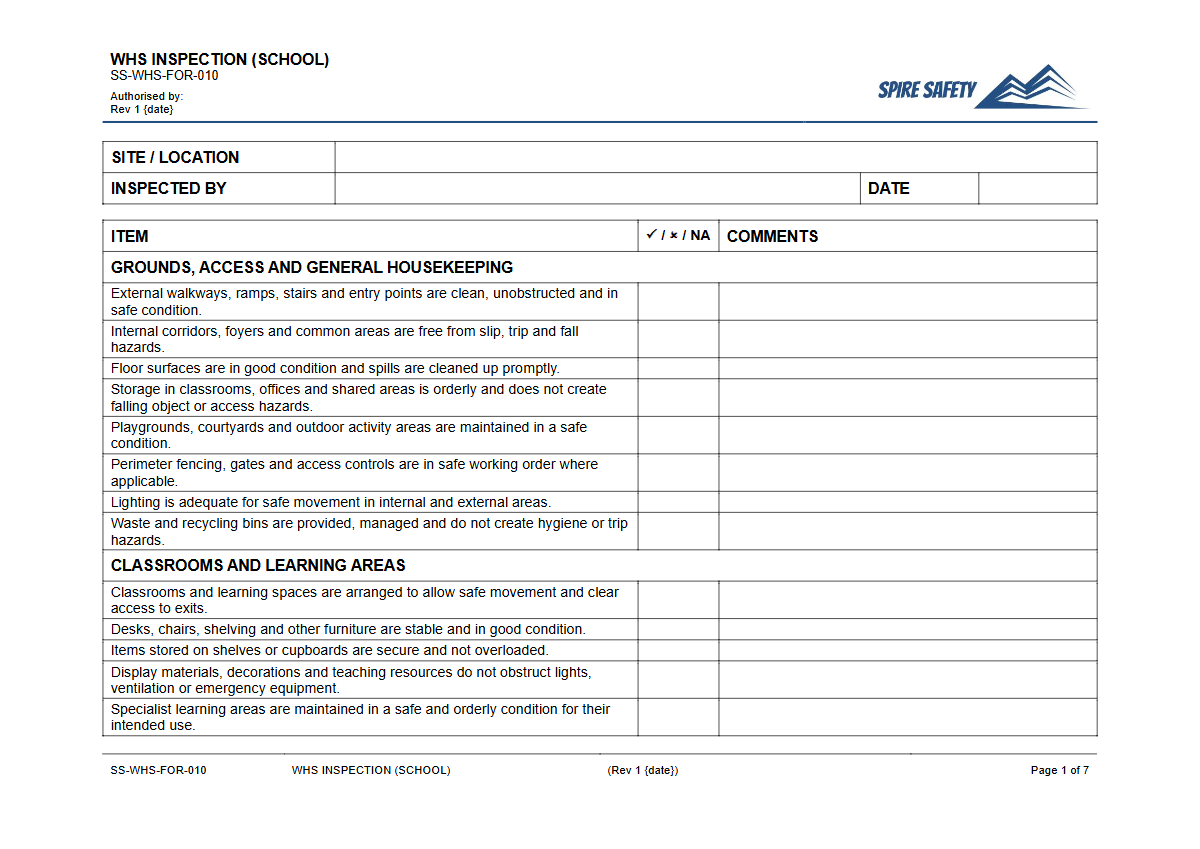
Regular safety inspections are a fundamental part of managing Work Health and Safety (WHS) in any Australian school. This Free WHS Inspection (School) Template provides a structured starting point for systematically identifying, assessing, and documenting potential hazards across your educational environment.
Using a formal checklist helps ensure that no area is overlooked, from classrooms and playgrounds to administrative offices and maintenance sheds. It supports a proactive approach to safety, helping your school meet its duty of care to students, staff, and visitors.
The template is designed to be a practical tool that helps formalise your inspection process. It prompts users to look at common risk areas and provides a clear format for recording findings, recommending corrective actions, and assigning responsibility.
Adopting this structured approach is a key component of effective risk management and forms an important part of broader WHS management systems, demonstrating a clear commitment to maintaining a safe and healthy workplace.
Video walkthrough
How to use the Free WHS Inspection (School) Template
This document is provided as a fully editable DOCX file, with a PDF version also available for easy printing. To get the most value from this resource, follow these steps:
- Download and Customise: Download the template and open the DOCX file. Add your school’s name, logo, and specific inspection details.
- Walk Through and Adapt: Review the checklist items and adapt them to your school’s unique environment. Add sections for specialised areas like science labs, design and technology workshops, swimming pools, or agricultural plots. Remove any items that are not relevant.
- Conduct the Inspection: Use the customised checklist to perform a physical walkthrough of the school premises. Involve relevant personnel, such as the Health and Safety Representative (HSR), department heads, or maintenance staff.
- Document and Report: Clearly record all observations, noting any hazards or non-conformances. Use the comment fields to provide detail and take photos where necessary.
- Assign Corrective Actions: For each identified hazard, define a clear corrective action, assign it to a responsible person, and set a realistic due date for completion.
Please note: This template provides a foundational structure. We recommend you customise it thoroughly to address the specific hazards, equipment, and operational areas unique to your school environment.
What to look for during a school inspection
A thorough school inspection should cover all areas accessible to students, staff, and visitors. The checklist is categorised to guide you, but key focus areas should include:
- Classrooms and Learning Areas: Check for trip hazards (cords, bags), clear egress, appropriate furniture condition, secure shelving, and electrical safety.
- Playgrounds and Outdoor Areas: Inspect equipment for damage or wear, check soft-fall surfaces, ensure fencing is secure, and look for environmental hazards like trip roots or poor drainage.
- Sports Facilities: Examine goalposts, playing surfaces, and storage of sports equipment. Ensure procedures are in place for equipment use and maintenance.
- Science and Technology Rooms: Verify chemical storage, check functionality of safety equipment (eyewash stations, fume cupboards), and ensure machine guarding is in place. Specialised rooms may also require specific checks, like a daily pre-start check for a blender in a home economics classroom.
- Staff Rooms and Offices: Assess ergonomic setups, electrical equipment testing and tagging, and general housekeeping standards.
- Amenities and First Aid: Check that toilets and change rooms are clean and well-maintained. Ensure first aid kits are stocked and accessible, and that rooms for students with special needs are equipped appropriately. Some schools may benefit from a formal pre-start checklist for patient hoists in these areas.
- Grounds and Maintenance: Review pathways for trip hazards, assess lighting, and check the condition of maintenance equipment. Procedures should include items like a pre-start checklist for a lawn tractor before use.
- Access and Egress: Ensure emergency exits are clear and functional, and that access control systems are working correctly. This includes checking things like a pre-start checklist for a boom gate in the car park.
When to use it
Workplace inspections should be conducted on a regular, scheduled basis to proactively identify issues. A comprehensive site-wide inspection using this template is recommended at least once per term or semester.
Additionally, inspections should be triggered by specific events, such as after a significant incident or near miss, before the introduction of new equipment or facilities, or following major changes to the school layout or operations. Regular inspections form part of the evidence base for larger, less frequent WHS compliance audits.
Who should use it
This inspection template is designed for use by anyone with responsibility for health and safety within a school. This can include the Principal, Deputy Principal, Business Manager, a dedicated WHS Officer or Coordinator, or the Facilities Manager.
To ensure a comprehensive review, the inspection process should ideally be a collaborative effort involving Health and Safety Representatives (HSRs) and other relevant staff members who have direct knowledge of the specific work areas being inspected. Their input is invaluable for identifying hazards that may not be obvious during a simple walkthrough. You can find more templates and checklists like this one in our free WHS resources library.
Common mistakes
Common mistakes to avoid
- Failing to customise the template for the school's specific environment, equipment, and hazards.
- Conducting the inspection as a 'tick-and-flick' exercise without genuine observation and engagement.
- Not following up on identified hazards with documented corrective actions and completion dates.
- Forgetting to involve staff and Health and Safety Representatives (HSRs) in the inspection process.
Legal references
Legal considerations
The following legal requirements may be relevant to this type of work.
- Work Health and Safety Act (Harmonised) — Provides the primary duties for protecting workers and other people from work health and safety risks.
- Work Health and Safety Regulations (Harmonised) — Sets out requirements supporting the management of workplace hazards and risks.
The following codes may be relevant to this type of work.
- Managing WHS Risks Code of Practice — Provides practical guidance on identifying hazards, assessing risks and applying effective controls.
- Work Health and Safety Consultation, Cooperation and Coordination Code of Practice — Provides practical guidance on consulting workers and coordinating with other duty holders.
- Managing the Work Environment and Facilities Code of Practice — Provides practical guidance on safe work environments, workplace facilities and related controls.
Did you know
A Leading Cause of Injury
According to Safe Work Australia, slips, trips, and falls are a leading cause of serious injury claims in the Education and Training industry, highlighting the importance of inspecting floors, pathways, and housekeeping.
FAQ
Frequently asked questions
01What areas should a school WHS inspection cover?
02How often should schools conduct WHS inspections?
03Who is responsible for conducting safety inspections in a school?
04Is this template suitable for TAFEs or universities?
Share this resource
Free WHS Inspection (School) Template
Browse Categories
How To Use It
- 1Download and open in Word or PDF.
- 2Replace the placeholders with your business details.
- 3Get it reviewed by a WHS specialist before rollout.
Need it customised?
Our WHS consultants can adapt this template to your site, run a gap analysis, or audit what you already have in place.
Book a Free Consultation WHS consulting servicesor call 1300 156 382