
Free WHS Inspection (School Grounds) Template
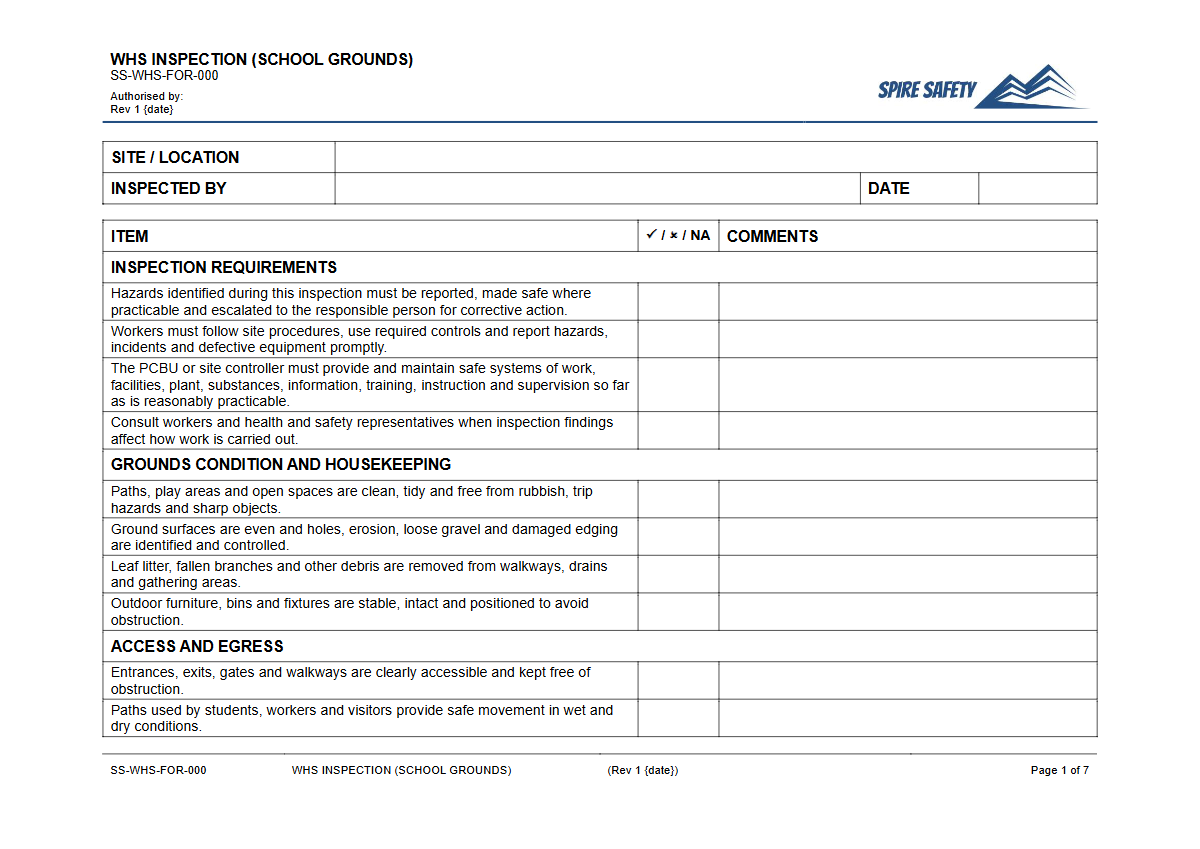
Download our free WHS Inspection (School Grounds) Template to formalise safety checks of playgrounds, ovals, and buildings. A structured starting point.
Free WHS Inspection (School Grounds) Template
DOCX • 128 KB + PDF
Updated Oct 2026
No signup required
Purpose of the Free WHS Inspection (School Grounds) Template
A school is a dynamic and complex environment, acting as both a workplace for staff and a place of learning and recreation for students. Managing work health and safety requires a systematic approach to identifying and controlling the unique hazards present.
This Free WHS Inspection (School Grounds) Template provides a structured starting point for systematically checking key areas, from playgrounds and sports fields to car parks and building exteriors. Using a formal checklist helps an organisation demonstrate due diligence and maintain a proactive approach to risk management, ensuring potential issues are identified and addressed before they can cause an incident.
The primary purpose of this inspection template is to guide a competent person through a thorough examination of the physical environment. It prompts the user to look for hazards that could harm staff, students, or visitors, such as damaged playground equipment, trip hazards on pathways, inadequate lighting, or security vulnerabilities.
It forms a critical part of a broader safety management system, providing tangible records that safety checks are being completed. Thorough inspections are a key part of maintaining a safe physical and psychosocial environment.
Video walkthrough
How to use the Free WHS Inspection (School Grounds) Template
This resource is available in two formats. The DOCX file is fully editable, allowing you to tailor the checklist to the specific layout, features, and equipment at your school.
The PDF version is ready for immediate printing and use. It is critical to recognise that this document is a general template; you must adapt it to cover all relevant areas and hazards unique to your site.
A one-size-fits-all approach is rarely effective for WHS. We recommend having a competent person review and approve the customised document before its first use.
To implement it effectively, follow these steps:
- Customise: Add, remove, or modify sections to reflect your school’s specific environment. For example, you may need to add sections for swimming pools, science laboratories, trade training centres, or specific outdoor equipment.
- Schedule: Determine a regular inspection frequency (e.g., once per term) and assign responsibility to a competent person or team.
- Conduct: Walk the grounds with the checklist, carefully examining each item. Record any non-conformances, potential hazards, or maintenance requirements in detail.
- Action: Assign corrective actions for every issue identified. Document who is responsible for the action and set a clear deadline for completion.
- Review: Track all corrective actions to ensure they are completed. The findings should be reported to the WHS committee or school leadership team.
Inspections should also cover any plant and equipment used for groundskeeping. For daily checks on specific machinery, you can supplement this general inspection with our Free Pre-Start Checklist (Lawn Tractor) Template.
When to use it
Regular, scheduled inspections are fundamental, but additional checks are often necessary. A comprehensive school grounds inspection should be conducted at least once per school term. However, it should also be performed:
- Following severe weather events like storms or high winds, which can create new hazards like fallen branches or structural damage.
- Before major school events such as a fete, sports carnival, or open day, to ensure the grounds are safe for a large number of visitors.
- After any construction or significant maintenance work has been completed on the grounds.
- In response to an incident, accident, or near miss, to help identify contributing environmental factors.
Specific areas like car parks and entry points may require more frequent checks, especially if they have automated systems. A free Pre-Start Checklist (Boom Gate) Template can be useful for daily verification of such equipment.
Who should use it
This template is designed for use by any person responsible for WHS and facilities management within a school setting. This includes:
- School Principals and Business Managers
- WHS Committee Members or Health and Safety Representatives (HSRs)
- Facilities and Maintenance Managers
- Groundskeeping Staff
The inspection should be carried out by individuals who are familiar with the site and have been trained to recognise potential hazards. Involving groundskeeping staff is highly beneficial, as they have detailed, day-to-day knowledge of the environment and equipment.
The documented results of these inspections provide valuable data that feeds into your overarching WHS management systems, enabling continuous improvement.
The findings from this checklist are crucial for ongoing risk management. For example, if inspections of the school canteen consistently identify issues with temperature control, it may indicate a need for more robust procedures, such as those outlined in a Free Pre-Start Checklist (Freezer) Template. Regularly verifying that these inspections are being completed and are effective is a core component of a healthy safety culture.
The effectiveness of your inspection program can be verified through a systematic review process. Periodic reviews ensure that the checks are not just a paper exercise but are leading to tangible safety improvements, a process that can be formalised through WHS compliance auditing.
For more tools to help manage workplace safety, browse our complete free WHS resources library, which contains a wide range of templates, checklists, and guides.
Common mistakes
Common mistakes to avoid
- Failing to customise the template to cover hazards specific to the school site (e.g., swimming pools, science labs).
- Treating the inspection as a 'tick and flick' exercise without documenting and implementing corrective actions for identified issues.
- Not assigning clear responsibility and deadlines for completing required repairs or actions.
- Forgetting to review and update the inspection checklist after an incident or when changes occur on the school grounds.
Legal references
Legal considerations
The following legal requirements may be relevant to this type of work.
- Work Health and Safety Act (Harmonised) — Provides the primary duties for protecting workers and other people from work health and safety risks.
- Work Health and Safety Regulations (Harmonised) — Sets out requirements supporting the management of workplace hazards and risks.
The following codes may be relevant to this type of work.
- Managing WHS Risks Code of Practice — Provides practical guidance on identifying hazards, assessing risks and applying effective controls.
- Work Health and Safety Consultation, Cooperation and Coordination Code of Practice — Provides practical guidance on consulting workers and coordinating with other duty holders.
- Managing the Work Environment and Facilities Code of Practice — Provides practical guidance on safe work environments, workplace facilities and related controls.
Did you know
Slips, Trips, and Falls
Slips, trips, and falls are a leading cause of serious injury claims in Australia. Regular grounds inspections are a key control measure for identifying and fixing common hazards like uneven paths, spilt liquids, and poor lighting.
FAQ
Frequently asked questions
01Is this school grounds inspection checklist compliant with Australian WHS law?
02How often should we inspect our school grounds?
03What is the difference between an inspection and an audit?
04Who is ultimately responsible for actioning items from the inspection?
Share this resource
Free WHS Inspection (School Grounds) Template
Browse Categories
How To Use It
- 1Download and open in Word or PDF.
- 2Replace the placeholders with your business details.
- 3Get it reviewed by a WHS specialist before rollout.
Need it customised?
Our WHS consultants can adapt this template to your site, run a gap analysis, or audit what you already have in place.
Book a Free Consultation WHS consulting servicesor call 1300 156 382