
Free WHS Inspection (Retail Store) Template
Download our free WHS Inspection (Retail Store) Template to formalise your safety checks. This structured DOCX & PDF helps identify retail hazards.
Free WHS Inspection (Retail Store) Template
DOCX • 127 KB + PDF
Updated Oct 2026
No signup required
Purpose of the Free WHS Inspection (Retail Store) Template
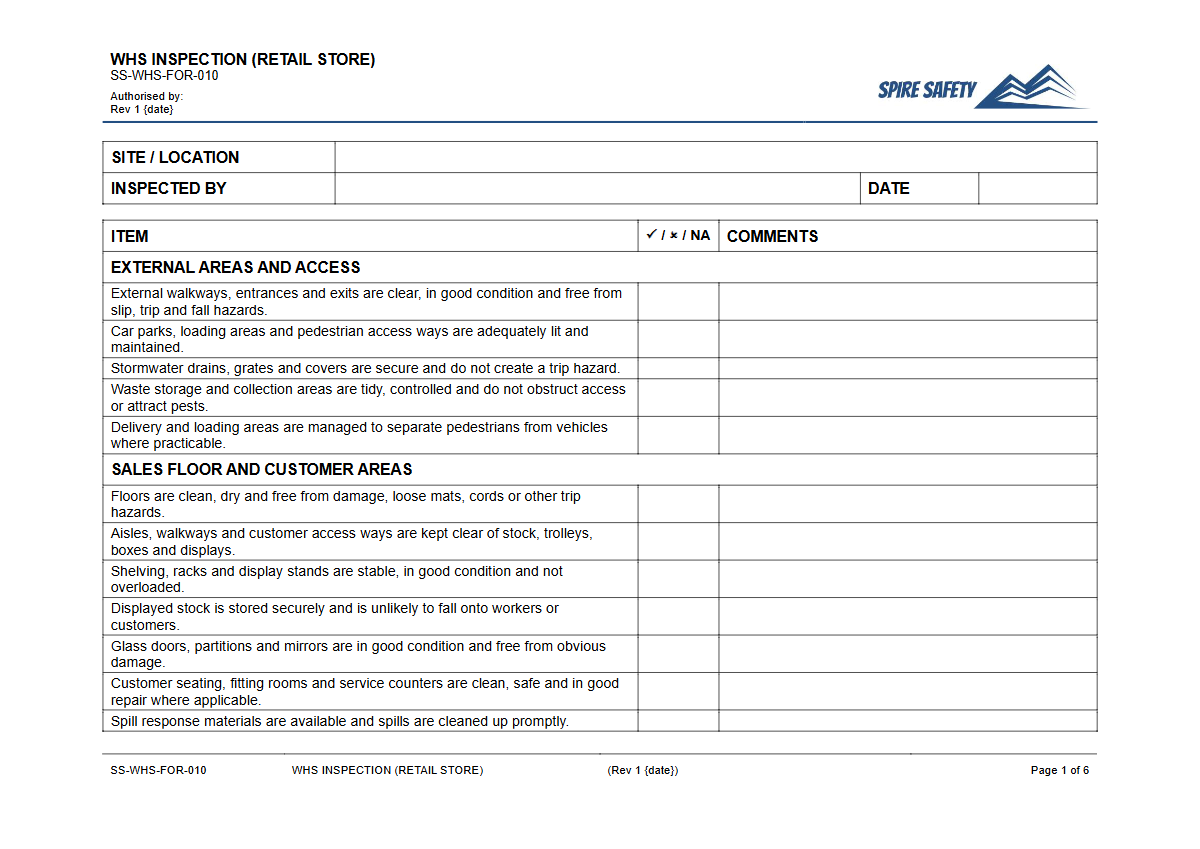
Maintaining a safe retail environment is vital for protecting staff, customers, and contractors from harm. Our Free WHS Inspection (Retail Store) Template provides a structured starting point for systematically identifying and controlling hazards specific to retail operations.
This downloadable document, available in DOCX and PDF formats, helps you formalise your safety walks, ensuring key risk areas are regularly checked.
Regular inspections are a cornerstone of effective WHS management systems, helping to prevent incidents before they occur. This template is designed to prompt a thorough review of your workplace, from the shop floor to the stockroom, covering common retail hazards such as slips and trips, manual handling, storage, electrical equipment, and emergency preparedness.
It serves as a practical tool for proactive risk management, aligned with Australian WHS principles.
Video walkthrough
How to use the Free WHS Inspection (Retail Store) Template
This Inspection template is designed to be a comprehensive guide. It prompts users to walk through various areas of the retail environment and assess them against common safety criteria.
For each item, you can note whether it is compliant, identify any issues or hazards, and record the corrective actions required, including who is responsible and the due date.
Important: This document is a template, not a finished procedure. Every retail space is unique, and it is essential that you customise this document to reflect the specific hazards and operational realities of your workplace.
We recommend reviewing all checklist items and adding, removing, or modifying them to suit your store's layout, the equipment you use, and the tasks your team performs.
For instance, if your store includes a large cold storage area for perishable goods, you may want to integrate specific checks from our Free Pre-Start Checklist (Freezer) Template into your regular inspection.
When to use it
The frequency of inspections depends on the level of risk and the nature of your retail operations. As a general guide, formal inspections should be conducted at regular, scheduled intervals, such as weekly or monthly.
This creates a consistent record of your safety performance over time.
You should also conduct inspections:
- After an incident, accident, or near miss to identify contributing factors.
- When introducing new equipment, products, or store layouts.
- When work processes or tasks change.
- Following concerns raised by staff or customers.
Who should use it
Workplace inspections can be carried out by various personnel, depending on your business structure. This typically includes:
- Store Managers or Department Supervisors
- Health and Safety Representatives (HSRs)
- Members of a Health and Safety Committee (HSC)
- Business owners or senior leadership
It is best practice to involve workers directly in the inspection process. They have first-hand knowledge of the tasks and the associated risks. If your store uses specialised equipment for moving stock, like a back-of-house hoist, the person operating that equipment should be involved in inspecting it, similar to the process outlined in our Free Pre-Start Checklist (Electric Hoist) Template.
Key Areas to Inspect in a Retail Environment
This template guides you through several critical zones and risk categories, including:
- Floors & Aisles: Checking for slip, trip, and fall hazards like spills, debris, and uneven surfaces.
- Shelving & Racking: Ensuring units are stable, not overloaded, and stock is secured.
- Manual Tasks: Observing staff lifting, carrying, and moving stock to identify ergonomic risks.
- Storage & Stockrooms: Assessing organisation, lighting, and access.
- Emergency & Fire Safety: Verifying that fire extinguishers are accessible, exit signs are lit, and emergency exits are clear.
- Electrical Safety: Looking for damaged cords, overloaded power boards, and ensuring equipment has been tested and tagged.
For stores with car parks or loading docks, it's also important to check access control systems like those covered in our Free Pre-Start Checklist (Boom Gate) Template. A formal inspection process can also prepare your business for a more comprehensive WHS compliance auditing program. By implementing a regular inspection schedule, you demonstrate a commitment to safety and continuous improvement. Find more tools to support your safety program in our complete free WHS resources library.
Common mistakes
Common mistakes to avoid
- Using a generic checklist without customising it for the specific store layout and equipment.
- Failing to assign responsibility and deadlines for corrective actions, meaning hazards are identified but not fixed.
- Not involving frontline retail workers, who have the best understanding of day-to-day risks.
- Completing the inspection as a 'tick-and-flick' exercise without genuine observation and assessment.
Legal references
Legal considerations
The following legal requirements may be relevant to this type of work.
- Work Health and Safety Act (Harmonised) — Provides the primary duties for protecting workers and other people from work health and safety risks.
- Work Health and Safety Regulations (Harmonised) — Sets out requirements supporting the management of workplace hazards and risks.
The following codes may be relevant to this type of work.
- Managing WHS Risks Code of Practice — Provides practical guidance on identifying hazards, assessing risks and applying effective controls.
- Work Health and Safety Consultation, Cooperation and Coordination Code of Practice — Provides practical guidance on consulting workers and coordinating with other duty holders.
- Managing the Work Environment and Facilities Code of Practice — Provides practical guidance on safe work environments, workplace facilities and related controls.
Did you know
A Common Hazard
Slips, trips, and falls are one of the leading causes of serious injury in the Australian retail sector, often resulting from spills, cluttered floors, and inadequate cleaning.
Manual Tasks Risk
According to Safe Work Australia, body stressing, which includes hazardous manual tasks like lifting and moving stock, is a major mechanism of injury in the retail trade.
FAQ
Frequently asked questions
01What is the purpose of a retail store WHS inspection?
02How often should I conduct a WHS inspection in my retail store?
03Who is responsible for conducting safety inspections in a retail environment?
04What are the most common hazards found in a retail store?
Share this resource
Free WHS Inspection (Retail Store) Template
Browse Categories
How To Use It
- 1Download and open in Word or PDF.
- 2Replace the placeholders with your business details.
- 3Get it reviewed by a WHS specialist before rollout.
Need it customised?
Our WHS consultants can adapt this template to your site, run a gap analysis, or audit what you already have in place.
Book a Free Consultation WHS consulting servicesor call 1300 156 382