
Free WHS Inspection (Recycling Plant) Template
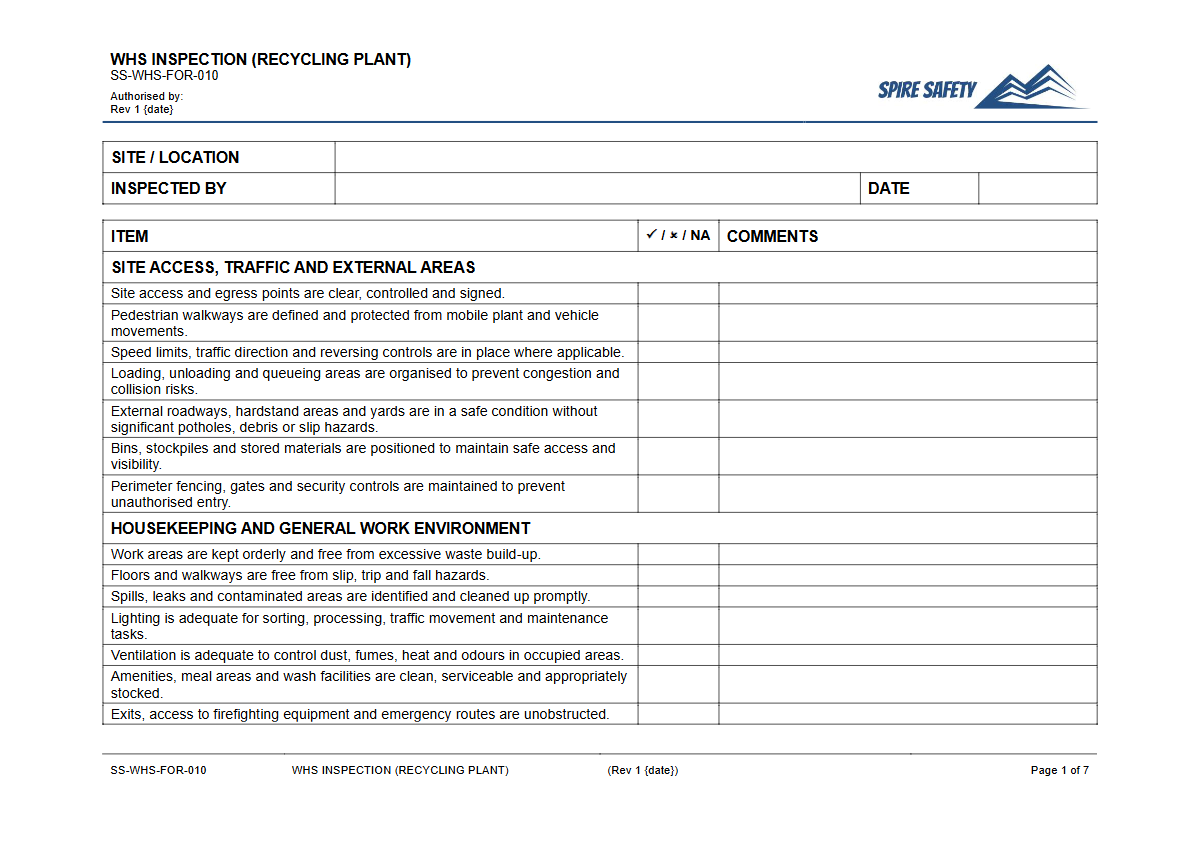
Download our Free WHS Inspection (Recycling Plant) Template to methodically identify hazards in your facility.
Free WHS Inspection (Recycling Plant) Template
DOCX • 128 KB + PDF
Updated Oct 2026
No signup required
Purpose of the Free WHS Inspection (Recycling Plant) Template
Recycling plants present a unique and complex range of work health and safety risks, from heavy mobile plant and fixed machinery to hazardous substances and high-risk manual tasks. This Free WHS Inspection (Recycling Plant) Template provides a structured starting point for systematically inspecting your worksite to identify potential hazards before they cause harm.
It is designed to guide supervisors, managers, and safety personnel through key areas of a typical recycling facility, prompting checks on traffic management, machine guarding, emergency procedures, and chemical handling.
Regular inspections are a fundamental part of any safety management system, demonstrating proactive risk management and a commitment to worker wellbeing. Using a formal checklist helps ensure consistency and thoroughness, creating a documented record of the site's condition at a specific point in time.
This process is crucial for identifying deteriorating conditions or unsafe work practices that may have developed since a formal Skidsteer Bobcat Risk Assessment was last conducted. This template helps you move beyond ad-hoc checks towards a more formal, documented safety process.
Video walkthrough
How to use the Free WHS Inspection (Recycling Plant) Template
This template is available in both DOCX and PDF formats for your convenience. The DOCX file is fully editable, allowing you to tailor the checklist to the specific layout, machinery, and processes of your recycling operation.
It is essential that you customise this document. No two recycling plants are identical, and your inspection checklist must reflect the unique hazards present in your workplace.
We have included common inspection points for areas like balers, conveyors, sorting stations, and vehicle-operating areas, but you must add, remove, and modify sections to suit your site.
To use the template effectively, follow these steps:
- Download the DOCX version.
- Walk through your facility and compare the template's sections to your operational areas.
- Add specific checkpoints for each piece of major plant and equipment you use (e.g., "Check guarding on Baler #2," "Inspect integrity of sorting line A conveyor belt").
- Incorporate site-specific traffic management rules and high-risk areas.
- Consult with workers and Health and Safety Representatives (HSRs) to ensure the checklist is practical and comprehensive.
- Once customised, use the checklist to conduct your inspections, documenting any identified hazards, risks, or non-conformances.
- Assign corrective actions with clear responsibilities and due dates for every issue you find.
Integrating this process into your overall safety framework is key. A well-designed checklist is one component of a robust system, which can be strengthened through services like WHS management systems development to ensure all safety activities are connected and effective.
When to use it
The frequency of workplace inspections depends on the level of risk and the nature of the work. For a dynamic environment like a recycling plant, a schedule of inspections is recommended:
- Weekly or Fortnightly: A general workplace inspection covering all key operational areas.
- Following an Incident: A targeted inspection of the area or equipment involved to identify contributing factors.
- After introducing new machinery: To ensure it has been installed correctly and all controls are effective, complementing documents like an Elevated Work Platform Risk Assessment for access equipment.
- Before high-risk work: Such as scheduled major maintenance shutdowns.
Documenting these inspections provides valuable data for your safety meetings and management reviews. Consistent checks, such as those guided by a Spill Prevention and Response Toolbox Talk, can highlight recurring issues that may require a more in-depth investigation or system-level change.
Who should use it
Workplace inspections should be conducted by competent personnel with a thorough understanding of the facility's operations and WHS principles. This typically includes:
- Site Supervisors and Line Managers: They have direct responsibility for the safety of their teams and work areas.
- WHS Officers or Advisors: They provide expert guidance and can help ensure the inspection process is robust.
- Health and Safety Representatives (HSRs): Involving HSRs is a critical part of worker consultation and helps build a positive safety culture.
- Maintenance Personnel: Their technical expertise is invaluable for inspecting the mechanical and electrical integrity of plant.
For organisations seeking an independent evaluation of their safety performance against legal requirements and best practice, engaging external experts for WHS compliance auditing provides an objective and comprehensive assessment. You can find many more helpful documents like this one in our free WHS resources library to support your safety team.
Common mistakes
Common mistakes to avoid
- Using a generic checklist without customising it for your specific site and machinery.
- Failing to assign and track corrective actions for identified hazards.
- Treating the inspection as a 'tick-and-flick' paper exercise without genuine observation.
- Not involving workers or HSRs in the inspection process.
Legal references
Legal considerations
The following legal requirements may be relevant to this type of work.
- Work Health and Safety Act (Harmonised) — Provides the primary duties for protecting workers and other people from work health and safety risks.
- Work Health and Safety Regulations (Harmonised) — Sets out requirements supporting the management of workplace hazards and risks.
The following codes may be relevant to this type of work.
- Managing WHS Risks Code of Practice — Provides practical guidance on identifying hazards, assessing risks and applying effective controls.
- Work Health and Safety Consultation, Cooperation and Coordination Code of Practice — Provides practical guidance on consulting workers and coordinating with other duty holders.
- Managing the Work Environment and Facilities Code of Practice — Provides practical guidance on safe work environments, workplace facilities and related controls.
Did you know
A High-Risk Industry
According to Safe Work Australia, the Waste Collection, Treatment and Disposal Services industry has one of the highest rates of serious workers' compensation claims, significantly higher than the average for all industries.
Mobile Plant Hazards
Being hit by moving vehicles is one of the most common causes of fatalities and serious injuries in the waste and recycling industry. Effective traffic management plans are a critical control.
FAQ
Frequently asked questions
01What is the difference between an inspection and a risk assessment?
02How often should I conduct a WHS inspection at my recycling plant?
03Is this template suitable for e-waste recycling?
04Can I use this template for an incident investigation?
Share this resource
Free WHS Inspection (Recycling Plant) Template
Browse Categories
How To Use It
- 1Download and open in Word or PDF.
- 2Replace the placeholders with your business details.
- 3Get it reviewed by a WHS specialist before rollout.
Need it customised?
Our WHS consultants can adapt this template to your site, run a gap analysis, or audit what you already have in place.
Book a Free Consultation WHS consulting servicesor call 1300 156 382