
Free WHS Inspection (Rail Depot) Template
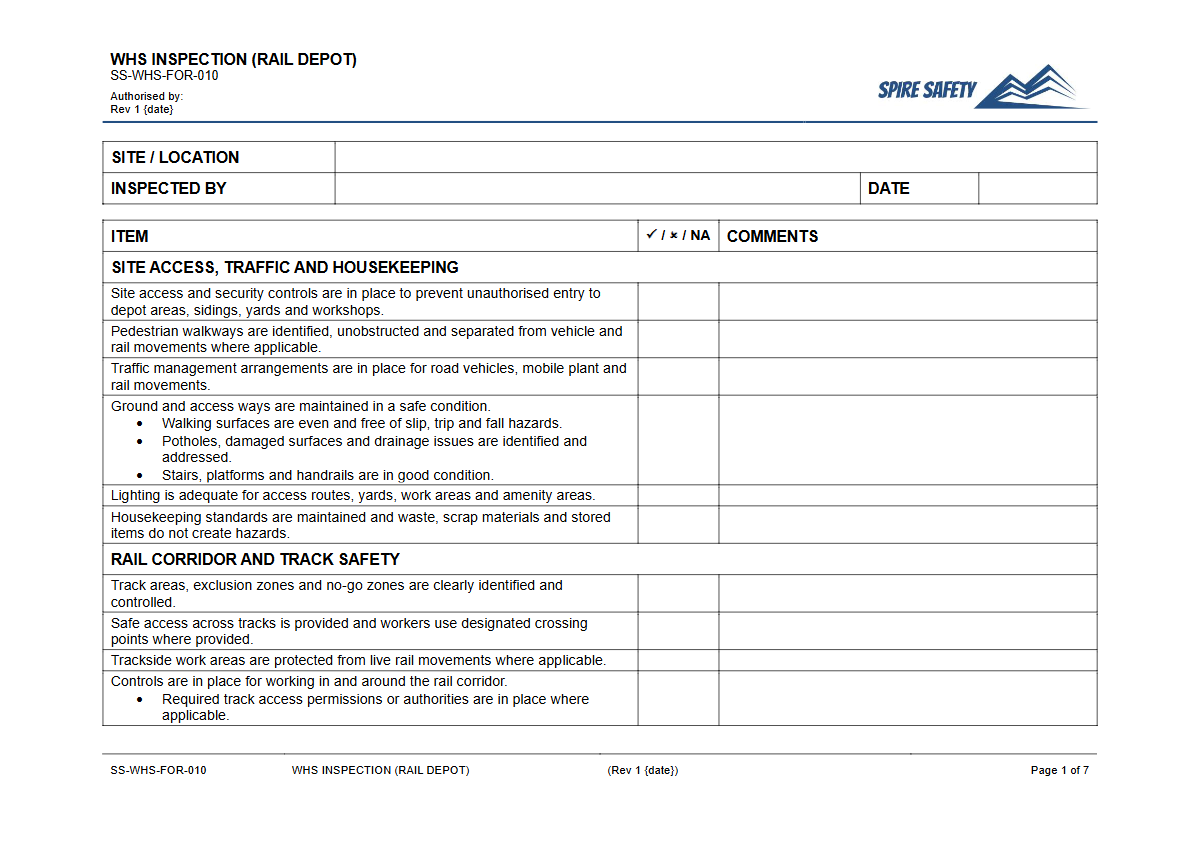
Enhance safety in your rail depot with our WHS Inspection Template. This structured document helps identify hazards like moving stock and electrical risks.
Free WHS Inspection (Rail Depot) Template
DOCX • 128 KB + PDF
Updated Oct 2026
No signup required
Purpose of the Free WHS Inspection (Rail Depot) Template
Rail depots are high-risk environments with a unique combination of hazards, from moving rolling stock and shunting operations to high-voltage equipment and vehicle traffic. A systematic approach to safety is not just best practice; it's essential for protecting workers and ensuring operational continuity.
This Free WHS Inspection (Rail Depot) Template provides a structured starting point for organisations to formalise their safety checks, identify potential hazards, and document corrective actions. Regular inspections are a key component of a proactive safety culture, helping you manage risks before they lead to incidents.
Using a standardised checklist ensures that inspections are thorough and consistent. It prompts inspectors to look at specific areas and known risk factors, such as track conditions, signalling equipment, pedestrian walkways, lighting, and emergency procedures.
The document serves as a record of your organisation's due diligence in managing risks associated with depot operations. This includes common hazards found at access points, which can be managed with tools like a pre-start checklist for boom gates to ensure they function correctly.
Video walkthrough
How to use the Free WHS Inspection (Rail Depot) Template
This template is designed to be a practical tool for your safety personnel. After downloading the DOCX or PDF file, you should begin by adapting it to the specific layout, equipment, and operations of your rail depot.
The document includes sections covering general site conditions, buildings and structures, plant and equipment, rolling stock areas, and worker facilities. Simply walk through the designated areas, checking each item on the list and noting any non-conformances, hazards, or opportunities for improvement.
Be sure to record detailed comments and take photos where necessary to support your findings.
Important: This template is a guide and must be customised to your specific workplace. Every rail depot is different, and what works for one may not be sufficient for another.
We strongly recommend you consult with your workers and review your site-specific risk assessments to add, remove, or modify checklist items to ensure they are relevant and comprehensive for your operations. The goal is to integrate this inspection process into your broader formal WHS management systems.
Once the inspection is complete, the findings should be documented and communicated to the relevant managers or supervisors. A crucial step is assigning responsibility and deadlines for implementing corrective actions to control the identified risks.
In workshops or maintenance areas, this may involve checks on specific machinery, similar to using an electric hoist pre-start checklist before use.
When to use it
The frequency of rail depot inspections should be determined by a risk-based approach. High-risk areas, such as active rail lines, shunting yards, and refuelling stations, may require daily or weekly inspections.
Lower-risk areas, like administrative offices or car parks, might be inspected on a monthly or quarterly basis. A schedule should be established and followed consistently.
Beyond routine scheduling, this Inspection template should also be used:
- After an incident, accident, or near-miss to identify contributing factors.
- Before and after significant changes in operations, such as the introduction of new rolling stock, equipment, or work procedures.
- When new hazards are identified through worker consultation or hazard reporting.
- As part of periodic safety reviews and formal WHS compliance auditing activities.
Who should use it
This template is designed for use by competent personnel with a thorough understanding of both WHS principles and rail depot operations. This may include:
- WHS Managers or Officers
- Supervisors and Team Leaders
- Members of the Health and Safety Committee (HSC)
- Maintenance Managers
- Operations Managers
Effective inspections often involve a team approach, combining the operational knowledge of supervisors with the safety expertise of WHS professionals. The responsibility for ensuring inspections are completed and that corrective actions are implemented ultimately rests with the PCBU (Person Conducting a Business or Undertaking) and their management team. This responsibility extends to all facilities within the depot, including ancillary areas like staff kitchens, which may require specific checks like a checklist for commercial freezers.
For more tools to support your safety management system, explore our complete free WHS resources library, which includes a wide range of templates, checklists, and guides.
Common mistakes
Common mistakes to avoid
- Failing to customise the template for specific depot layouts, rolling stock, and local operations.
- "Pencil-whipping" the checklist from a desk without physically verifying each item in the field.
- Not assigning clear responsibility and deadlines for implementing corrective actions.
- Neglecting to review and update the inspection checklist after an incident or change in work practices.
Legal references
Legal considerations
The following legal requirements may be relevant to this type of work.
- Work Health and Safety Act (Harmonised) — Provides the primary duties for protecting workers and other people from work health and safety risks.
- Work Health and Safety Regulations (Harmonised) — Sets out requirements supporting the management of workplace hazards and risks.
The following codes may be relevant to this type of work.
- Managing WHS Risks Code of Practice — Provides practical guidance on identifying hazards, assessing risks and applying effective controls.
- Work Health and Safety Consultation, Cooperation and Coordination Code of Practice — Provides practical guidance on consulting workers and coordinating with other duty holders.
- Managing the Work Environment and Facilities Code of Practice — Provides practical guidance on safe work environments, workplace facilities and related controls.
Did you know
Slips, Trips and Falls
Slips, trips, and falls are a leading cause of injury in rail environments, often due to uneven surfaces, spilled substances like oil or grease, and poor housekeeping in depots and yards.
National Rail Safety Regulator
In Australia, rail safety is co-regulated by the Office of the National Rail Safety Regulator (ONRSR) and state bodies, which work with operators to supports your compliance efforts with national safety laws and standards.
FAQ
Frequently asked questions
01What is the difference between a workplace inspection and an audit in a rail depot?
02How often should rail depot WHS inspections be conducted?
03Can this template be used for a Safe Work Method Statement (SWMS)?
04Who is responsible for fixing hazards found during a rail depot inspection?
Share this resource
Free WHS Inspection (Rail Depot) Template
Browse Categories
How To Use It
- 1Download and open in Word or PDF.
- 2Replace the placeholders with your business details.
- 3Get it reviewed by a WHS specialist before rollout.
Need it customised?
Our WHS consultants can adapt this template to your site, run a gap analysis, or audit what you already have in place.
Book a Free Consultation WHS consulting servicesor call 1300 156 382