
Free WHS Inspection (Pub) Template
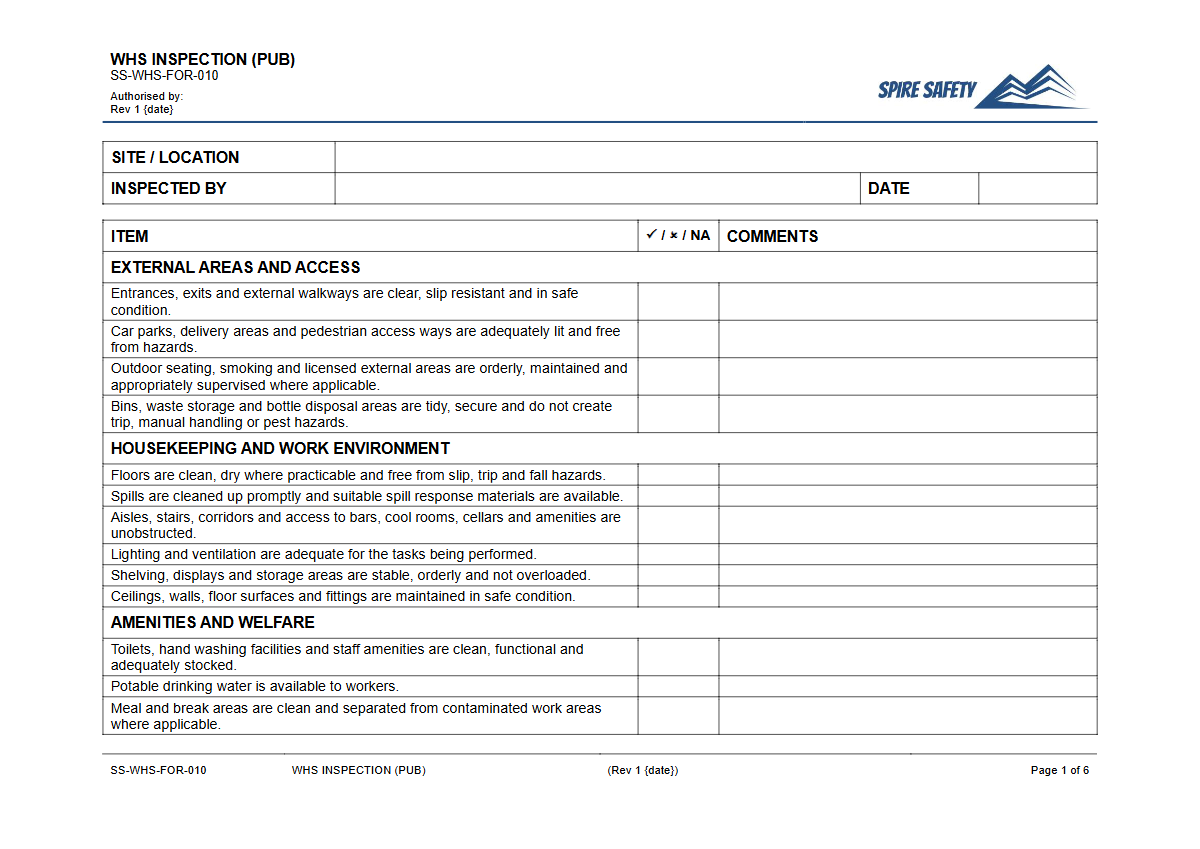
Download our Free WHS Inspection (Pub) Template. A structured DOCX & PDF to help formalise your pub's safety checks and manage hospitality-specific risks.
Free WHS Inspection (Pub) Template
DOCX • 127 KB + PDF
Updated Oct 2026
No signup required
Purpose of the Free WHS Inspection (Pub) Template
Managing a pub involves navigating a unique set of work health and safety risks, from patron areas and commercial kitchens to cellars and storage. This Free WHS Inspection (Pub) Template provides a structured starting point for systematically identifying and controlling these hazards.
Regular, documented inspections are a cornerstone of due diligence, helping your organisation proactively manage safety rather than reacting to incidents. Using this template helps to formalise your safety processes, demonstrating a commitment to protecting staff, contractors, and patrons.
A consistent inspection schedule is a key component of effective WHS management systems. It allows you to track hazards over time, verify that risk controls are working, and create a documented history of your safety efforts. This template is designed to cover common areas in a hospitality venue, including front of house, back of house, chemical storage, and emergency procedures, aligning with Australian WHS principles.
Video walkthrough
How to use the Free WHS Inspection (Pub) Template
This Inspection template is designed for ease of use. First, download the document in your preferred format (DOCX for easy editing or PDF).
Before your first inspection, walk through your entire venue with the template in hand. Add, remove, or modify checklist items to reflect the specific layout, equipment, and procedures of your pub.
For example, you may need to add sections for a beer garden, a gaming room, or specific delivery bay procedures.
When conducting the inspection, the designated person should physically observe each area, noting any non-conformances, hazards, or maintenance requirements. For each issue identified, document the required corrective action, assign responsibility to a specific person, and set a realistic due date for completion.
Once the action is completed, sign off on it to close the loop. For certain high-risk equipment within the kitchen, you may decide to use more detailed checklists, such as our pre-start checklist for blenders, to supplement your general inspection.
Properly managing cold storage is also critical. Your general inspection should include checks on cool rooms and freezers, but for daily verification, a dedicated freezer pre-start checklist can ensure temperature and safety standards are consistently met.
A Note on Customisation
IMPORTANT: This is a general template that we have created to be a starting point. You must customise it to address the specific hazards, equipment, and operating procedures unique to your pub.
A generic checklist is not sufficient to ensure safety; it must be adapted to your reality.
When to conduct a Pub Inspection
The frequency of inspections should be based on risk. High-traffic, high-risk areas require more frequent checks than static, low-risk environments.
- Daily Inspections: Ideal for patron areas, bars, and toilets. Focus on slip and trip hazards (spills, mats), cleanliness, and restocking of safety items like soap and paper towels.
- Weekly Inspections: Suitable for kitchens, cellars, and storage areas. Check for pest control, chemical storage integrity, functionality of safety equipment (e.g., guards on machinery), and general organisation.
- Monthly Inspections: Use for less frequent checks like testing fire safety equipment (extinguishers, blankets), reviewing first aid kit contents, and inspecting the building exterior for new hazards.
These inspections provide valuable data for your safety program. The findings can highlight recurring issues that may require more robust solutions, forming a key input for processes like WHS compliance auditing.
Who should use this Inspection Template
This template can be used by various personnel within a pub, provided they are competent to do so. This means they must be trained to recognise the hazards specific to the areas they are inspecting. Roles that typically conduct inspections include:
- Venue Managers or Licensees
- Supervisors or Team Leaders
- Designated WHS Representatives or Committee Members
- Experienced staff members assigned to specific areas
For more complex safety challenges or system-level reviews, engaging external support may be beneficial. Professional WHS consulting can provide an independent perspective and help refine your safety processes. If your venue includes a car park with automated entry, ensure that equipment is also part of your inspection schedule, potentially using a resource like our boom gate pre-start checklist.
Ultimately, the goal is to create a culture where safety is a shared responsibility. You can explore more ways to build this culture by browsing our complete free WHS resources library for additional tools and templates.
Common mistakes
Common mistakes to avoid
- Failing to customise the template for the specific venue layout and equipment.
- Not training staff on how to properly conduct the inspection and report hazards.
- Completing the checklist as a 'tick-and-flick' exercise without genuine observation.
- Poor record-keeping and failing to follow up on identified corrective actions.
Legal references
Legal considerations
The following legal requirements may be relevant to this type of work.
- Work Health and Safety Act (Harmonised) — Provides the primary duties for protecting workers and other people from work health and safety risks.
- Work Health and Safety Regulations (Harmonised) — Sets out requirements supporting the management of workplace hazards and risks.
The following codes may be relevant to this type of work.
- Managing WHS Risks Code of Practice — Provides practical guidance on identifying hazards, assessing risks and applying effective controls.
- Work Health and Safety Consultation, Cooperation and Coordination Code of Practice — Provides practical guidance on consulting workers and coordinating with other duty holders.
- Managing the Work Environment and Facilities Code of Practice — Provides practical guidance on safe work environments, workplace facilities and related controls.
Did you know
Slips, Trips & Falls
Slips, trips, and falls are the most common cause of injury in the Australian hospitality industry. They are often caused by wet or greasy floors, cluttered walkways, and poor lighting.
Chemical Safety Data Sheets
Under WHS law, you must hold a register of all hazardous chemicals used on-site and ensure the Safety Data Sheet (SDS) for each product is readily accessible to workers who use them.
FAQ
Frequently asked questions
01What is the difference between a workplace inspection and an audit?
02How often should I conduct safety inspections in my pub?
03Who is legally responsible for WHS in a pub?
04Can I use this template for a different hospitality venue like a café or restaurant?
Share this resource
Free WHS Inspection (Pub) Template
Browse Categories
How To Use It
- 1Download and open in Word or PDF.
- 2Replace the placeholders with your business details.
- 3Get it reviewed by a WHS specialist before rollout.
Need it customised?
Our WHS consultants can adapt this template to your site, run a gap analysis, or audit what you already have in place.
Book a Free Consultation WHS consulting servicesor call 1300 156 382