
Free WHS Inspection (Plumbing Shop) Template
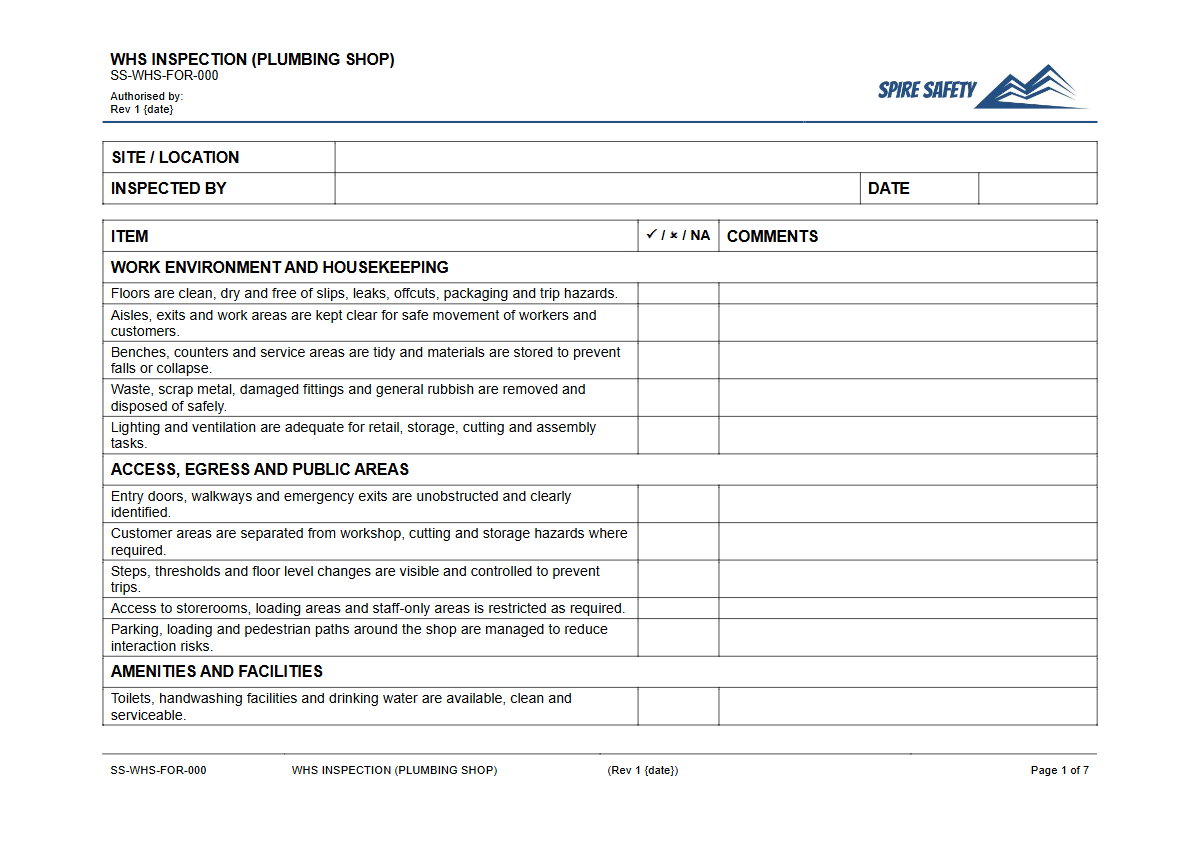
Download our free WHS Inspection (Plumbing Shop) Template. This structured document helps formalise safety checks for plumbing workshops.
Free WHS Inspection (Plumbing Shop) Template
DOCX • 128 KB + PDF
Updated Oct 2026
No signup required
Purpose of the Free WHS Inspection (Plumbing Shop) Template
This Free WHS Inspection (Plumbing Shop) Template provides a structured starting point for systematically identifying and managing health and safety hazards in a plumbing workshop environment. A plumbing shop contains a unique combination of risks, including water on floors causing slip hazards, storage of chemicals and hazardous substances, manual handling of heavy or awkward materials like pipes and fittings, and the use of various powered and non-powered tools.
Regularly conducting a thorough inspection helps a Person Conducting a Business or Undertaking (PCBU) meet their primary duty of care.
Using this template helps formalise the process of checking key safety areas, such as workshop layout and housekeeping, the condition of tools and equipment, electrical safety, chemical storage, and emergency preparedness. Proactively identifying issues before they lead to an incident is a cornerstone of effective safety management.
These inspections are a vital component of a broader safety framework, which should be integrated into your overall WHS management systems to ensure a safe workplace for all personnel.
The checklist covers common plumbing workshop hazards, from ensuring clear access and egress to verifying that guards are in place on machinery. It prompts checks on ventilation systems, correct labelling of hazardous materials, and the accessibility of first aid kits and fire extinguishers.
For specialised equipment, such as lifting aids used for moving heavy stock, it's critical to conduct specific pre-operational checks; our free Pre-Start Checklist for an Electric Hoist is a useful supplementary resource for this task.
Video walkthrough
How to use the Free WHS Inspection (Plumbing Shop) Template
Begin by downloading the template in your preferred format, either DOCX for easy editing in Microsoft Word or PDF for straightforward printing. The document is designed to be user-friendly, with logical sections covering different aspects of a plumbing workshop.
The person conducting the inspection can walk through the premises, using the checklist items as prompts to assess conditions and record observations, findings, and any required corrective actions.
Important: This template is a guide, not a complete, off-the-shelf solution. We have included common inspection points relevant to a plumbing shop, but every workplace is different.
You must customise this document to reflect the specific hazards, equipment, chemicals, and work processes present at your site. Add, remove, or modify sections to ensure the inspection is relevant and thorough for your organisation's operations.
Once completed, the inspection record should be signed, dated, and filed. Any identified hazards or non-conformances must be addressed through your corrective action process, with responsibilities assigned and completion dates tracked.
For businesses seeking to verify their safety processes against legislative requirements, a formal WHS compliance auditing service can provide an independent and comprehensive assessment of your entire system.
When to conduct a workshop inspection
The frequency of formal workshop inspections depends on the level of risk and the nature of the work. A common practice is to schedule comprehensive inspections on a monthly or quarterly basis. However, inspections should also be conducted outside of this regular schedule in specific circumstances, such as:
- After an incident, accident, or near-miss occurs.
- When new equipment, tools, or machinery is introduced.
- When work processes or the workshop layout are changed.
- Following the introduction of new hazardous substances.
- In response to concerns raised by workers or WHS representatives.
These formal inspections supplement, but do not replace, the need for daily pre-start checks of specific plant and equipment. Building a library of safety documents ensures all tasks and equipment are covered.
You can find more templates in our free WHS resources library to support your daily safety routines.
Who should use this inspection template
This inspection template is designed for use by various personnel within a plumbing business. This includes Workshop Managers, Site Supervisors, and team leaders who hold direct responsibility for the safety of their work areas.
It is also a valuable tool for Health and Safety Representatives (HSRs) and WHS committee members to use during their own workplace reviews.
Engaging the workers who perform the tasks is crucial for a successful inspection. They have firsthand knowledge of the risks and are often the first to notice when something is not right.
Involving them in the inspection process not only yields better results but also fosters a stronger safety culture. For organisations needing specialised guidance on implementing these processes or training personnel, engaging external experts through WHS consulting can provide valuable support and help build internal capability.
Common mistakes
Common mistakes to avoid
- Using a generic checklist without customising it for the specific tools, chemicals, and layout of the workshop.
- Failing to assign clear responsibility and deadlines for corrective actions identified during the inspection.
- Not involving workers who actually use the workshop in the inspection process, missing out on valuable insights.
- Treating the inspection as a paperwork exercise ('pencil-whipping') without genuinely assessing the risks.
Legal references
Legal considerations
The following legal requirements may be relevant to this type of work.
- Work Health and Safety Act (Harmonised) — Provides the primary duties for protecting workers and other people from work health and safety risks.
- Work Health and Safety Regulations (Harmonised) — Sets out requirements supporting the management of workplace hazards and risks.
The following codes may be relevant to this type of work.
- Managing WHS Risks Code of Practice — Provides practical guidance on identifying hazards, assessing risks and applying effective controls.
- Work Health and Safety Consultation, Cooperation and Coordination Code of Practice — Provides practical guidance on consulting workers and coordinating with other duty holders.
- Managing the Work Environment and Facilities Code of Practice — Provides practical guidance on safe work environments, workplace facilities and related controls.
Did you know
Trade Injuries
According to Safe Work Australia, technicians and trades workers, including plumbers, have one of the highest rates of serious workers' compensation claims, with muscular stress from manual handling being a leading cause of injury.
FAQ
Frequently asked questions
01What should be included in a plumbing shop WHS inspection?
02How often should a plumbing workshop be inspected for safety?
03Who is responsible for conducting WHS inspections in a plumbing business?
04Is this plumbing shop inspection template sufficient for WHS compliance?
Share this resource
Free WHS Inspection (Plumbing Shop) Template
Browse Categories
How To Use It
- 1Download and open in Word or PDF.
- 2Replace the placeholders with your business details.
- 3Get it reviewed by a WHS specialist before rollout.
Need it customised?
Our WHS consultants can adapt this template to your site, run a gap analysis, or audit what you already have in place.
Book a Free Consultation WHS consulting servicesor call 1300 156 382