
Free WHS Inspection (Physio Clinic) Template
Download our free WHS Inspection (Physio Clinic) Template to formalise your safety checks and manage risks.
Free WHS Inspection (Physio Clinic) Template
DOCX • 129 KB + PDF
Updated Oct 2026
No signup required
Purpose of the Free WHS Inspection (Physio Clinic) Template
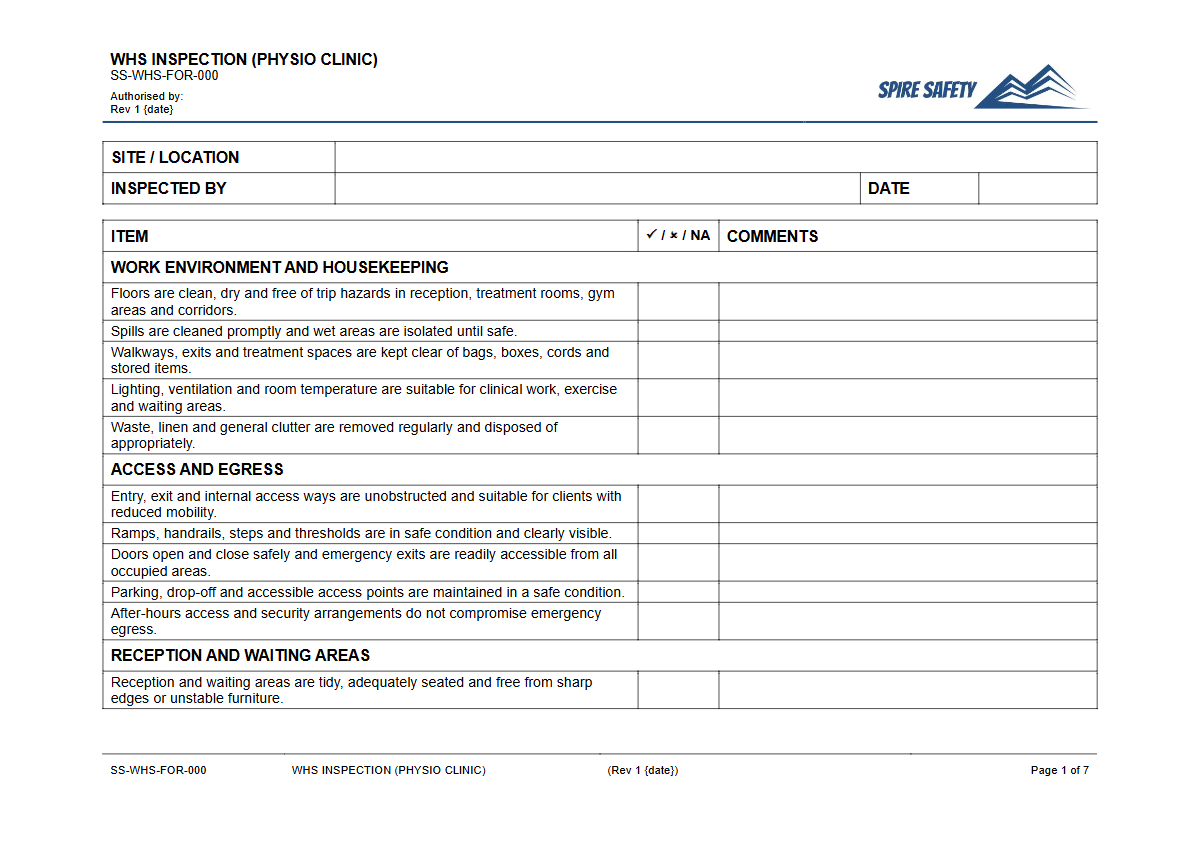
A physiotherapy clinic presents a unique set of work health and safety (WHS) challenges, from manual handling risks during patient treatment to slip hazards in wet areas and the safety of specialised equipment. Our Free WHS Inspection (Physio Clinic) Template provides a structured starting point for systematically identifying these hazards and assessing risks within your practice.
Regularly conducting and documenting these checks is a key part of a PCBU’s (Person Conducting a Business or Undertaking) duty of care to provide a safe working environment for all staff, patients, and visitors.
This document helps formalise your safety processes, moving beyond ad-hoc checks to a scheduled, recordable activity. It prompts you to examine key areas such as treatment rooms, reception and waiting areas, staff facilities, and the maintenance of clinical equipment.
Using a template ensures consistency in your inspections and helps demonstrate your commitment to proactive WHS management. It forms a crucial part of an effective safety system, helping to prevent injuries and ensure ongoing operational safety.
Video walkthrough
How to use the Free WHS Inspection (Physio Clinic) Template
Using this template effectively involves more than just filling in the blanks. First, download the document in your preferred format (DOCX for easy editing or PDF).
The next step is crucial: customisation. This document is a general framework aligned with Australian WHS principles and must be adapted to the specific layout, equipment, and procedures of your clinic.
Walk through your practice and add or remove checklist items to reflect your unique environment. For example, if your clinic uses specific rehabilitation machines, you should add dedicated checks for them.
Some practices may find value in using our free Pre-Start Checklist for Gym Treadmills for specific equipment checks.
Once customised, schedule the inspections and assign responsibility to a competent person, such as a practice manager or a WHS representative. Train them on how to conduct the inspection thoroughly.
During the inspection, they should methodically go through each item, recording their findings and noting any non-conformances or hazards. Any identified issues must be documented along with a corresponding corrective action, an assigned responsible person, and a due date for completion. Keeping these records is essential for tracking safety performance and is a key component when undergoing a WHS compliance audit.
Note: This document is a template and not a complete safety solution. We recommend you customise it to suit the specific hazards and operational procedures of your clinic.
Its effectiveness depends on its correct implementation and integration into your broader safety management system.
When to use this Inspection Template
Regular, scheduled inspections are fundamental to good WHS practice. The frequency depends on the level of risk and the nature of the work in your clinic.
A common approach is to conduct a full clinic inspection on a quarterly or bi-annual basis. However, some areas or equipment may require more frequent checks.
For example, daily checks of high-use patient equipment are advisable. You may formalise these using a specific tool like our free Pre-Start Checklist (Patient Hoist) Template if such equipment is used.
In addition to routine schedules, an inspection should also be conducted whenever there is a significant change in the workplace. This includes the introduction of new equipment or procedures, refurbishment of the clinic space, or after an incident or near-miss has occurred.
These ad-hoc inspections help ensure that new hazards have not been introduced and that risk controls remain effective.
Who should use this Inspection Template
While a specific person should be assigned responsibility for conducting the inspection, WHS is a shared responsibility. The template is designed primarily for Practice Managers, Clinic Owners, and designated WHS Officers or Representatives.
These individuals are typically responsible for overseeing the implementation of safety procedures and ensuring that identified issues are addressed.
However, it is best practice to involve all staff in the safety process. Encourage team members to report hazards as they see them, rather than waiting for a formal inspection. Consulting with your team during the customisation of the template and when reviewing inspection findings can provide valuable insights from those performing the day-to-day tasks. For organisations looking to integrate such processes into a certified framework, developing a comprehensive WHS management system aligned with standards like ISO 45001 is the next logical step. You can explore more documents to support your safety system in our free WHS resources library.
Common mistakes
Common mistakes to avoid
- Using the template without customising it to the clinic's specific layout and equipment.
- Failing to assign clear responsibility and deadlines for corrective actions.
- Not involving clinical and administrative staff in the inspection process.
- Treating the inspection as a paperwork exercise without genuine investigation or follow-up.
Legal references
Legal considerations
The following legal requirements may be relevant to this type of work.
- Work Health and Safety Act (Harmonised) — Provides the primary duties for protecting workers and other people from work health and safety risks.
- Work Health and Safety Regulations (Harmonised) — Sets out requirements supporting the management of workplace hazards and risks.
The following codes may be relevant to this type of work.
- Managing WHS Risks Code of Practice — Provides practical guidance on identifying hazards, assessing risks and applying effective controls.
- Work Health and Safety Consultation, Cooperation and Coordination Code of Practice — Provides practical guidance on consulting workers and coordinating with other duty holders.
- Managing the Work Environment and Facilities Code of Practice — Provides practical guidance on safe work environments, workplace facilities and related controls.
Did you know
Manual Handling Risks
The healthcare and social assistance industry has one of the highest rates of serious workers' compensation claims in Australia, with body stressing and manual handling being the primary causes of injury.
Consultation is Key
Under model WHS laws, PCBUs have a specific duty to consult with workers on matters relating to their health and safety. Involving your team in the inspection process helps meet this duty and improves safety outcomes.
FAQ
Frequently asked questions
01What are the most common WHS hazards in a physiotherapy clinic?
02How often should I conduct a WHS inspection in my physio practice?
03Can this WHS Inspection Template be used for other allied health clinics?
04What should I do after the inspection identifies a significant risk?
Share this resource
Free WHS Inspection (Physio Clinic) Template
Browse Categories
How To Use It
- 1Download and open in Word or PDF.
- 2Replace the placeholders with your business details.
- 3Get it reviewed by a WHS specialist before rollout.
Need it customised?
Our WHS consultants can adapt this template to your site, run a gap analysis, or audit what you already have in place.
Book a Free Consultation WHS consulting servicesor call 1300 156 382