
Free Pre-Start Checklist (Gym Treadmill) Template
Download our free Pre-Start Checklist for Gym Treadmills.
Free Pre-Start Checklist (Gym Treadmill) Template
DOCX • 125 KB + PDF
Updated Oct 2026
No signup required
Purpose of the Free Pre-Start Checklist (Gym Treadmill) Template
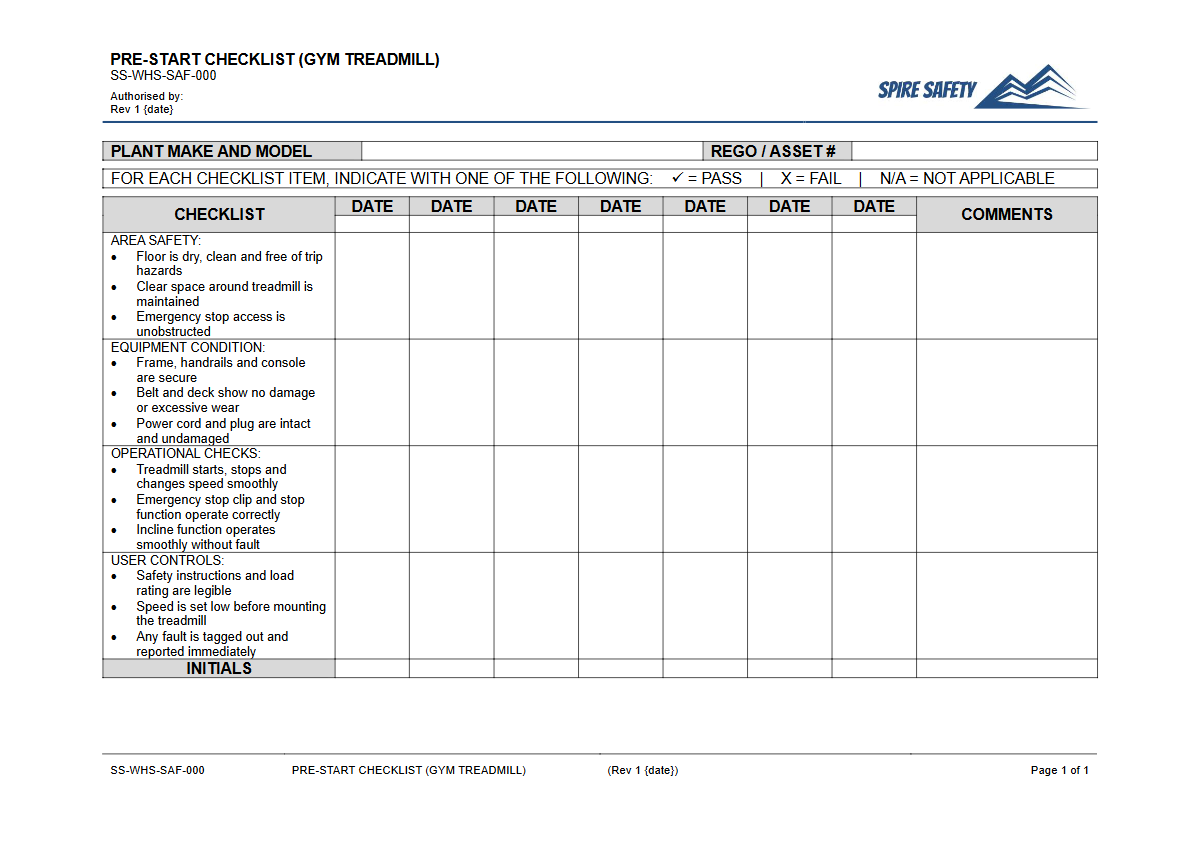
Regularly inspecting gym equipment is a critical part of managing health and safety in any fitness facility. Our Free Pre-Start Checklist (Gym Treadmill) Template provides a structured starting point for formalising these essential daily checks.
Using this document helps your organisation systematically identify potential faults, damage, or hazards before members or clients use the equipment.
The primary purpose of a pre-start check is to verify that a piece of plant is safe to operate. For a gym treadmill, this includes checking critical safety features like the emergency stop, the condition of the running belt, and the stability of the frame.
Formalising this process helps to prevent incidents and injuries caused by equipment malfunction. It also creates a documented record of inspections, which is a key component of demonstrating due-diligence and proactive safety management. Consistent use of this checklist can be reinforced through regular team meetings, such as those guided by a Pre-Start Checks and Plant Maintenance Toolbox Talk.
Video walkthrough
How to use the Free Pre-Start Checklist (Gym Treadmill) Template
This template is provided in both DOCX and PDF formats for your convenience. The DOCX file is fully editable, allowing you to tailor it to your specific needs.
Follow these steps to implement the checklist effectively:
- Download: Select your preferred format (DOCX or PDF).
- Customise: Add your company branding and, most importantly, review and amend the checklist items to match the specific make and model of treadmills at your facility. Different models have unique features and potential failure points.
- Train: Ensure all staff responsible for conducting the checks are trained on how to properly inspect each item and what to do if they find a fault.
- Implement: Integrate the checklist into your daily opening procedures. Store completed checklists in a designated location for record-keeping purposes.
- Review: Periodically review the checklist's effectiveness and update it as needed, especially if new treadmill models are introduced or an incident occurs.
Important: This document is a template and must be customised. We strongly recommend you adapt it to reflect the specific equipment, risks, and procedures of your workplace. Integrating such procedures is a fundamental part of building effective WHS management systems.
When to use a Treadmill Pre-Start Checklist
A pre-start inspection should be completed:
- At the beginning of each day before the gym opens to the public.
- At the start of each staff shift in a 24-hour facility.
- After any maintenance or repair work has been performed on the treadmill.
- If a fault was previously reported, a check should be done to verify it has been rectified before returning the equipment to service.
Who should use it
The pre-start check should be conducted by a competent person who has been trained on the procedure. This could include:
- Gym managers or supervisors.
- Opening staff members.
- Personal trainers or fitness instructors.
- Designated maintenance personnel.
The key is that the individual understands the equipment and the potential hazards to look for. For organisations unsure how to define and assign these responsibilities, engaging specialist WHS consulting can provide clarity and help establish a compliant framework.
Key Inspection Points for a Gym Treadmill
While your customised checklist should be specific to your equipment, a thorough inspection generally covers several key areas. The same principle of tailoring checks to the specific item applies to all equipment, whether it's an industrial machine or a simple pre-start checklist for a coffee grinder in a staff kitchen. For a treadmill, focus on:
- Emergency Stop: Test both the emergency stop button and the safety lanyard/clip to ensure they immediately stop the belt.
- Power Cord and Plug: Inspect for any fraying, exposed wires, or damage to the plug. Ensure the cord is not a trip hazard.
- Frame and Handrails: Check for stability, loose bolts, cracks, or other signs of structural damage.
- Running Belt and Deck: Look for tears, fraying, or excessive wear on the belt. Check that it is correctly aligned and moves smoothly without slipping.
- Control Panel and Display: Ensure the display is functioning correctly and that all buttons (speed, incline) respond as expected.
- Surrounding Area: Verify the area around the treadmill is clear of obstructions and trip hazards, with adequate space behind the machine.
Integrating the Checklist into Your Safety System
A pre-start checklist is most effective when it is part of a comprehensive safety management system. It should not exist in isolation. The information gathered from these checks should feed into other processes, such as your maintenance and repair log. Any faults identified must trigger a clear 'tag out' and reporting procedure to ensure faulty equipment is not used. Regular reviews of completed checklists can help identify recurring issues with certain machines, informing future purchasing decisions. The overall health of these interconnected processes can be verified through periodic WHS compliance audits to ensure your safety system remains effective and aligned with legal duties.
Common mistakes
Common mistakes to avoid
- Completing the checklist from memory without physically inspecting the treadmill ('pencil-whipping').
- Failing to immediately remove a faulty treadmill from service with clear 'Do Not Use' tagging.
- Neglecting to train staff on how to conduct checks properly and what to look for on specific models.
- Using a generic checklist that doesn't cover the unique safety features of the treadmills in use.
Legal references
Legal considerations
The following legal requirements may be relevant to this type of work.
- Work Health and Safety Act (Harmonised) — Provides the primary duties for protecting workers and other people from work health and safety risks.
- Work Health and Safety Regulations (Harmonised) — Sets out requirements supporting the management of workplace hazards and risks.
The following codes may be relevant to this type of work.
- Managing WHS Risks Code of Practice — Provides practical guidance on identifying hazards, assessing risks and applying effective controls.
- Work Health and Safety Consultation, Cooperation and Coordination Code of Practice — Provides practical guidance on consulting workers and coordinating with other duty holders.
- Managing the Work Environment and Facilities Code of Practice — Provides practical guidance on safe work environments, workplace facilities and related controls.
Did you know
Plant and Equipment
Under Australian WHS law, a commercial-use treadmill is considered 'plant'. PCBUs (e.g., gym owners) have a specific legal duty to ensure plant is inspected, maintained, and safe to use.
Emergency Stop Lanyard
The safety clip and lanyard are not optional accessories. They are a critical part of the emergency stop system, designed to automatically halt the machine if the user stumbles or falls, preventing more serious injury.
FAQ
Frequently asked questions
01Is a treadmill pre-start checklist legally required in Australia?
02How often should a gym treadmill be inspected?
03What should I do if a treadmill fails the pre-start check?
04Can this template be used for other gym equipment like cross-trainers or bikes?
Share this resource
Free Pre-Start Checklist (Gym Treadmill) Template
Browse Categories
How To Use It
- 1Download and open in Word or PDF.
- 2Replace the placeholders with your business details.
- 3Get it reviewed by a WHS specialist before rollout.
Need it customised?
Our WHS consultants can adapt this template to your site, run a gap analysis, or audit what you already have in place.
Book a Free Consultation WHS consulting servicesor call 1300 156 382