
Free WHS Inspection (Panel Shop) Template
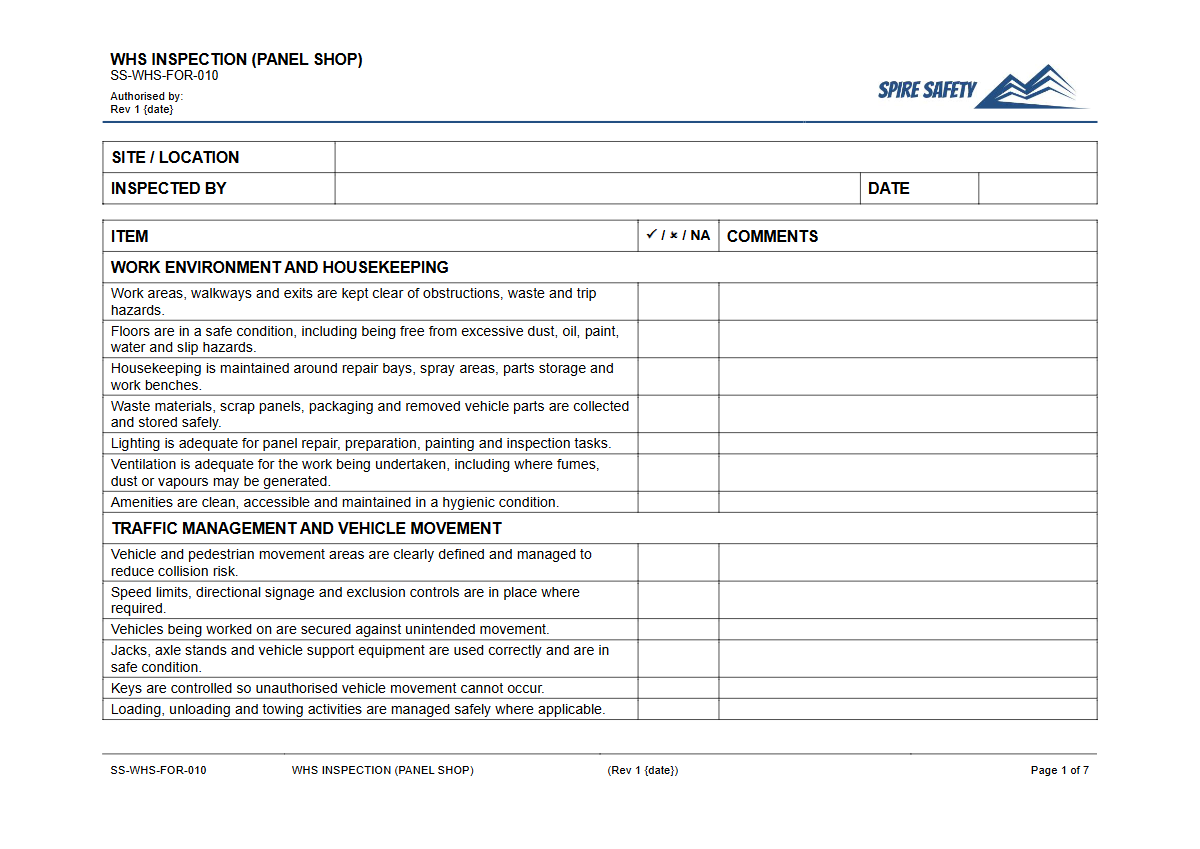
Download our free WHS Inspection (Panel Shop) Template. A structured starting point for formalising your workshop safety checks. Available in DOCX & PDF.
Free WHS Inspection (Panel Shop) Template
DOCX • 128 KB + PDF
Updated Oct 2026
No signup required
Purpose of the Free WHS Inspection (Panel Shop) Template
Panel and smash repair shops are high-risk environments, filled with hazards ranging from hazardous chemicals and flammable liquids to high-impact machinery and ergonomic risks. A systematic inspection process is fundamental to identifying and controlling these workplace hazards before they cause injury or illness.
This Free WHS Inspection (Panel Shop) Template provides a structured starting point for your organisation to formalise its safety checks, ensuring no critical area is overlooked. By regularly inspecting equipment, work areas, and safety procedures, you can proactively manage risks, demonstrate due diligence, and foster a stronger safety culture.
A consistent inspection program is a cornerstone of effective WHS management systems, helping to ensure control measures remain effective over time.
Video walkthrough
How to use the Free WHS Inspection (Panel Shop) Template
This template is designed as a comprehensive starting point, covering common areas and hazards found in a typical panel shop. It includes sections for general workshop conditions, spray booths, welding bays, chemical storage, vehicle hoists, personal protective equipment (PPE), and emergency procedures. To get the most value from this Free WHS Inspection (Panel Shop) Template, follow these steps:
- Download: Choose your preferred format, either the editable DOCX or the ready-to-print PDF.
- Customise: This is the most critical step. Every workshop is unique. You must adapt the checklist to reflect the specific machinery, chemicals, layout, and processes at your site. Add, remove, or modify checklist items to ensure they are relevant to your operations. Please note: we are not a law firm. This document is a template and must be customised to your specific business, state, and operational needs.
- Train: Ensure the personnel conducting the inspections are competent to do so. They must understand the hazards they are looking for and know what constitutes a 'pass' or 'fail'.
- Schedule & Conduct: Integrate the inspections into your regular operational rhythm. Assign responsibility and set frequencies (e.g., daily, weekly, monthly) for different checks.
- Review & Action: Don't just file the completed forms. Review all findings, prioritise hazards, and assign corrective actions with clear responsibilities and deadlines. This process of review and verification is a key activity in any formal WHS compliance auditing program.
When to conduct an Inspection
Workplace inspections should be a regular, planned activity, not just a reaction to an incident. A robust inspection schedule includes conducting checks at various key moments.
Use this template for routine safety tours, scheduled at regular intervals such as weekly or monthly, to monitor the ongoing effectiveness of your risk controls. It's also vital to perform a thorough inspection before introducing new equipment, substances, or work processes to identify any new potential hazards.
Following any incident, near miss, or the identification of a new hazard, an inspection should be carried out to understand contributing factors and prevent recurrence. Part of this process can include checking specific safety systems, and our free Pre-Start Checklist for Fire Panels is a useful tool for ensuring this critical life-saving equipment is functional.
Who should use this Inspection Template
Responsibility for safety is shared, and various roles within a panel shop can and should use this template. Workshop Managers and Supervisors are primarily responsible for ensuring inspections are completed and that corrective actions are implemented effectively.
They use the findings to manage safety at an operational level. Workplace Health and Safety Representatives (HSRs) and committee members can use the template to facilitate their inspections and represent the safety concerns of their workgroups.
Team Leaders and experienced workers can also use it to conduct routine checks of their specific work areas, like the paint or fabrication bays. For Persons Conducting a Business or Undertaking (PCBUs), this document serves as a tool to help meet their primary duty of care.
If you need assistance embedding this process into your business, our WHS consulting services can provide expert guidance. You can also explore our entire free WHS resources library for more templates and guides.
Common mistakes
Common mistakes to avoid
- Failing to document and follow up on corrective actions identified during the inspection.
- Using a generic checklist that doesn't address specific panel shop risks like spray booth interlocks or welding fume extraction.
- Not involving workers who perform the tasks in the inspection and risk management process.
- Treating the inspection as a paperwork exercise instead of a genuine opportunity to find and fix hazards.
Legal references
Legal considerations
The following legal requirements may be relevant to this type of work.
- Work Health and Safety Act (Harmonised) — Provides the primary duties for protecting workers and other people from work health and safety risks.
- Work Health and Safety Regulations (Harmonised) — Sets out requirements supporting the management of workplace hazards and risks.
The following codes may be relevant to this type of work.
- Managing WHS Risks Code of Practice — Provides practical guidance on identifying hazards, assessing risks and applying effective controls.
- Work Health and Safety Consultation, Cooperation and Coordination Code of Practice — Provides practical guidance on consulting workers and coordinating with other duty holders.
- Managing the Work Environment and Facilities Code of Practice — Provides practical guidance on safe work environments, workplace facilities and related controls.
Did you know
Isocyanate Exposure
Isocyanates, found in two-pack automotive paints, are a leading cause of occupational asthma in the Australian motor vehicle repair industry. Effective ventilation and correctly used air-fed respirators are critical controls.
Combustible Dust
Fine dust from sanding fillers and primers can be combustible. If this dust accumulates in sufficient concentration and meets an ignition source, it can cause a serious explosion or fire.
FAQ
Frequently asked questions
01What key hazards should a panel shop inspection checklist cover?
02How often should I conduct WHS inspections in a panel shop?
03Is this panel shop inspection template suitable for all Australian states?
04What should I do with the completed inspection form?
Share this resource
Free WHS Inspection (Panel Shop) Template
Browse Categories
How To Use It
- 1Download and open in Word or PDF.
- 2Replace the placeholders with your business details.
- 3Get it reviewed by a WHS specialist before rollout.
Need it customised?
Our WHS consultants can adapt this template to your site, run a gap analysis, or audit what you already have in place.
Book a Free Consultation WHS consulting servicesor call 1300 156 382