
Free WHS Inspection (Parcel Centre) Template
Download our Free WHS Inspection (Parcel Centre) Template to systematically identify and control hazards in your logistics facility.
Free WHS Inspection (Parcel Centre) Template
DOCX • 129 KB + PDF
Updated Oct 2026
No signup required
Purpose of the Free WHS Inspection (Parcel Centre) Template
Parcel and mail distribution centres are dynamic environments with significant work health and safety risks. This Free WHS Inspection (Parcel Centre) Template provides a structured starting point for systematically identifying hazards before they cause injury.
Regular, documented inspections are a cornerstone of proactive safety management, helping your organisation meet its duty of care. Using a formal checklist helps ensure consistency, aids in tracking corrective actions, and demonstrates a commitment to maintaining a safe workplace for all workers, contractors, and visitors.
A thorough inspection process is a critical component of broader safety frameworks. Integrating these regular checks into your operational procedures helps build a positive safety culture and provides valuable data for your overall WHS management systems. This template is designed to be a practical tool to support that process, covering key areas common to most logistics and sorting facilities.
Video walkthrough
How to use the Free WHS Inspection (Parcel Centre) Template
Begin by downloading the template in your preferred format (DOCX for easy editing or PDF). Before its first use, it's crucial to adapt the document to the unique layout, equipment, and processes of your facility.
A generic checklist cannot account for every specific risk in your workplace.
Please note: This document is a template and must be customised to your specific workplace. We strongly recommend conducting a site-specific risk assessment and using its findings to add, remove, or modify checklist items to ensure they are relevant to the hazards present in your parcel centre.
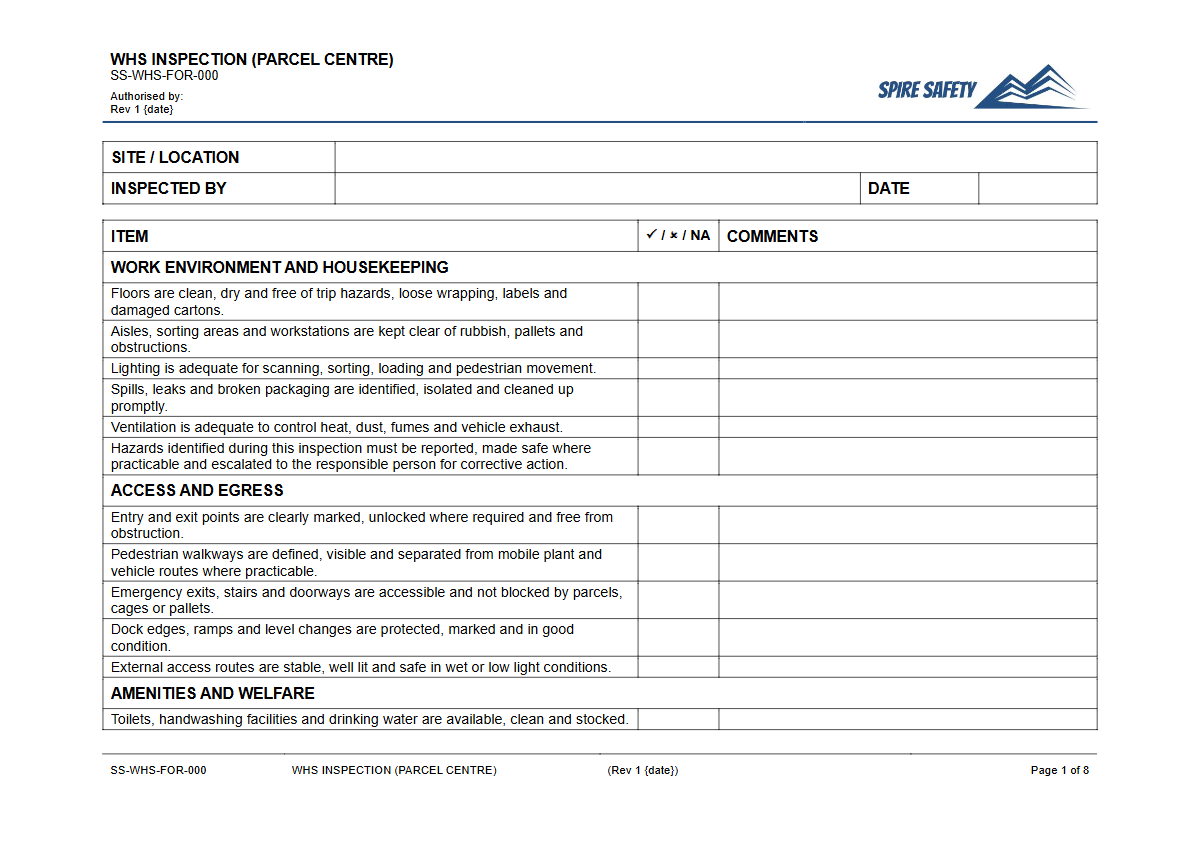
The template is structured for clarity, with sections for administrative details like the inspection date, location, and the inspector's name. The main body is a checklist organised by common hazard categories found in parcel centres, such as:
- General Access and Egress: Clear, unobstructed walkways, emergency exits.
- Housekeeping: Slips, trips, and falls hazards, waste management.
- Racking and Storage: Stability, load limits, condition of shelving.
- Manual Tasks: Workstation ergonomics, lifting aids, team lifting procedures.
- Machinery and Equipment: Guarding on conveyors, emergency stops.
- Traffic Management: Pedestrian segregation, forklift operating zones, loading dock safety.
- Hazardous Chemicals: Correct storage and labelling of any chemicals on site.
- Fire and Emergency: Accessibility of fire extinguishers, clear signage, functional alarms.
For each item, the inspector notes whether it is compliant, non-compliant, or not applicable. A comments section allows for detailed observations, and a dedicated area is included to document required corrective actions, assign responsibility, and set deadlines for completion.
Involving your Health and Safety Representatives (HSRs) and workers in the inspection process is highly recommended, as their firsthand experience is invaluable for spotting hazards. You can supplement this general inspection with specific equipment checks, such as using a Free Pre-Start Checklist (Electric Hoist) Template for lifting devices.
When to use it
The frequency of inspections should be determined by a risk assessment. A general workplace inspection of a parcel centre might be conducted weekly or monthly.
High-traffic areas like loading docks or areas with heavy machinery may require more frequent, even daily, checks. It is also good practice to conduct an inspection after an incident or near miss, when new machinery like an envelope sealer is introduced, or when work processes change significantly.
Who should use it
This Inspection template is designed for use by competent personnel responsible for workplace safety. This typically includes Site Managers, WHS Managers, Supervisors, and trained Health and Safety Representatives (HSRs).
The person conducting the inspection must be familiar with the work area, understand the relevant WHS legislation, and be able to recognise potential and existing hazards. While inspections identify hazards, they are different from a comprehensive system review.
For a deeper analysis of your safety programs, engaging professional WHS compliance auditing services can provide an independent assessment of your entire system's effectiveness and legal conformity.
Formalising your inspection schedule with documents like this template helps create a robust safety process. You can explore our complete free WHS resources library for more tools to support your safety management efforts, including templates for different types of machinery and work tasks.
Common mistakes
Common mistakes to avoid
- Using a generic checklist without customising it for site-specific machinery and hazards.
- Failing to assign responsibility and track corrective actions through to completion.
- Not involving workers or Health and Safety Representatives (HSRs) in the inspection process.
- Treating the inspection as a paperwork exercise rather than a genuine effort to find and fix hazards.
Legal references
Legal considerations
The following legal requirements may be relevant to this type of work.
- Work Health and Safety Act (Harmonised) — Provides the primary duties for protecting workers and other people from work health and safety risks.
- Work Health and Safety Regulations (Harmonised) — Sets out requirements supporting the management of workplace hazards and risks.
The following codes may be relevant to this type of work.
- Managing WHS Risks Code of Practice — Provides practical guidance on identifying hazards, assessing risks and applying effective controls.
- Work Health and Safety Consultation, Cooperation and Coordination Code of Practice — Provides practical guidance on consulting workers and coordinating with other duty holders.
- Managing the Work Environment and Facilities Code of Practice — Provides practical guidance on safe work environments, workplace facilities and related controls.
Did you know
A High-Risk Industry
According to Safe Work Australia, the Transport, Postal & Warehousing industry consistently has one of the highest rates of serious workers' compensation claims, with body stressing from manual handling being a leading cause of injury.
FAQ
Frequently asked questions
01What's the difference between a WHS inspection and an audit?
02How often should our parcel centre be inspected?
03Who is considered a 'competent person' to conduct an inspection?
04Is this WHS inspection template compliant with Australian law?
Share this resource
Free WHS Inspection (Parcel Centre) Template
Browse Categories
How To Use It
- 1Download and open in Word or PDF.
- 2Replace the placeholders with your business details.
- 3Get it reviewed by a WHS specialist before rollout.
Need it customised?
Our WHS consultants can adapt this template to your site, run a gap analysis, or audit what you already have in place.
Book a Free Consultation WHS consulting servicesor call 1300 156 382