
Free WHS Inspection (Mining Workshop) Template
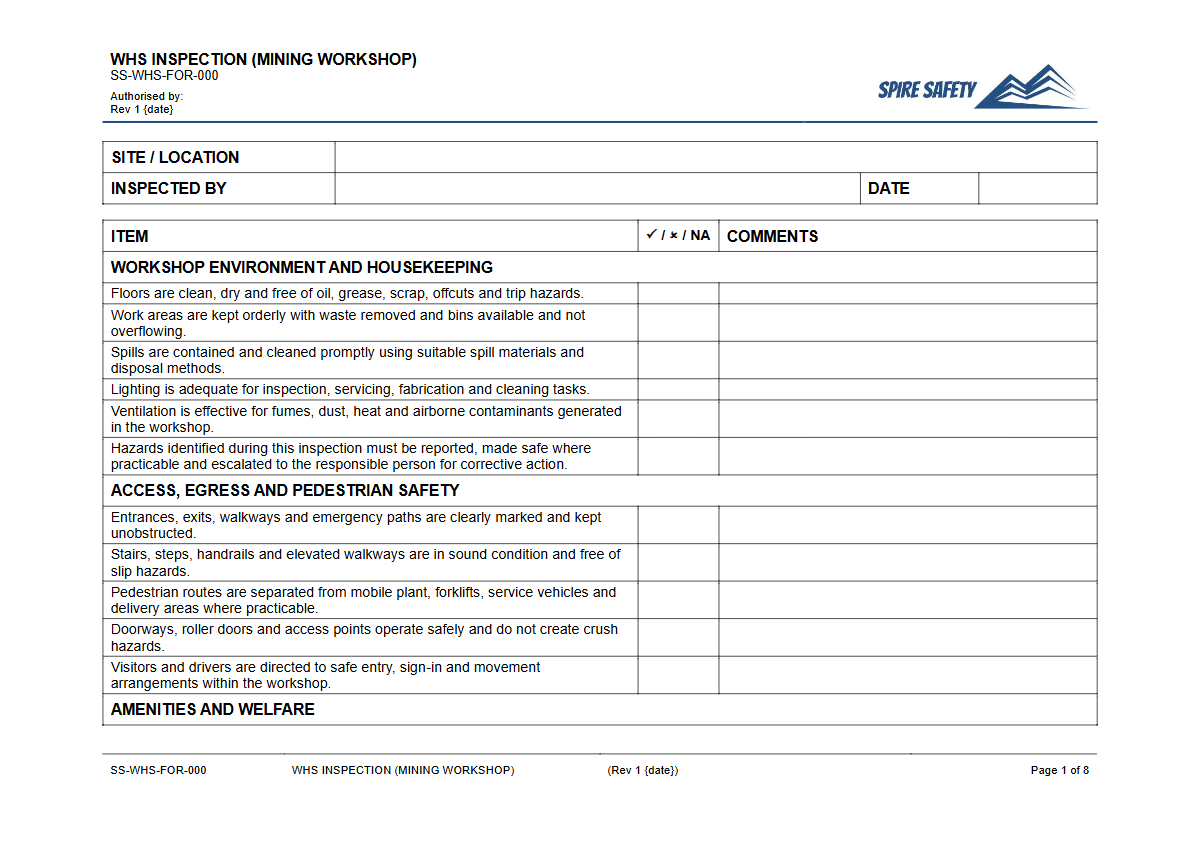
Formalise safety checks in your high-risk mining workshop with our free WHS Inspection Template. A structured starting point for identifying hazards.
Free WHS Inspection (Mining Workshop) Template
DOCX • 129 KB + PDF
Updated Oct 2026
No signup required
Purpose of the Free WHS Inspection (Mining Workshop) Template
Mining workshops are dynamic, high-risk environments where the interaction between heavy machinery, hazardous substances, and complex tasks creates significant safety challenges. Proactively managing these risks is not just a matter of compliance, but a fundamental duty of care.
This Free WHS Inspection (Mining Workshop) Template provides a structured starting point for organisations to formalise their inspection processes, helping to systematically identify and control hazards before they lead to an incident. Regular, documented inspections are a key component of any effective safety program.
Using this template helps you methodically assess areas like machine guarding, electrical safety, housekeeping, chemical storage, fire prevention, and emergency preparedness. It serves as a practical tool for demonstrating due diligence and forms an essential part of developing robust WHS management systems that protect your workers and your operation.
By standardising the inspection process, you can track trends, verify that controls are effective, and foster a culture of safety awareness and accountability across the workshop floor.
Video walkthrough
How to use the Free WHS Inspection (Mining Workshop) Template
This inspection template is a foundational document designed for broad application in a mining workshop context. It covers common hazards and control measures aligned with Australian WHS principles. To gain the most benefit, follow these steps:
- Download and Customise: Download the DOCX version to edit the checklist. This step is critical. We strongly recommend you customise the template to reflect the specific machinery, equipment, layout, and processes unique to your workshop. Add sections for specialised plant like heavy vehicle hoists, boilermaking equipment, or hydraulic presses.
- Schedule the Inspection: Determine an appropriate frequency for inspections based on the level of risk and operational tempo. This may be weekly, fortnightly, or monthly.
- Conduct the Inspection: The designated inspector(s) should walk through the workshop, systematically observing conditions against the checklist criteria. Engage with workers to understand how tasks are actually performed.
- Document Findings: Record all observations, noting both compliant and non-compliant items. Use the comments section to add detail, take photos of hazards, and describe potential risks.
- Implement Corrective Actions: For every identified hazard or non-conformance, a corrective action must be assigned to a specific person with a clear deadline for completion. Tracking these actions to closure is the most important part of the process.
For specific pieces of equipment, this general workshop inspection should be supplemented with more detailed pre-start checks. For example, if your workshop uses lifting equipment, you might also use our free pre-start checklist for electric hoists to ensure it is safe for use each day.
The records generated from these inspections provide valuable data for your safety management system. They can be reviewed during internal assessments or a formal WHS compliance auditing process to verify the health of your safety practices and identify areas for systemic improvement.
When to use it
A workshop inspection is not a one-time event. It should be integrated into your regular operational rhythm to ensure ongoing safety.
The frequency should be determined by a risk assessment but can be scheduled at various intervals depending on the objective.
- Routine General Inspections: Conduct weekly or fortnightly to monitor general housekeeping, storage, and the condition of common areas and equipment.
- In-Depth Monthly Inspections: Use a monthly schedule for a more comprehensive review of all items on the customised checklist, including checking documentation like maintenance records.
- Following an Incident or Near Miss: An inspection can be used as part of an investigation to identify workplace conditions that may have contributed to an event.
- After Major Changes: Conduct an inspection after the introduction of new plant, a change in workshop layout, or the implementation of a new work process to assess for new or changed risks.
These formal inspections complement the daily checks operators should perform on their equipment and work area. They provide a periodic, high-level overview of the entire environment, including site access points where you might implement pre-start checks for boom gates to manage vehicle interactions.
Who should use it
A thorough inspection process benefits from the involvement of various personnel who bring different perspectives. The responsibility for conducting inspections typically falls to:
- Workshop Supervisors and Managers: They hold primary responsibility for the safety of the area and must ensure inspections are completed and actions are closed out.
- WHS Officers or Advisors: They can lead inspections, provide technical advice, and ensure the process aligns with the organisation's overall safety system.
- Health and Safety Representatives (HSRs): As representatives of their work group, HSRs should be involved in inspections to provide input on behalf of workers.
- Maintenance Personnel: Their technical expertise is invaluable for assessing the condition of plant and equipment.
- Competent Workers: Involving experienced workers who use the equipment daily provides practical insights that a manager might miss.
For organisations needing an independent assessment or assistance in establishing a robust inspection program, seeking support from WHS consulting professionals can provide valuable expertise and an objective viewpoint.
This template is just one of many tools available to help you build a safer workplace. You can explore our complete free WHS resources library for additional checklists, forms, and guides to support your safety management efforts.
Common mistakes
Common mistakes to avoid
- Using the template 'as-is' without customising it for the specific equipment and tasks at your site.
- Performing a 'tick and flick' exercise without genuinely observing and assessing workplace conditions.
- Failing to formally document, assign, and track corrective actions identified during the inspection.
- Not involving the workers who operate the equipment and perform the tasks in the inspection process.
Legal references
Legal considerations
The following legal requirements may be relevant to this type of work.
- Work Health and Safety Act (Harmonised) — Provides the primary duties for protecting workers and other people from work health and safety risks.
- Work Health and Safety Regulations (Harmonised) — Sets out requirements supporting the management of workplace hazards and risks.
The following codes may be relevant to this type of work.
- Managing WHS Risks Code of Practice — Provides practical guidance on identifying hazards, assessing risks and applying effective controls.
- Work Health and Safety Consultation, Cooperation and Coordination Code of Practice — Provides practical guidance on consulting workers and coordinating with other duty holders.
- Managing the Work Environment and Facilities Code of Practice — Provides practical guidance on safe work environments, workplace facilities and related controls.
Did you know
A High-Risk Industry
The Australian mining industry has one of the highest rates of serious workers' compensation claims, underscoring the critical need for proactive safety measures like regular and thorough workshop inspections.
Plant and Machinery Hazards
Incidents involving plant and machinery remain a leading cause of fatalities and serious injuries in the resources sector. A robust inspection and maintenance program is a primary control for managing these risks.
FAQ
Frequently asked questions
01How often should a mining workshop be inspected for WHS purposes?
02What is the difference between a WHS inspection and an audit?
03Who is responsible for fixing hazards found during an inspection?
04Can this template be used for a non-mining automotive workshop?
Share this resource
Free WHS Inspection (Mining Workshop) Template
Browse Categories
How To Use It
- 1Download and open in Word or PDF.
- 2Replace the placeholders with your business details.
- 3Get it reviewed by a WHS specialist before rollout.
Need it customised?
Our WHS consultants can adapt this template to your site, run a gap analysis, or audit what you already have in place.
Book a Free Consultation WHS consulting servicesor call 1300 156 382