
Free WHS Inspection (Marine Workshop) Template
Download our Free WHS Inspection (Marine Workshop) Template to formalise safety checks in your maritime facility.
Free WHS Inspection (Marine Workshop) Template
DOCX • 129 KB + PDF
Updated Oct 2026
No signup required
Purpose of the Free WHS Inspection (Marine Workshop) Template
A marine workshop presents a unique combination of workplace hazards, from wet and slippery surfaces to hazardous chemicals, electrical risks, and heavy lifting. Systematically managing these risks is a key duty for any Person Conducting a Business or Undertaking (PCBU).
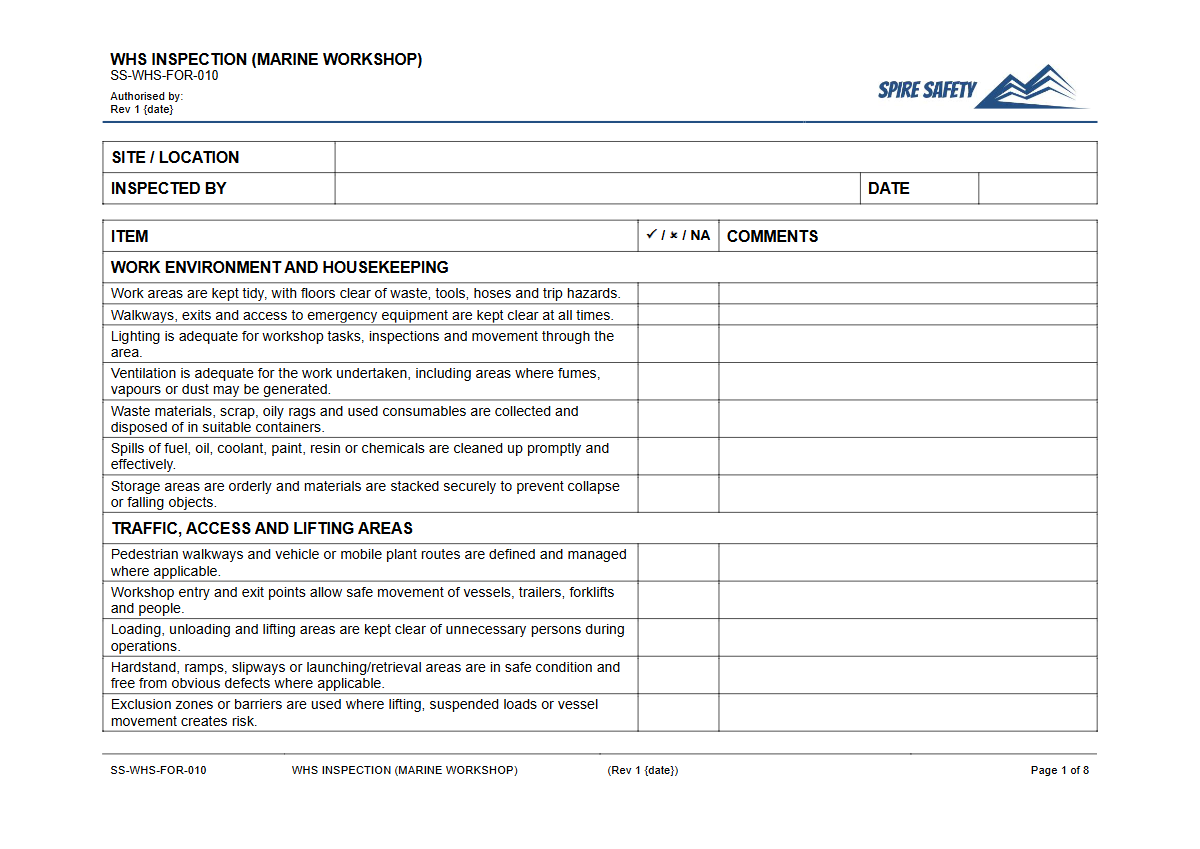
This Free WHS Inspection (Marine Workshop) Template provides a structured starting point for conducting and recording regular safety inspections in your facility. Using this document helps your organisation formalise its approach to hazard identification, risk assessment, and the implementation of control measures.
The primary purpose of this Inspection template is to create a consistent, documented process for proactively finding and fixing potential problems before they cause an incident or injury. It guides the user through key areas of a typical marine workshop, prompting checks on everything from the condition of tools and equipment to the state of emergency exits and first aid facilities.
Regular use of this template can help build a stronger safety culture, demonstrate due diligence, and form a critical part of your overall safety management framework. Effective documentation is a cornerstone of robust WHS management systems.
Video walkthrough
How to use the Free WHS Inspection (Marine Workshop) Template
Using the Free WHS Inspection (Marine Workshop) Template effectively involves more than just filling out the checklist. Follow these steps to integrate it properly into your safety processes:
- Download and Customise: Download the template in your preferred format (DOCX or PDF). The DOCX version is fully editable. It is crucial that you customise the document to reflect the specific layout, equipment, chemicals, and tasks performed in your workshop. We cannot know your specific circumstances, so you must adapt this template to fit your operational reality.
- Assign Responsibility: Clearly define who is responsible for conducting the inspections (e.g., Workshop Manager, Supervisor, Health and Safety Representative) and the frequency.
- Train Your Team: Ensure the person performing the inspection understands what they are looking for and the risk level associated with different hazards. They should be competent to identify non-compliance or unsafe conditions.
- Conduct the Inspection: Walk through the workshop systematically, completing each section of the template. Note any hazards, non-compliances, or areas for improvement, and assign a risk rating if applicable.
- Document and Act: Record all findings clearly. For every identified issue, document the corrective action required, assign responsibility for completing it, and set a due date. This creates an auditable trail of your risk management activities. Follow-up is essential; a checklist is useless if actions are not taken.
Key Areas to Customise
When adapting this template, pay special attention to sections covering:
- Specific Machinery: List the exact plant and equipment used in your workshop (e.g., welders, grinders, engine hoists, lathes). For certain high-risk equipment, a more detailed check may be needed, such as using our Free Pre-Start Checklist (Electric Hoist) Template.
- Chemicals and Substances: List the specific paints, solvents, resins, fuels, and cleaning agents you store and use. Refer to their Safety Data Sheets (SDS) for specific storage and handling requirements.
- Work Processes: Add checkpoints relevant to your unique tasks, such as fibreglassing, engine overhauls, welding on vessels, or working in confined spaces.
- Site Layout: Tailor sections on access, egress, and traffic management to your workshop's specific floor plan and yard layout.
When to use this Inspection Template
Regular, scheduled inspections are fundamental to good WHS practice. The ideal frequency depends on the level of risk and the nature of the work. A common schedule might involve:
- Monthly or Quarterly: For a comprehensive, wall-to-wall inspection of the entire workshop.
- Following an Incident: To identify contributing factors and prevent recurrence.
- After introducing new equipment or processes: To ensure new hazards haven't been introduced.
- Before a high-risk project: To verify that all controls are in place and functioning correctly.
These formal inspections supplement, but do not replace, the need for daily pre-start checks on equipment and general visual inspections by workers as part of their day-to-day duties. While this document is for the broader workshop, specific machinery like site vehicles may also require daily checks, for which a Free Pre-Start Checklist (Lawn Tractor) Template can be adapted.
Who should use this Template
This Inspection template is designed for use by individuals with responsibility for workplace safety in a marine service or repair environment. This includes:
- Workshop Managers and Supervisors: They hold primary responsibility for ensuring a safe work environment and are often tasked with overseeing or conducting inspections.
- Health and Safety Representatives (HSRs): Elected HSRs can use this template as a tool to conduct inspections of their work group's area.
- WHS Advisors or Officers: Safety professionals can use this as a baseline for developing a more comprehensive audit tool. For greater assurance, organisations may engage external experts for periodic WHS compliance auditing.
- Business Owners (PCBUs): For smaller operations, the owner may conduct inspections themselves to fulfil their primary duty of care.
No matter who completes the form, it is vital that findings are communicated to all relevant workers and management. To find other useful documents like this, you can browse our complete free WHS resources library. Different facility areas may require their own specific checks, for which you can adapt other resources, such as our Free Pre-Start Checklist (Freezer) Template for galley or storage areas.
Common mistakes
Common mistakes to avoid
- Using a generic checklist without customising it for specific marine workshop hazards (e.g., saltwater corrosion, specific chemicals).
- Failing to follow up on identified hazards and document the corrective actions taken.
- Conducting inspections without involving the workers who actually perform the tasks.
- Treating the inspection as a 'tick-and-flick' exercise instead of a genuine effort to identify risks.
Legal references
Legal considerations
The following legal requirements may be relevant to this type of work.
- Work Health and Safety Act (Harmonised) — Provides the primary duties for protecting workers and other people from work health and safety risks.
- Work Health and Safety Regulations (Harmonised) — Sets out requirements supporting the management of workplace hazards and risks.
The following codes may be relevant to this type of work.
- Managing WHS Risks Code of Practice — Provides practical guidance on identifying hazards, assessing risks and applying effective controls.
- Work Health and Safety Consultation, Cooperation and Coordination Code of Practice — Provides practical guidance on consulting workers and coordinating with other duty holders.
- Managing the Work Environment and Facilities Code of Practice — Provides practical guidance on safe work environments, workplace facilities and related controls.
Did you know
Slips, Trips, and Falls
Slips, trips, and falls are a leading cause of injury in Australian workplaces. In a marine environment, the constant presence of water, oils, and uneven surfaces significantly increases this risk.
Confined Spaces
Many marine vessels contain confined spaces like tanks, voids, and chain lockers. These areas pose serious risks from atmospheric hazards and require specific entry permits and procedures under WHS regulations.
FAQ
Frequently asked questions
01What should a marine workshop WHS inspection cover?
02How often should marine workshops be inspected for WHS?
03Is this template suitable for commercial vessel maintenance?
04Who is responsible for conducting WHS inspections in a workshop?
Share this resource
Free WHS Inspection (Marine Workshop) Template
Browse Categories
How To Use It
- 1Download and open in Word or PDF.
- 2Replace the placeholders with your business details.
- 3Get it reviewed by a WHS specialist before rollout.
Need it customised?
Our WHS consultants can adapt this template to your site, run a gap analysis, or audit what you already have in place.
Book a Free Consultation WHS consulting servicesor call 1300 156 382