
Free WHS Inspection (Meat Plant) Template
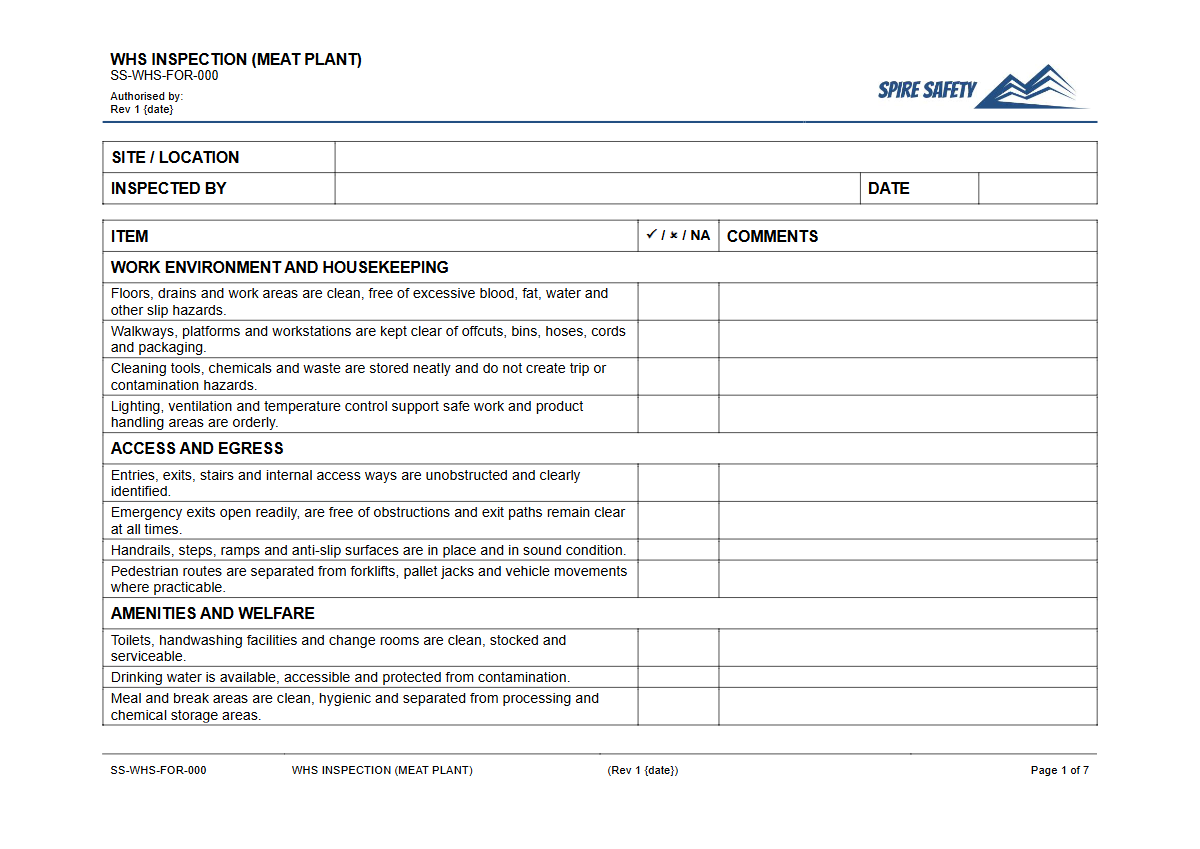
Download our Free WHS Inspection (Meat Plant) Template (DOCX/PDF). A structured starting point to help you identify hazards in your meat processing facility.
Free WHS Inspection (Meat Plant) Template
DOCX • 128 KB + PDF
Updated Oct 2026
No signup required
Purpose of the Free WHS Inspection (Meat Plant) Template
A meat processing plant presents a unique and high-risk work environment. This Free WHS Inspection (Meat Plant) Template provides a structured starting point for systematically identifying, assessing, and controlling hazards specific to your facility.
Regular inspections are a fundamental part of proactive safety management, helping you move beyond reactive incident response. Using a formal checklist helps ensure consistency, provides documented evidence of your due diligence, and demonstrates a commitment to workplace health and safety.
This template prompts checks across various critical areas, including processing equipment (saws, grinders, slicers), refrigeration and freezer systems, chemical storage, waste disposal, amenities, and traffic management. By formalising your inspection process, you can better manage risks such as cuts, musculoskeletal disorders, slips and falls, and exposure to biological hazards. The goal is to uncover potential issues before they lead to an injury or illness, forming a crucial component of your overall WHS management systems.
Video walkthrough
How to use the Free WHS Inspection (Meat Plant) Template
This downloadable template is provided in both DOCX and PDF formats, allowing you to easily adapt it to your specific operational needs. A generic checklist cannot cover every hazard in every workplace, so customisation is essential for it to be effective.
IMPORTANT: This is a template, not an out-of-the-box solution. You must customise it to reflect the specific layout, machinery, processes, and risks present in your workplace.
We recommend a competent person reviews and adapts the template before use.
Steps for Effective Use:
- Customise the Checklist: Walk through your facility and add or remove items to align the template with your specific site. Include sections for different areas like the kill floor, boning room, packing areas, and cool rooms. For specific equipment like large walk-in cold storage, you may want to use a more detailed daily check, such as our free Pre-Start Checklist (Freezer) Template.
- Involve Your Team: Conduct inspections with a team that includes supervisors, Health and Safety Representatives (HSRs), and workers from the area. Their direct experience is invaluable for identifying subtle or task-specific hazards.
- Document Findings: Clearly record any identified hazards, potential risks, and non-conformances. Use photos where possible to add context. A common issue is failing to address spills promptly; consider reinforcing procedures using a resource like our Spill Prevention and Response Toolbox Talk Template to improve awareness.
- Assign Corrective Actions: For each issue found, assign a specific person responsible for implementing a solution, set a realistic deadline, and track the action to completion.
When to use it
The frequency of your inspections should be determined by a risk assessment. High-risk environments require more frequent checks.
- Scheduled Inspections: Conduct comprehensive workplace inspections on a regular schedule, such as weekly or monthly, to monitor ongoing safety performance.
- Post-Incident: Always perform an inspection of the relevant area after an incident or near miss to identify contributing factors and prevent a recurrence.
- Process or Equipment Changes: Use the checklist to review safety before and after introducing new machinery, chemicals, or work procedures. Many items of plant, from bandsaws to mixers, benefit from daily checks in addition to these broader inspections. A good example of a focused daily check is our free Pre-Start Checklist (Blender) Template.
- Legislative Changes: When WHS laws or industry codes of practice are updated, an inspection can help verify that your controls remain adequate.
Who should use it
This template is designed for use by anyone with responsibility for health and safety in a meat processing environment. This includes:
- WHS Managers and Safety Officers: For implementing and managing the workplace inspection program.
- Supervisors and Team Leaders: For conducting regular inspections of their specific work areas and teams.
- Health and Safety Representatives (HSRs): As a tool for representing their work group and formally documenting safety concerns.
- Business Owners and Senior Management: To gain oversight of the state of safety within the organisation and ensure duties are being met. The results from these inspections can serve as valuable input for periodic WHS compliance auditing to verify the effectiveness of your entire safety system.
Common mistakes
Common mistakes to avoid
- Using a generic checklist without customising it for specific plant areas and machinery.
- Failing to involve workers who operate the equipment and work in the inspected areas.
- Only looking for physical hazards while overlooking psychosocial or ergonomic risks like repetitive strain.
- Not following up on identified issues or assigning clear corrective actions with deadlines.
Legal references
Legal considerations
The following legal requirements may be relevant to this type of work.
- Work Health and Safety Act (Harmonised) — Provides the primary duties for protecting workers and other people from work health and safety risks.
- Work Health and Safety Regulations (Harmonised) — Sets out requirements supporting the management of workplace hazards and risks.
The following codes may be relevant to this type of work.
- Managing WHS Risks Code of Practice — Provides practical guidance on identifying hazards, assessing risks and applying effective controls.
- Work Health and Safety Consultation, Cooperation and Coordination Code of Practice — Provides practical guidance on consulting workers and coordinating with other duty holders.
- Managing the Work Environment and Facilities Code of Practice — Provides practical guidance on safe work environments, workplace facilities and related controls.
Did you know
Slips, Trips & Falls
The Australian food processing industry has one of the highest rates of serious injury claims. Slips, trips, and falls are a major contributor, often caused by wet and contaminated floor surfaces from water, blood, and fat.
FAQ
Frequently asked questions
01What is the difference between an inspection and an audit?
02How often should I inspect a meat processing plant?
03Who should be involved in a meat plant inspection?
04What are the most common hazards in a meat processing plant?
Share this resource
Free WHS Inspection (Meat Plant) Template
Browse Categories
How To Use It
- 1Download and open in Word or PDF.
- 2Replace the placeholders with your business details.
- 3Get it reviewed by a WHS specialist before rollout.
Need it customised?
Our WHS consultants can adapt this template to your site, run a gap analysis, or audit what you already have in place.
Book a Free Consultation WHS consulting servicesor call 1300 156 382