
Free WHS Inspection (Mechanical Workshop) Template
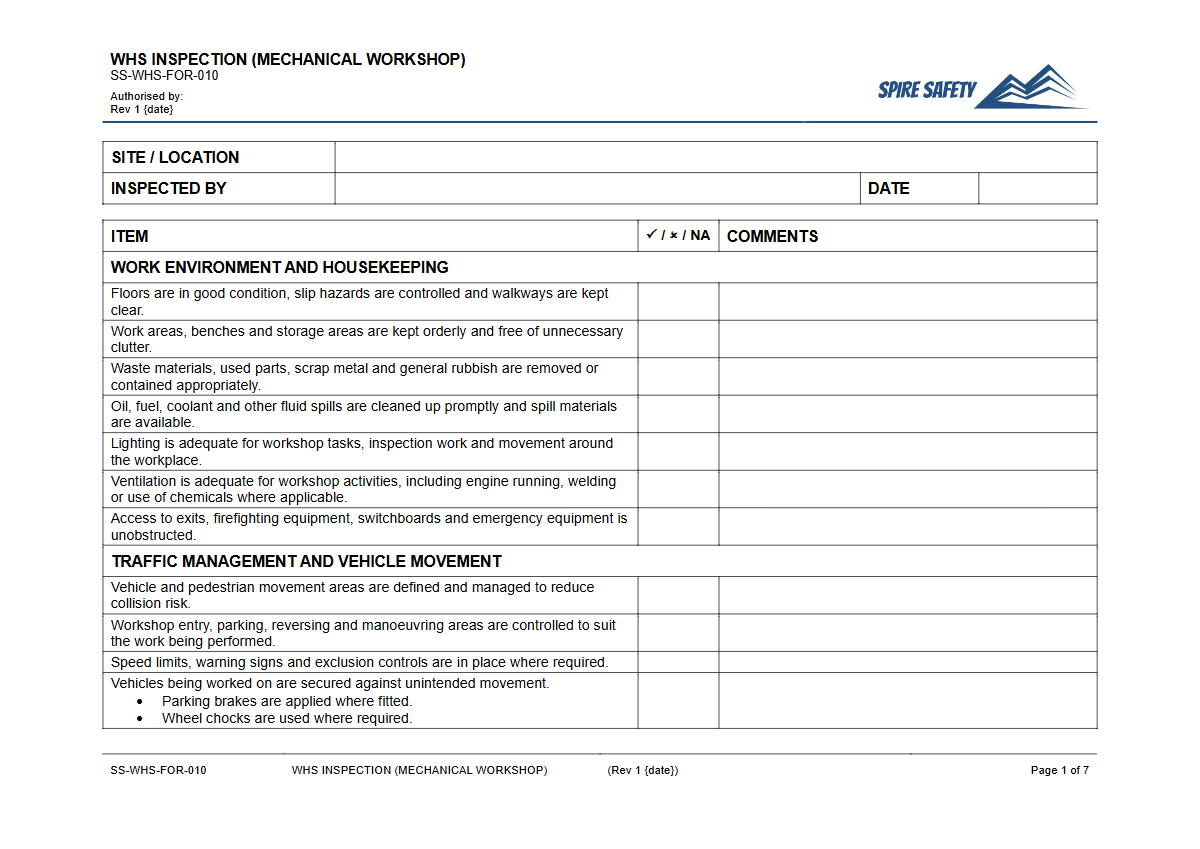
Download our Free WHS Inspection (Mechanical Workshop) Template to formalise your safety checks. This DOCX & PDF resource helps identify hazards.
Free WHS Inspection (Mechanical Workshop) Template
DOCX • 128 KB + PDF
Updated Oct 2026
No signup required
Purpose of the Free WHS Inspection (Mechanical Workshop) Template
Mechanical workshops are dynamic environments filled with significant WHS risks, from moving vehicles and heavy machinery to hazardous substances and electrical equipment. This Free WHS Inspection (Mechanical Workshop) Template provides a structured starting point for systematically identifying these hazards and assessing control measures.
Using a formal checklist helps ensure that critical safety items are not overlooked, promoting a safer workplace for everyone. It helps document your organisation's commitment to proactive risk management and continuous safety improvement.
A thorough inspection covers various elements, including the condition of vehicle hoists, power tools, welding equipment, and chemical storage. It also prompts checks for general workshop safety, such as housekeeping, emergency exit access, and fire safety equipment. For specific high-risk plant, you may need dedicated daily checks in addition to this broader inspection, such as our free Pre-Start Checklist (Electric Hoist) Template.
Video walkthrough
How to use the Free WHS Inspection (Mechanical Workshop) Template
This document is a template designed to be adapted to your specific operational needs. To get the most value, follow these steps:
- Download: Get your copy of the Inspection in DOCX or PDF format. The DOCX version is fully editable.
- Customise: Review every item on the checklist and modify it to reflect the actual equipment, processes, and hazards present in your workshop. Add, remove, or edit sections to align with your site layout, the types of vehicles you service, and the specific plant you use. We cannot stress this enough: you must customise this template for your specific workplace. A generic checklist is not sufficient to manage your unique risks.
- Train: Ensure that the personnel conducting the inspections are trained on how to use the customised checklist effectively. They should understand what each item means and how to identify non-conformances.
- Implement: Schedule and conduct the inspections at a regular frequency. Document the findings, assign corrective actions with deadlines, and track them to completion.
- Review: Periodically review the inspection results and the checklist itself to ensure it remains relevant and effective. This process of regular review and improvement is a core component of strong WHS management systems.
When to use this Inspection Template
Regular, scheduled inspections are key to maintaining a safe workshop. The ideal frequency depends on the size and complexity of your operations, but a monthly or quarterly schedule is a common starting point. In addition to routine checks, this inspection should be performed:
- After an incident, accident, or near-miss occurs.
- When new equipment or machinery is introduced into the workshop.
- Following significant changes to the workshop layout or work procedures.
- As part of annual WHS reviews or planning.
These formal inspections complement, but do not replace, daily pre-start checks on equipment or informal safety observations by workers. The goal is to create multiple layers of safety assurance.
A complete site safety plan should also consider external areas, such as using a free Pre-Start Checklist (Boom Gate) Template for site entry points.
Who should use this Inspection Template
This template is designed for use by various personnel responsible for workplace safety. Key users include:
- Workshop Managers and Supervisors: They hold primary responsibility for ensuring a safe working environment and are often tasked with completing or reviewing these inspections.
- Health and Safety Representatives (HSRs): HSRs can use this template to conduct formal inspections as part of their role in representing their work group's safety interests.
- WHS/HSE Officers: Safety professionals can use this as a tool for internal audits and to verify that safety standards are being met across the business. To verify the effectiveness of your entire safety framework, consider engaging external experts for WHS compliance auditing.
Engaging workers in the inspection process can also be highly beneficial, as they have direct, hands-on knowledge of the risks involved in their daily tasks. Even when inspecting ancillary equipment for grounds maintenance, using a formal process like our free Pre-Start Checklist (Lawn Tractor) Template reinforces a positive safety culture. For more tools to support your safety program, browse our complete free WHS resources library.
Common mistakes
Common mistakes to avoid
- Using a generic checklist without customising it for the specific workshop.
- Failing to assign and track corrective actions for identified hazards.
- Conducting the inspection as a 'tick-and-flick' exercise without genuine observation.
- Not involving workers who have hands-on knowledge of the risks.
Legal references
Legal considerations
The following legal requirements may be relevant to this type of work.
- Work Health and Safety Act (Harmonised) — Provides the primary duties for protecting workers and other people from work health and safety risks.
- Work Health and Safety Regulations (Harmonised) — Sets out requirements supporting the management of workplace hazards and risks.
The following codes may be relevant to this type of work.
- Managing WHS Risks Code of Practice — Provides practical guidance on identifying hazards, assessing risks and applying effective controls.
- Work Health and Safety Consultation, Cooperation and Coordination Code of Practice — Provides practical guidance on consulting workers and coordinating with other duty holders.
- Managing the Work Environment and Facilities Code of Practice — Provides practical guidance on safe work environments, workplace facilities and related controls.
Did you know
Vehicle Hoist Risks
According to Safe Work Australia, incidents involving vehicle hoists are a major cause of death and serious injury in the vehicle repair industry, often due to hoist collapse, failure, or improper use.
FAQ
Frequently asked questions
01How often should I conduct a mechanical workshop inspection?
02Is this template compliant with Australian WHS laws?
03What are the most common hazards in a mechanical workshop?
04Who is responsible for fixing issues found during an inspection?
Share this resource
Free WHS Inspection (Mechanical Workshop) Template
Browse Categories
How To Use It
- 1Download and open in Word or PDF.
- 2Replace the placeholders with your business details.
- 3Get it reviewed by a WHS specialist before rollout.
Need it customised?
Our WHS consultants can adapt this template to your site, run a gap analysis, or audit what you already have in place.
Book a Free Consultation WHS consulting servicesor call 1300 156 382