
Free WHS Inspection (Manufacturing Plant) Template
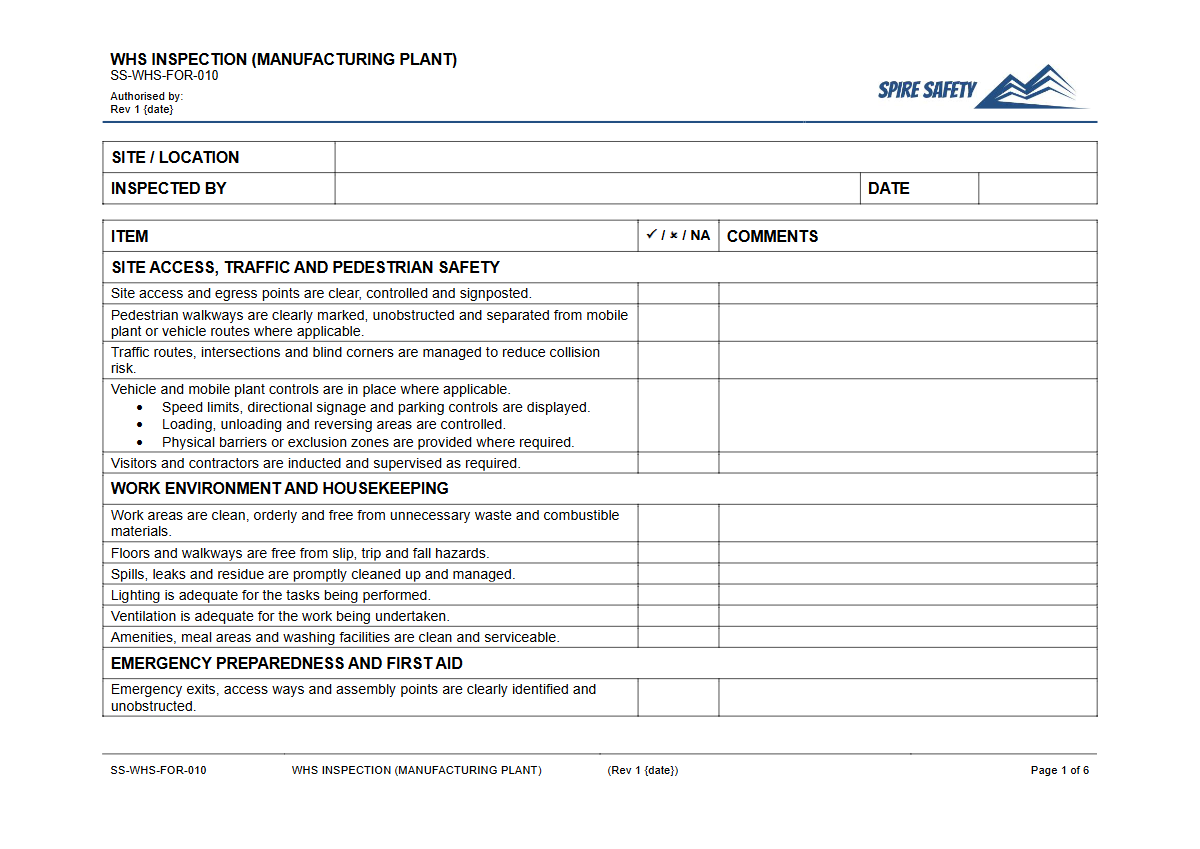
Regularly inspect your manufacturing plant for WHS hazards. Our Free WHS Inspection (Manufacturing Plant) Template provides a structured starting point.
Free WHS Inspection (Manufacturing Plant) Template
DOCX • 127 KB + PDF
Updated Oct 2026
No signup required
Purpose of the Free WHS Inspection (Manufacturing Plant) Template
Maintaining a safe manufacturing environment requires proactive and systematic hazard identification. This Free WHS Inspection (Manufacturing Plant) Template provides a documented framework for reviewing your workplace, helping you find and fix risks before they cause harm.
Regular, thorough inspections are a cornerstone of effective safety management, assisting a Person Conducting a Business or Undertaking (PCBU) in meeting their primary duty of care. This template is designed as a starting point, to be adapted to the unique layout, machinery, and processes of your facility.
Using a structured checklist helps ensure that inspections are consistent, comprehensive, and that no critical areas are overlooked. It creates a formal record of your safety efforts, which can be invaluable for demonstrating due diligence, tracking hazard correction, and identifying trends over time.
The findings from these inspections are critical inputs for your overall comprehensive WHS management system, driving continuous improvement and fostering a positive safety culture.
Video walkthrough
How to use the Free WHS Inspection (Manufacturing Plant) Template
This template is available for download in both DOCX and PDF formats. The DOCX version is fully editable, allowing for easy customisation to suit your specific operational needs.
The process involves more than just ticking boxes; it's an active process of observation, engagement, and follow-up. An effective inspection cycle is a key activity reviewed during independent WHS compliance auditing.
Key Inspection Areas
While the template provides a detailed list, your inspection should cover all relevant aspects of the work environment. Focus areas in a manufacturing setting typically include:
- Plant and Equipment: Check for adequate machine guarding, functioning emergency stops, fluid leaks, and regular maintenance records. For mobile plant like forklifts or loaders, a specific skidsteer risk assessment template can be used to manage vehicle-specific hazards.
- Hazardous Chemicals: Ensure correct segregation and storage, clear labelling, availability of Safety Data Sheets (SDS), and adequate ventilation and spill kits. Reinforce safe handling by running a Spill Prevention and Response Toolbox Talk with relevant teams.
- Electrical Safety: Look for damaged leads, plugs, and sockets. Verify that electrical equipment is tested and tagged in line with legislative requirements and that switchboards are unobstructed.
- Access, Egress, and Housekeeping: Confirm that walkways, stairs, and emergency exits are clear of obstruction. Assess general tidiness, waste management, and the control of slip and trip hazards. Work at height requires particular attention, and a dedicated Elevated Work Platform Risk Assessment should be in place for those tasks.
- Manual Tasks: Observe work practices for hazardous manual tasks, assessing awkward postures, repetitive movements, and the availability of mechanical aids.
Important: This template must be adapted to your workplace. We cannot guarantee it covers every specific hazard at your site.
You MUST customise this template by adding, removing, or modifying sections to reflect the specific plant, equipment, substances, and work processes at your manufacturing facility.
When to use it
The frequency of general plant inspections depends on the level of risk. A common schedule is monthly or quarterly, but this may need to be adjusted based on your operations. In addition to routine checks, a full inspection should be conducted:
- After an incident, accident, or near-miss occurs.
- Before introducing new machinery, equipment, or substances.
- When work processes or the layout of the plant changes.
- As part of a scheduled review of your safety management system.
While daily checks might use a more focused document like a pre-start checklist for a feed mixer, these broader general inspections provide a periodic deep dive into the overall state of your facility's safety.
Who should use it
Workplace inspections should be conducted by competent personnel who are familiar with the work area and its associated hazards. This often includes:
- WHS Managers or Safety Officers
- Supervisors and Line Managers
- Health and Safety Representatives (HSRs)
- Members of the WHS Committee
Involving a mix of management and workers can provide a more holistic view, combining procedural knowledge with on-the-ground experience. For highly complex or high-risk environments, engaging external specialist WHS consulting services for an independent inspection can provide an objective and expert assessment, identifying issues that internal teams may have overlooked.
Common mistakes
Common mistakes to avoid
- Failing to customise the template for the specific machinery, layout, and risks of the site.
- Completing the checklist as a paper exercise without thoroughly observing the work environment.
- Neglecting to assign clear corrective actions, responsibilities, and deadlines for identified hazards.
- Not following up to ensure that corrective actions have been effectively implemented and have controlled the risk.
Legal references
Legal considerations
The following legal requirements may be relevant to this type of work.
- Work Health and Safety Act (Harmonised) — Provides the primary duties for protecting workers and other people from work health and safety risks.
- Work Health and Safety Regulations (Harmonised) — Sets out requirements supporting the management of workplace hazards and risks.
The following codes may be relevant to this type of work.
- Managing WHS Risks Code of Practice — Provides practical guidance on identifying hazards, assessing risks and applying effective controls.
- Work Health and Safety Consultation, Cooperation and Coordination Code of Practice — Provides practical guidance on consulting workers and coordinating with other duty holders.
- Managing the Work Environment and Facilities Code of Practice — Provides practical guidance on safe work environments, workplace facilities and related controls.
Did you know
Manufacturing Industry Statistics
According to Safe Work Australia, the manufacturing industry is one of the top industries for serious workers' compensation claims, highlighting the critical need for robust safety systems and regular inspections.
Hierarchy of Control
When addressing hazards found during an inspection, always apply the hierarchy of control. Aim to eliminate the hazard first, and if that's not possible, use substitution, isolation, or engineering controls before relying on administrative controls or PPE.
FAQ
Frequently asked questions
01What is the difference between a pre-start check and a general plant inspection?
02How often should a manufacturing plant WHS inspection be done?
03Who is responsible for fixing hazards found during an inspection?
04Can this template be used for OHS in Victoria or WorkSafe WA?
Share this resource
Free WHS Inspection (Manufacturing Plant) Template
Browse Categories
How To Use It
- 1Download and open in Word or PDF.
- 2Replace the placeholders with your business details.
- 3Get it reviewed by a WHS specialist before rollout.
Need it customised?
Our WHS consultants can adapt this template to your site, run a gap analysis, or audit what you already have in place.
Book a Free Consultation WHS consulting servicesor call 1300 156 382