
Free WHS Inspection (Maintenance Depot) Template
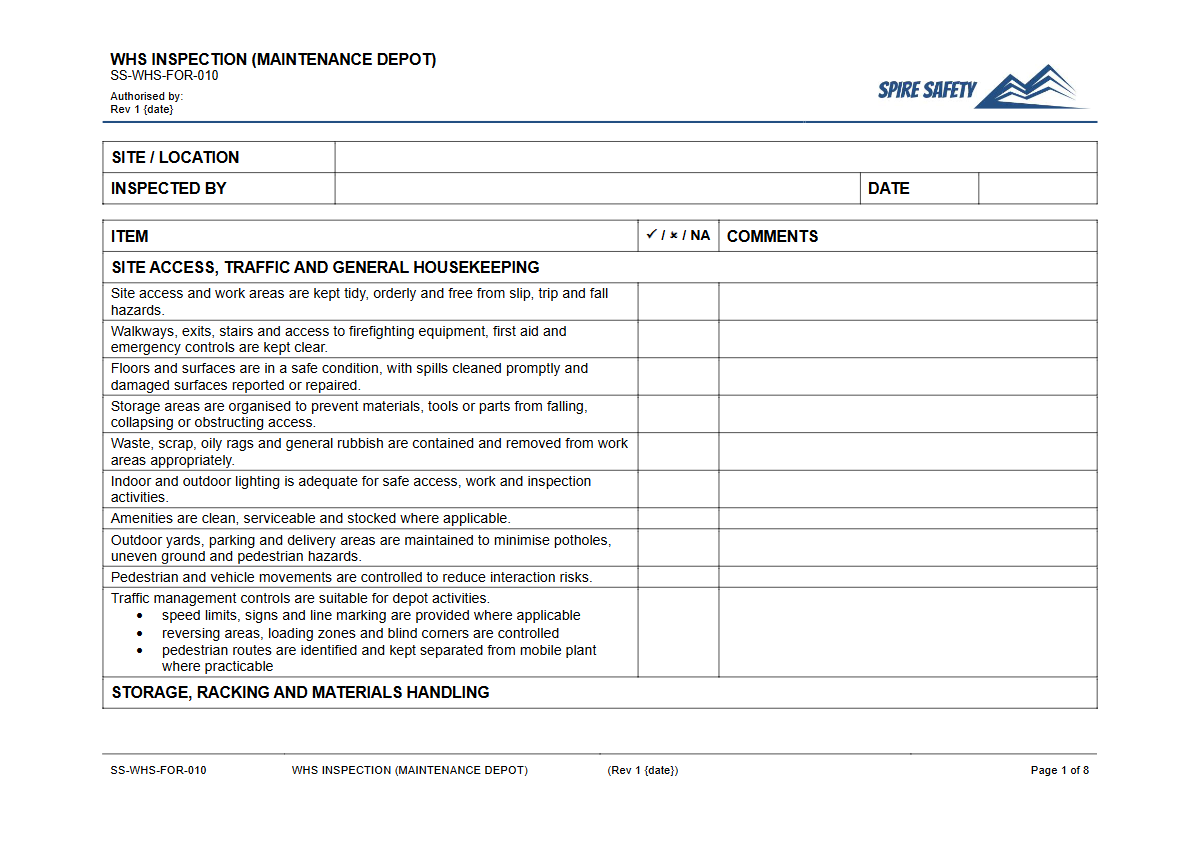
Download our Free WHS Inspection (Maintenance Depot) Template to formalise safety checks in your workshop. A structured starting point to identify hazards.
Free WHS Inspection (Maintenance Depot) Template
DOCX • 129 KB + PDF
Updated Oct 2026
No signup required
Purpose of the Free WHS Inspection (Maintenance Depot) Template
Maintenance depots are dynamic environments with a unique combination of risks, including vehicle movements, hazardous substances, plant and equipment, and manual tasks. This Free WHS Inspection (Maintenance Depot) Template provides a structured starting point for systematically identifying and managing these hazards.
Regular inspections are a key proactive measure in preventing incidents and promoting a strong safety culture. Using a formal checklist helps ensure that no area is overlooked, from workshop bays and storage areas to staff amenities and first aid facilities.
The goal is to create a documented record of your safety diligence and a clear action plan for any identified issues. This process is fundamental to meeting your duties under WHS legislation.
The template is designed to be comprehensive, covering a broad range of common depot hazards. It encourages a thorough review of not just the physical equipment but also the work environment and procedures.
For checks on specific high-risk plant, you may need more detailed forms, such as our free Pre-Start Checklist for an Electric Hoist, which can supplement this general depot inspection.
Video walkthrough
How to use the Free WHS Inspection (Maintenance Depot) Template
This template is provided in both DOCX and PDF formats for your convenience. The DOCX version is fully editable, allowing you to tailor the checklist to the specific layout, equipment, and activities of your maintenance depot.
It is organised into logical sections to guide the inspector through the workplace in a systematic manner. For each item, the inspector can note compliance, identify non-conformance, and detail the corrective actions required, including assigning responsibility and a due date.
Important: This document is a template, not a finished product. We have developed it as a starting point based on common industry practice, but it must be customised to reflect the specific risks at your site.
You must review and adapt the checklist content to ensure it is suitable for your unique operations. Integrating this inspection process into a comprehensive WHS management system ensures that findings are tracked, reviewed, and used to drive continuous improvement in your safety performance.
Key Areas to Inspect in a Maintenance Depot
While customising your template, ensure it covers these critical areas:
- Traffic Management: Review designated walkways, vehicle exclusion zones, signage, and speed limits. Check vehicle access points like those covered in our Boom Gate Pre-Start Checklist.
- Workshop & Bays: Inspect vehicle hoists, jacks, tools, guarding on machinery, lighting, ventilation, and general housekeeping.
- Hazardous Substances & Dangerous Goods: Check that chemicals are correctly stored, labelled, and have accessible Safety Data Sheets (SDS). Ensure spill kits are stocked and accessible.
- Plant & Equipment: Verify that maintenance is up-to-date and that pre-start checks are being completed. For specific plant like ride-on mowers, you can use our Lawn Tractor Pre-Start Checklist as a guide.
- Emergency Preparedness: Confirm fire extinguishers are serviced, first aid kits are stocked, and emergency exits are clear.
- Amenities & General: Check the condition of lunchrooms, toilets, and other facilities to ensure they meet welfare standards.
When to use it
The frequency of depot inspections depends on the level of risk and the nature of the work. A common approach is to schedule them at regular intervals, such as weekly or monthly.
More frequent inspections may be necessary for high-risk areas like a welding bay or paint shop. Inspections should also be triggered by specific events, such as after a safety incident, before introducing new plant or substances, or following significant changes to the workshop layout.
These inspections can also form part of a broader WHS compliance auditing program to verify that safety procedures are effective in practice.
Who should use it
Workplace inspections should be conducted by competent personnel who are familiar with the depot's operations and potential hazards. This often includes supervisors, managers, or Health and Safety Representatives (HSRs).
Involving workers who perform the tasks day-to-day can provide valuable insights into unreported hazards or practical challenges with existing controls. The completed inspection report should be reviewed by management to ensure that corrective actions are resourced and implemented in a timely manner.
This entire process can be guided and supported by our WHS consulting services if you require expert assistance. For more tools to enhance your safety processes, feel free to browse our complete free WHS resources library.
Common mistakes
Common mistakes to avoid
- Using a generic checklist without customising it for your specific depot and its risks.
- Failing to assign clear responsibility and deadlines for corrective actions found during the inspection.
- 'Pencil-whipping' the form without physically verifying each item in the workplace.
- Not involving workers who use the equipment and work in the areas being inspected.
Legal references
Legal considerations
The following legal requirements may be relevant to this type of work.
- Work Health and Safety Act (Harmonised) — Provides the primary duties for protecting workers and other people from work health and safety risks.
- Work Health and Safety Regulations (Harmonised) — Sets out requirements supporting the management of workplace hazards and risks.
The following codes may be relevant to this type of work.
- Managing WHS Risks Code of Practice — Provides practical guidance on identifying hazards, assessing risks and applying effective controls.
- Work Health and Safety Consultation, Cooperation and Coordination Code of Practice — Provides practical guidance on consulting workers and coordinating with other duty holders.
- Managing the Work Environment and Facilities Code of Practice — Provides practical guidance on safe work environments, workplace facilities and related controls.
Did you know
Slips, Trips, and Falls
According to Safe Work Australia, slips, trips, and falls are a leading cause of serious injury in Australian workplaces, often resulting from poor housekeeping—a key item on any depot inspection checklist.
Hierarchy of Control
When you identify a hazard during an inspection, the Hierarchy of Control requires you to first try and eliminate the risk. Lower-level controls like administrative actions (e.g., signage) or PPE should only be used if higher-level controls are not practical.
FAQ
Frequently asked questions
01What is the difference between an inspection and an audit?
02How often should I inspect our maintenance depot?
03Who is responsible for fixing issues found during an inspection?
04Do I need a specific checklist for every piece of equipment?
Share this resource
Free WHS Inspection (Maintenance Depot) Template
Browse Categories
How To Use It
- 1Download and open in Word or PDF.
- 2Replace the placeholders with your business details.
- 3Get it reviewed by a WHS specialist before rollout.
Need it customised?
Our WHS consultants can adapt this template to your site, run a gap analysis, or audit what you already have in place.
Book a Free Consultation WHS consulting servicesor call 1300 156 382