
Free WHS Inspection (Machine Shop) Template
Download our free WHS Inspection (Machine Shop) Template.
Free WHS Inspection (Machine Shop) Template
DOCX • 128 KB + PDF
Updated Oct 2026
No signup required
Purpose of the Free WHS Inspection (Machine Shop) Template
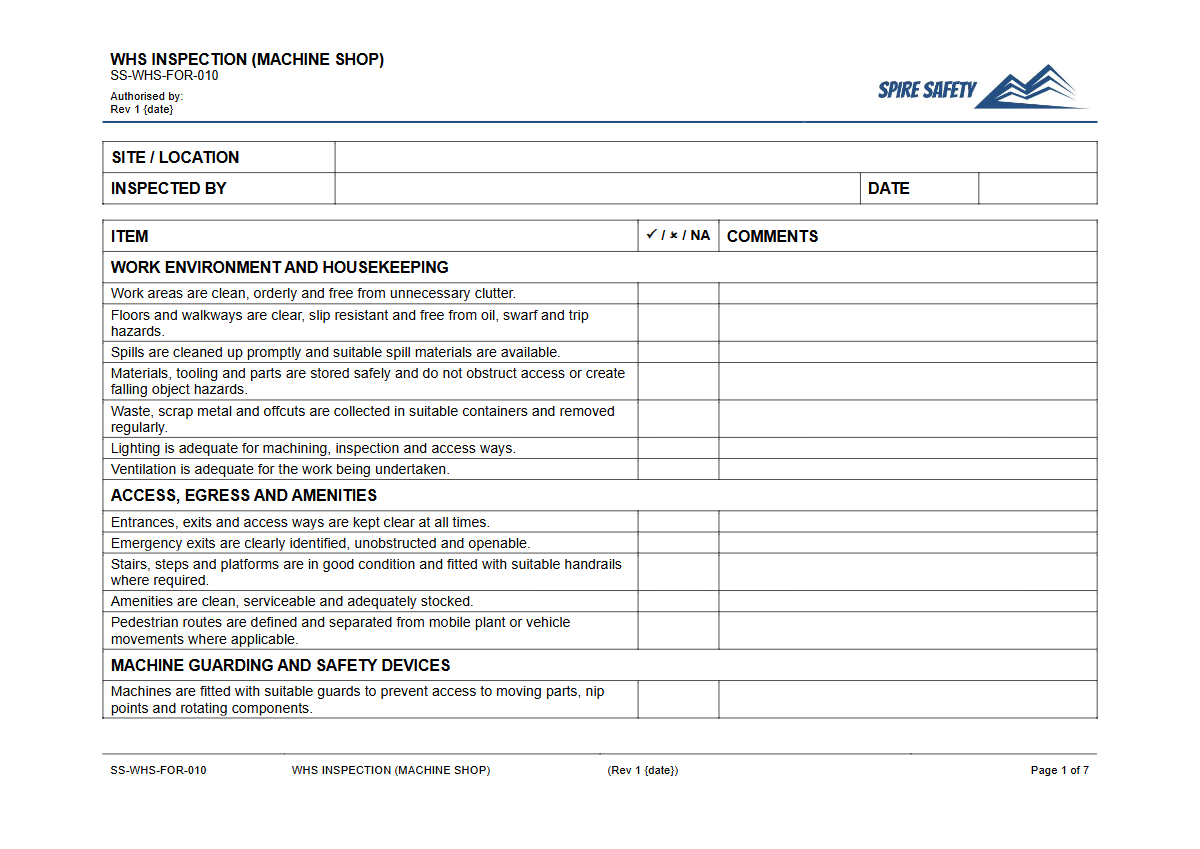
Strengthen safety protocols in your workshop with our Free WHS Inspection (Machine Shop) Template. This resource provides a structured starting point for systematically identifying and managing the unique hazards present in a machine shop environment.
Regular, documented inspections are a fundamental part of a proactive safety culture, helping to prevent injuries, reduce downtime, and demonstrate due diligence. Machine shops, with their combination of heavy machinery like lathes, mills, grinders, and CNC machines, present significant risks from moving parts, electrical energy, noise, and hazardous substances.
Using this template helps formalise your inspection process, ensuring that key safety elements are not overlooked. It prompts a thorough review of equipment condition, guarding, operational procedures, and the surrounding work environment.
Integrating such inspections is a key component of effective WHS management systems, allowing your organisation to move beyond reactive incident response to proactive risk control.
Video walkthrough
How to use the Free WHS Inspection (Machine Shop) Template
This template is designed to be a flexible tool that you can adapt to your specific operational needs. After downloading the DOCX or PDF file, follow these steps to integrate it into your safety procedures:
- Customise: It is crucial to adapt this template to your specific workplace. We've designed it as a comprehensive starting point, but you must add, remove, or modify sections to reflect the unique machines, layouts, and processes in your workshop.
- Consult: Involve your workers and their health and safety representatives in customising the checklist. Their direct experience is invaluable for identifying hazards.
- Train: Ensure that the personnel conducting the inspection (e.g., supervisors, WHS committee members) are competent and trained to recognise the hazards listed.
- Schedule & Conduct: Establish a regular schedule for inspections and carry them out diligently.
- Document & Action: Record all findings clearly. For any identified issues, assign a corrective action, a responsible person, and a due date. Track all actions to completion.
- Review: Periodically review the template itself to ensure it remains relevant as equipment, processes, or regulations change.
Key Areas for Inspection
While your customised checklist will be specific, a comprehensive machine shop inspection should generally cover several critical domains:
- Machine Guarding: Are all guards in place, secure, and functioning correctly? This includes shields, covers, and light curtains designed to prevent contact with moving parts, pinch points, or ejected material.
- Emergency Stops: Are E-stops readily accessible, clearly labelled, and functional? Test them as part of the inspection process where safe to do so.
- Electrical Safety: Check for damaged cables, plugs, or conduits. Ensure electrical panels are closed and that lockout/tagout (LOTO) equipment is available and in good condition.
- Operational Controls: Are operating controls clearly marked and functioning as intended? Are there any unauthorised modifications?
- Housekeeping: Assess the area around machinery. Look for slip, trip, and fall hazards such as oil spills, trailing cables, or clutter. Ensure adequate lighting and ventilation.
- Ancillary Equipment: Don't forget associated plant like lifting devices. For example, a workshop crane requires its own checks, which can be guided by a specific tool like our electric hoist pre-start checklist.
- Operator Competency: While not a physical check, an inspection can note if operators appear to be following safe work procedures. This process supports the need for formal skills assessment, which can be documented using a resource like our Dowelling Machine VOC template.
When to conduct a Machine Shop Inspection
Formal, in-depth inspections using this template should be conducted at regular, planned intervals, such as monthly or quarterly. The frequency should be determined by a risk assessment, considering the age and condition of the machinery, the intensity of use, and your workplace's incident history.
Additional inspections are warranted after an incident or near miss, when new machinery is installed or existing machinery is modified, or when concerns are raised by workers. This structured approach contrasts with daily pre-start checks, which are faster visual checks of specific machines, such as those guided by our pre-start checklist for a dovetail machine.
These scheduled inspections form a crucial evidence base for internal and external reviews. They provide documented proof of your organisation's commitment to safety and are a key input for any formal WHS compliance auditing program.
Who should use this Inspection Template
This template is designed for use by individuals with responsibility for safety in a manufacturing or workshop environment. This can include:
- WHS Managers and Officers: To implement and oversee a systematic inspection program.
- Workshop Supervisors and Team Leaders: To conduct routine inspections of their areas of responsibility.
- Health and Safety Representatives (HSRs): As a tool to facilitate their functions in monitoring workplace safety.
- Maintenance Personnel: To guide safety checks during preventative maintenance activities.
By providing a consistent framework, the template ensures that everyone involved in safety oversight is working from the same page, contributing to a more robust and reliable safety management process. To discover more tools to support your safety program, browse our complete free WHS resources library.
Common mistakes
Common mistakes to avoid
- Using a generic, off-the-shelf template without customising it for the specific machinery and risks in your workshop.
- Failing to document and track corrective actions, leaving identified hazards unresolved.
- Focusing only on the machines themselves and neglecting the surrounding environment, such as housekeeping, lighting, or ventilation.
- Not providing adequate training to the personnel responsible for conducting the inspections.
Legal references
Legal considerations
The following legal requirements may be relevant to this type of work.
- Work Health and Safety Act (Harmonised) — Provides the primary duties for protecting workers and other people from work health and safety risks.
- Work Health and Safety Regulations (Harmonised) — Sets out requirements supporting the management of workplace hazards and risks.
The following codes may be relevant to this type of work.
- Managing WHS Risks Code of Practice — Provides practical guidance on identifying hazards, assessing risks and applying effective controls.
- Work Health and Safety Consultation, Cooperation and Coordination Code of Practice — Provides practical guidance on consulting workers and coordinating with other duty holders.
- Managing the Work Environment and Facilities Code of Practice — Provides practical guidance on safe work environments, workplace facilities and related controls.
Did you know
Machinery Injury Statistics
According to Safe Work Australia, machinery and equipment are a leading cause of workplace injuries, with thousands of serious workers' compensation claims related to machinery operation each year.
Hierarchy of Control
When managing machinery risks, the most effective control is always elimination (e.g., removing the hazardous machine), followed by substitution or engineering controls (e.g., adding effective guarding), before relying on administrative controls or PPE.
FAQ
Frequently asked questions
01What's the difference between a machine shop inspection and a daily pre-start check?
02How often should machine shop inspections be conducted in Australia?
03Who is legally responsible for machinery safety in a workshop?
04Should my inspection include equipment brought in by contractors?
Share this resource
Free WHS Inspection (Machine Shop) Template
Browse Categories
How To Use It
- 1Download and open in Word or PDF.
- 2Replace the placeholders with your business details.
- 3Get it reviewed by a WHS specialist before rollout.
Need it customised?
Our WHS consultants can adapt this template to your site, run a gap analysis, or audit what you already have in place.
Book a Free Consultation WHS consulting servicesor call 1300 156 382