
Free WHS Inspection (Laydown Yard) Template
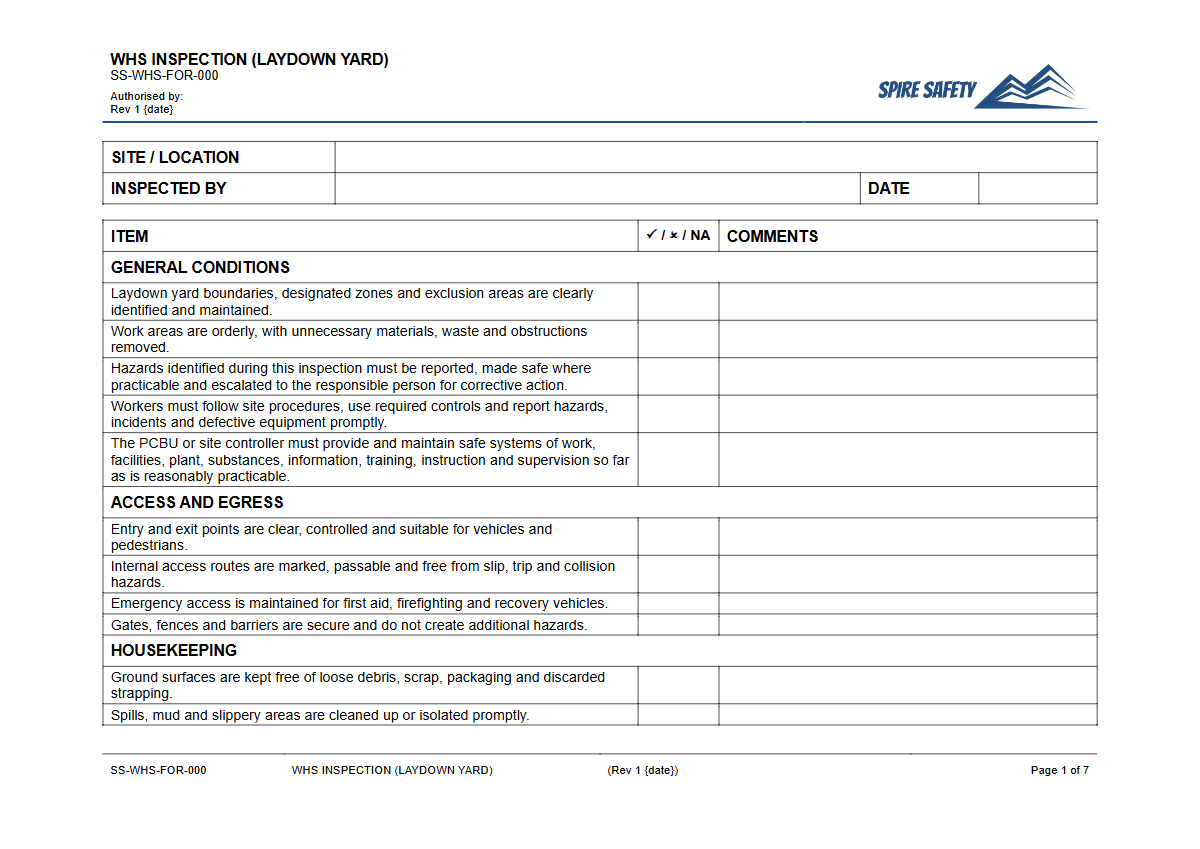
Download our free WHS Inspection (Laydown Yard) Template to help formalise your site safety checks.
Free WHS Inspection (Laydown Yard) Template
DOCX • 128 KB + PDF
Updated Oct 2026
No signup required
Purpose of the Free WHS Inspection (Laydown Yard) Template
Laydown yards are essential operational hubs in construction, mining, and manufacturing, but they present significant WHS risks. This free WHS Inspection (Laydown Yard) Template provides a structured framework for systematically identifying, assessing, and controlling hazards in these dynamic environments.
Regular inspections are a fundamental component of proactive safety management, helping to prevent incidents before they occur. Using this template helps an organisation demonstrate due diligence by formalising the process for monitoring workplace conditions, from traffic management and material storage to ground stability and general housekeeping.
By standardising your inspection process, you create consistent and reliable data that can be used to track performance, identify recurring issues, and inform broader safety strategies. An effective inspection program is a cornerstone of robust WHS management systems, ensuring that controls are being implemented and remain effective over time.
This template serves as a practical tool to facilitate that process, promoting a safer and more organised worksite.
Video walkthrough
How to use the Free WHS Inspection (Laydown Yard) Template
This resource is provided in both DOCX and PDF formats for your convenience. The DOCX file is fully editable, allowing for complete customisation to suit the unique characteristics of your specific laydown yard.
The PDF version is ready for immediate printing and use for more straightforward applications.
To get the most out of this template, follow these steps:
- Download the DOCX version.
- Review each section and checklist item, adding, removing, or modifying points to align with your site's specific layout, materials, equipment, and workflow. Consider hazards unique to your operations, such as specific chemicals, oversized components, or local environmental conditions.
- Add your company branding and specific site details.
- Once customised, use the document to conduct regular inspections. The person conducting the inspection should walk through the entire area, systematically checking each item.
- Document all findings, especially any non-conformances or hazards identified. For each issue, assign a corrective action, a responsible person, and a due date.
- File the completed inspection reports as part of your WHS records.
Important: This template is a starting point and must be customised to reflect the specific risks of your workplace. It is not a substitute for professional WHS advice tailored to your business needs.
You may need to integrate more specific checks for plant and equipment used within the yard; for instance, you could incorporate details from our Free Pre-Start Checklist (Electric Hoist) Template if lifting operations are frequent.
When to use this Inspection
Regularity is key to an effective inspection schedule. The ideal frequency will depend on the intensity of activity, the types of materials stored, and the overall risk profile of your laydown yard. As a general guide, consider conducting formal, documented inspections:
- Routinely: A weekly or fortnightly schedule is a common and effective practice for most active sites.
- After Significant Changes: Conduct an inspection after any major change, such as the delivery of a large new shipment of materials, the introduction of new types of mobile plant, or reconfiguration of the yard layout.
- Following an Incident: If an incident or a near-miss occurs, a thorough inspection of the area is essential to identify any contributing factors and prevent recurrence.
- After Extreme Weather: High winds, heavy rain, or flooding can significantly impact ground stability, the security of stacked materials, and drainage. An inspection is crucial to ensure the area remains safe.
- Site Supervisors or Forepersons
- Project Managers
- WHS Officers or Advisors
- Health and Safety Representatives (HSRs)
These routine inspections are a vital part of your operational safety measures and provide valuable evidence during formal WHS compliance auditing.
Who should use this Inspection
Inspections should be carried out by a person or team with the knowledge and competence to recognise hazards within a laydown yard. This typically includes:
Involving workers who operate in the area can also provide valuable insights, as they have firsthand experience with the daily operations and potential risks. A collaborative approach to inspections often yields the best results, fostering a stronger safety culture and shared ownership of workplace safety.
Managing who comes and goes from the site is also a critical control, and checks on perimeter security like fencing and entry points should be included. This can extend to verifying that access controls, such as those covered in a Free Pre-Start Checklist (Boom Gate) Template, are functioning correctly.
The physical environment of the yard itself requires constant attention. The ground surface must be stable, well-drained, and free from potholes or excessive mud that could create trip hazards or affect vehicle stability.
For larger grassed or soil areas, regular maintenance is essential, which may involve processes similar to those found in our Free Pre-Start Checklist (Aerator) Template to ensure ground integrity.
Explore our complete free WHS resources library to find more templates, checklists, and guides to support your safety management system.
Common mistakes
Common mistakes to avoid
- Assuming a 'set and forget' layout without regular review and adaptation.
- Failing to properly segregate pedestrian walkways from vehicle and mobile plant operating areas.
- Improper stacking techniques, leading to unstable piles of materials that could collapse.
- Neglecting to document inspections and any corrective actions taken.
Legal references
Legal considerations
The following legal requirements may be relevant to this type of work.
- Work Health and Safety Act (Harmonised) — Provides the primary duties for protecting workers and other people from work health and safety risks.
- Work Health and Safety Regulations (Harmonised) — Sets out requirements supporting the management of workplace hazards and risks.
The following codes may be relevant to this type of work.
- Managing WHS Risks Code of Practice — Provides practical guidance on identifying hazards, assessing risks and applying effective controls.
- Work Health and Safety Consultation, Cooperation and Coordination Code of Practice — Provides practical guidance on consulting workers and coordinating with other duty holders.
- Managing the Work Environment and Facilities Code of Practice — Provides practical guidance on safe work environments, workplace facilities and related controls.
Did you know
Struck-By Incidents
A significant portion of workplace fatalities in Australia involve being hit by moving or falling objects. Laydown yards, with their mix of mobile plant and stacked materials, are high-risk zones for these types of incidents.
Housekeeping is Key
Poor housekeeping is a leading contributor to trips, slips, and falls, which are among the most common causes of workplace injury. A well-organised laydown yard directly reduces these risks.
FAQ
Frequently asked questions
01What are the key hazards to look for in a laydown yard?
02How often should I inspect a laydown yard?
03Is this laydown yard inspection template a legal document?
04Who can conduct a laydown yard inspection?
Share this resource
Free WHS Inspection (Laydown Yard) Template
Browse Categories
How To Use It
- 1Download and open in Word or PDF.
- 2Replace the placeholders with your business details.
- 3Get it reviewed by a WHS specialist before rollout.
Need it customised?
Our WHS consultants can adapt this template to your site, run a gap analysis, or audit what you already have in place.
Book a Free Consultation WHS consulting servicesor call 1300 156 382