
Free WHS Inspection (Laundry) Template
Download our free WHS Inspection (Laundry) Template to formalise safety checks for washers, dryers, and irons.
Free WHS Inspection (Laundry) Template
DOCX • 128 KB + PDF
Updated Oct 2026
No signup required
Purpose of the Free WHS Inspection (Laundry) Template
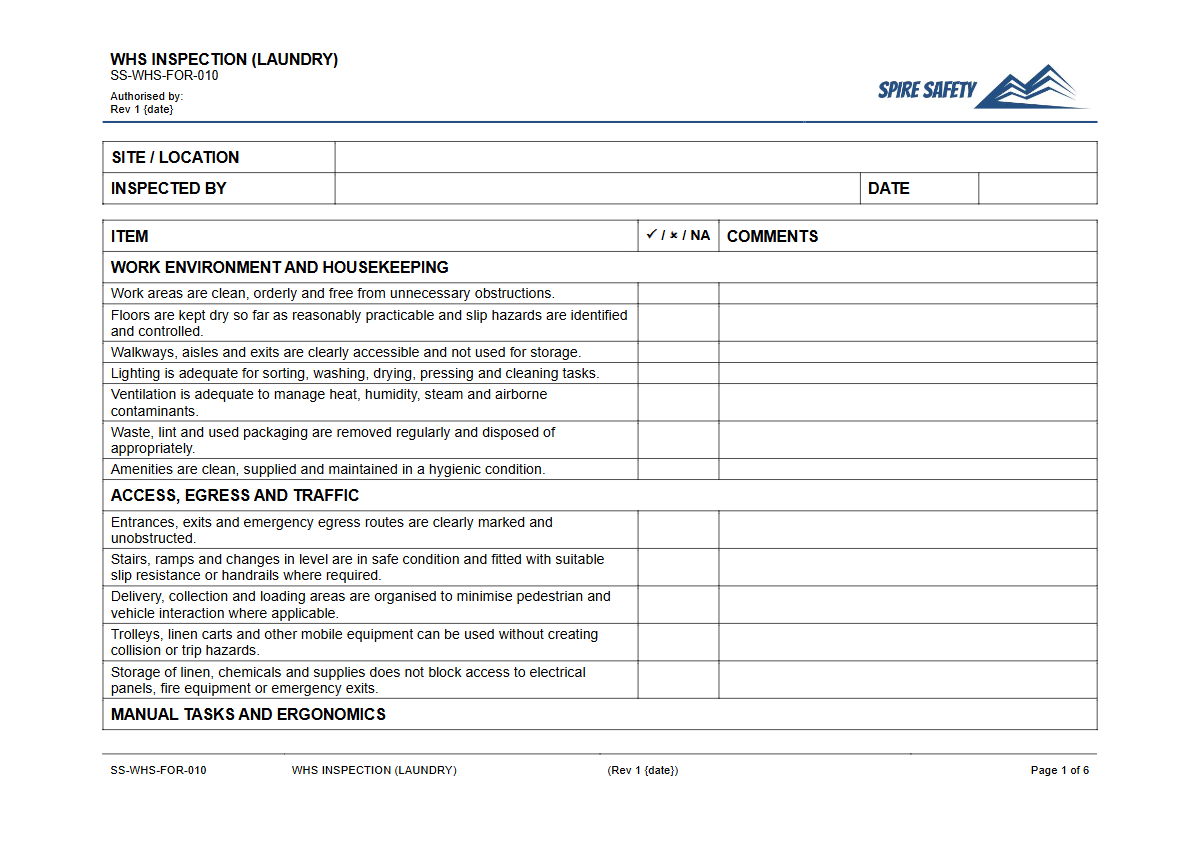
This Free WHS Inspection (Laundry) Template provides a structured starting point for businesses to formalise their safety inspection process for on-site laundry operations. Laundries, whether in hotels, aged care facilities, hospitals, or laundromats, present a unique combination of hazards.
These include wet floors causing slips, exposure to hazardous chemicals, ergonomic strains from manual handling, and risks associated with electrical and gas-powered machinery. Regularly using this template helps a Person Conducting a Business or Undertaking (PCBU) to proactively identify and control these risks before they lead to an incident.
Implementing regular, documented inspections is a fundamental part of a proactive safety culture. It demonstrates a commitment to worker safety and provides tangible records of your risk management activities.
Integrating these checks into your overall safety framework helps ensure that your processes are robust and consistently applied. A systematic approach is crucial for maintaining a safe work environment and can be a core component of effective WHS management systems.
Video walkthrough
How to use the Free WHS Inspection (Laundry) Template
Using the inspection template is straightforward. Download the file in your preferred format (DOCX for easy editing or PDF for printing) and integrate it into your safety procedures.
The document is organised into sections covering common laundry hazards, including equipment condition, chemical storage, housekeeping, ergonomics, and fire safety. The person conducting the inspection can then walk through the laundry area, checking off items and making notes on any identified hazards or non-conformances.
It's crucial to remember that this is a template. We strongly advise that you customise it to reflect the specific equipment, chemicals, and processes unique to your workplace.
You may need to add or remove sections to make it perfectly suited to your operational context. For example, the checks required for a small domestic-style machine will differ from those for a large industrial tunnel washer. The principle of tailored checks applies to all equipment, from commercial washing machines to simple appliances you might check with a Free Pre-Start Checklist (Bottle Warmer) Template.
When to use the Inspection Template
The frequency of laundry inspections should be determined by your own risk assessment, considering the intensity of use, age of the equipment, and the specific environment. As a general guide, some checks (like ensuring floors are clear and dry) should be part of daily housekeeping.
A more thorough inspection using this template might be scheduled weekly or monthly. It is also best practice to conduct an inspection after a safety incident or near miss, whenever new equipment or chemicals are introduced, or if concerns are raised by workers.
These scheduled inspections serve as a practical verification that your safety controls are working. If recurring issues are identified, it may signal a deeper problem with your systems or procedures.
In such cases, a more comprehensive review might be necessary, potentially involving a formal WHS compliance auditing process to assess the effectiveness of your entire safety program.
Who should use the Inspection Template
This inspection template is designed for anyone responsible for safety in a workplace with laundry facilities. This includes WHS Officers, Health and Safety Representatives (HSRs), Laundry Managers, and business owners (PCBUs).
The inspection can be delegated to a competent worker or supervisor who is familiar with the laundry operations and has been trained to identify hazards. The completed reports should be reviewed by management to ensure that any identified issues are rectified in a timely manner.
For organisations needing further guidance on implementing inspection programs or managing specific workplace hazards, expert advice can provide clarity and direction. Engaging external specialists can help you refine your processes and ensure they are aligned with industry best practice.
If you require tailored support, Spire Safety offers a range of WHS consulting services to assist your business.
This resource is just one of many tools designed to help you manage workplace safety. For other checklists, templates, and guides covering a wide range of topics and equipment, explore our complete free WHS resources library.
Common mistakes
Common mistakes to avoid
- Using the template 'as is' without customising it for specific workplace equipment and chemicals.
- Focusing only on the machines and neglecting the surrounding environment like floors, lighting, ventilation, and chemical storage.
- Failing to action the hazards identified during the inspection, rendering the process ineffective.
- Not providing adequate information and training to the person conducting the inspection.
Legal references
Legal considerations
The following legal requirements may be relevant to this type of work.
- Work Health and Safety Act (Harmonised) — Provides the primary duties for protecting workers and other people from work health and safety risks.
- Work Health and Safety Regulations (Harmonised) — Sets out requirements supporting the management of workplace hazards and risks.
The following codes may be relevant to this type of work.
- Managing WHS Risks Code of Practice — Provides practical guidance on identifying hazards, assessing risks and applying effective controls.
- Work Health and Safety Consultation, Cooperation and Coordination Code of Practice — Provides practical guidance on consulting workers and coordinating with other duty holders.
- Managing the Work Environment and Facilities Code of Practice — Provides practical guidance on safe work environments, workplace facilities and related controls.
Did you know
Lint is a Fire Hazard
According to Fire and Rescue NSW, lint build-up in and around clothes dryers is a significant fire hazard. Regular cleaning of lint filters and exhaust ducting is a critical fire prevention measure in any laundry.
Slips, Trips, and Falls
Slips, trips, and falls are one of the most common causes of workplace injury in Australia, and wet floors in laundry areas are a major contributor. Good housekeeping and non-slip flooring are essential controls.
FAQ
Frequently asked questions
01What hazards should a laundry inspection cover?
02How often should I inspect my commercial laundry equipment?
03Is this template suitable for a small laundromat?
04What is the difference between an inspection and a risk assessment?
Share this resource
Free WHS Inspection (Laundry) Template
Browse Categories
How To Use It
- 1Download and open in Word or PDF.
- 2Replace the placeholders with your business details.
- 3Get it reviewed by a WHS specialist before rollout.
Need it customised?
Our WHS consultants can adapt this template to your site, run a gap analysis, or audit what you already have in place.
Book a Free Consultation WHS consulting servicesor call 1300 156 382