
Heat Stress Toolbox Talk Template
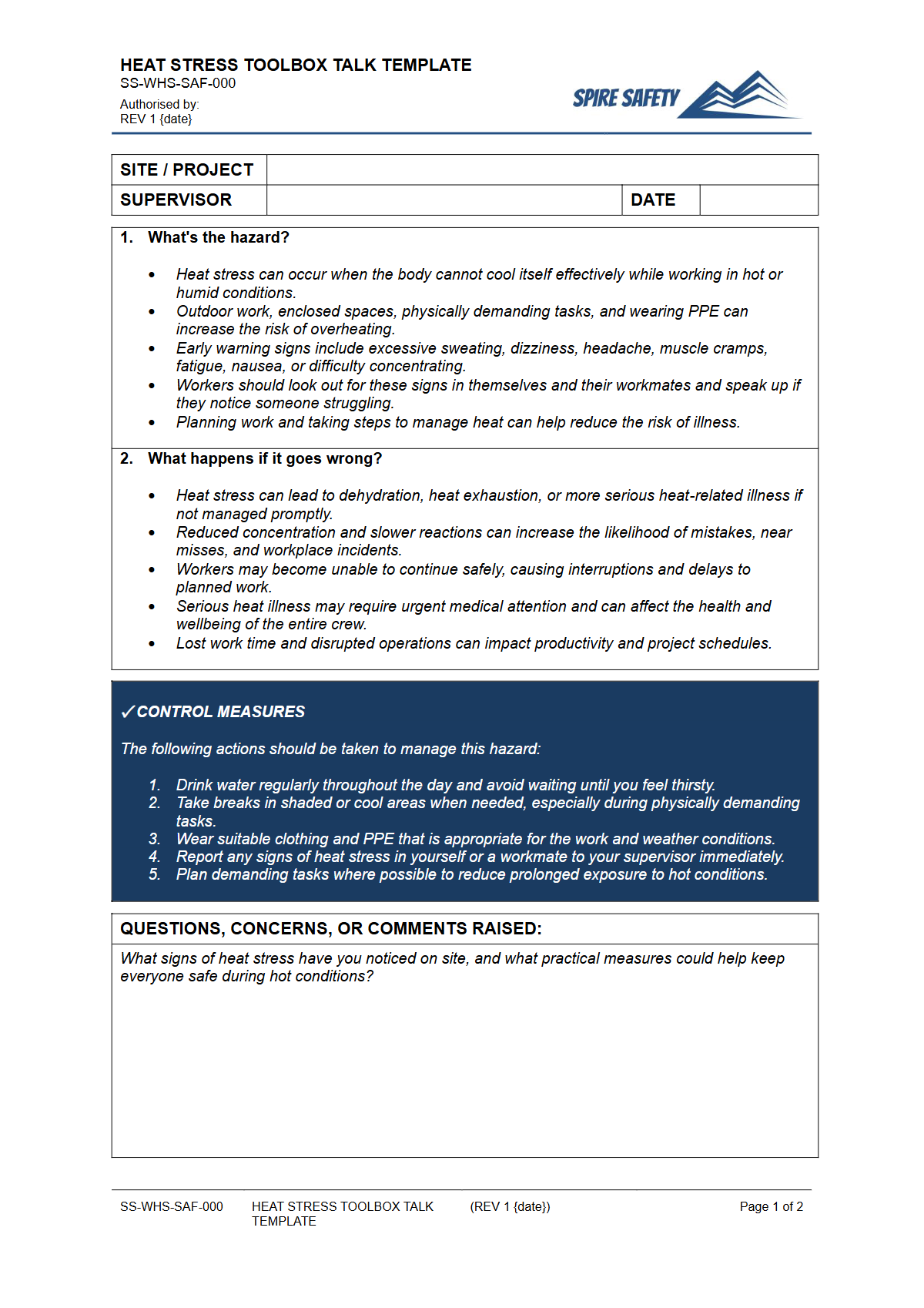
Download our free Heat Stress Toolbox Talk template (DOCX/PDF) to discuss managing heat-related risks in your workplace.
Heat Stress Toolbox Talk Template
DOCX • 142 KB + PDF
Updated Oct 2026
No signup required
Purpose of this document
This free Heat Stress Toolbox Talk template provides a structured format for discussing the risks of heat stress in the workplace. It's designed to help facilitate conversations about causes, symptoms, prevention strategies, and emergency procedures related to heat-induced illnesses.
The template assists Person Conducting a Business or Undertaking (PCBUs) in meeting their obligation to provide information and instruction to workers regarding health and safety risks. By using this resource, organisations can proactively address the challenges posed by working in hot conditions, improving worker awareness and promoting safer work practices aligned with Australian WHS practice.
Video walkthrough
How to use this Toolbox Talk
Our Heat Stress Toolbox Talk template is available for download in both DOCX and PDF formats. The DOCX version allows for full customisation, enabling you to tailor the content to the specific hazards, controls, and operational context of your workplace.
The PDF version is suitable for immediate use or as a reference. Before presenting, review the content thoroughly and add any site-specific information, such as designated rest areas, specific hydration protocols, or contact details for first aid. It is crucial that this template is customised to your workplace's unique risks and control measures, as I cannot provide a one-size-fits-all solution.
Encourage active participation from all workers during the talk. Facilitate questions and discussions to ensure understanding and engagement.
Afterwards, record attendance and any key actions or issues raised. Regular toolbox talks, supported by resources like this, are a foundational component of effective WHS management systems.
When to use it
This Heat Stress Toolbox Talk template should be used whenever there is a risk of workers being exposed to high temperatures, whether due to environmental conditions, the nature of the work, or the use of heavy personal protective equipment (PPE). This includes, but is not limited to, the warmer months, during heatwaves, or when undertaking strenuous outdoor or indoor work in poorly ventilated areas.
It's also beneficial to conduct a heat stress toolbox talk as part of induction for new workers, before commencing new tasks that may increase heat exposure, or as a refresher during regular safety meetings. Consistent application helps maintain high levels of awareness.
Who should use it
This Heat Stress Toolbox Talk template is primarily intended for supervisors, team leaders, WHS representatives, and anyone responsible for conducting safety briefings or training sessions within an organisation. WHS managers and officers will find it a valuable addition to their suite of free WHS resources library. Workers also benefit directly from attending these talks, as they gain crucial knowledge about recognising and preventing heat stress in themselves and their colleagues.
It is a fundamental tool for PCBUs committed to fostering a safe working environment and upholding their duty of care.
Common mistakes
Common mistakes to avoid
- Not customising the talk to specific workplace conditions and risks.
- Failing to encourage worker participation and feedback during the session.
- Not documenting attendance and key discussion points for future reference.
- Treating the toolbox talk as a checkbox exercise rather than a genuine safety discussion.
Legal references
Legal considerations
The following legal requirements may be relevant to this type of work.
- Work Health and Safety Act (Harmonised) — Provides the primary duties for protecting workers and other people from work health and safety risks.
- Work Health and Safety Regulations (Harmonised) — Sets out requirements supporting the management of workplace hazards and risks.
The following codes may be relevant to this type of work.
- Managing WHS Risks Code of Practice — Provides practical guidance on identifying hazards, assessing risks and applying effective controls.
- Work Health and Safety Consultation, Cooperation and Coordination Code of Practice — Provides practical guidance on consulting workers and coordinating with other duty holders.
- Managing the Work Environment and Facilities Code of Practice — Provides practical guidance on safe work environments, workplace facilities and related controls.
Did you know
Impact of Hydration
Even mild dehydration can impair cognitive function and physical performance, increasing the risk of heat-related illnesses and affecting decision-making on site.
Acclimatisation Benefits
Workers can become acclimatised to heat over time, reducing their physiological strain and improving their tolerance to hot conditions, but this process requires careful management.
FAQ
Frequently asked questions
01What is heat stress and why is it dangerous?
02How often should heat stress toolbox talks be conducted?
03What are the common symptoms of heat stress?
04Can this template be used for any industry?
Share this resource
Heat Stress Toolbox Talk Template
Browse Categories
How To Use It
- 1Download and open in Word or PDF.
- 2Replace the placeholders with your business details.
- 3Get it reviewed by a WHS specialist before rollout.
Need it customised?
Our WHS consultants can adapt this template to your site, run a gap analysis, or audit what you already have in place.
Book a Free Consultation WHS consulting servicesor call 1300 156 382