
Incident Lessons Learned Toolbox Talk Template
Download our free Incident Lessons Learned Toolbox Talk Template. A clear, structured tool for improving workplace safety through shared insights.
Incident Lessons Learned Toolbox Talk Template
DOCX • 140 KB + PDF
Updated Oct 2026
No signup required
Purpose of this document
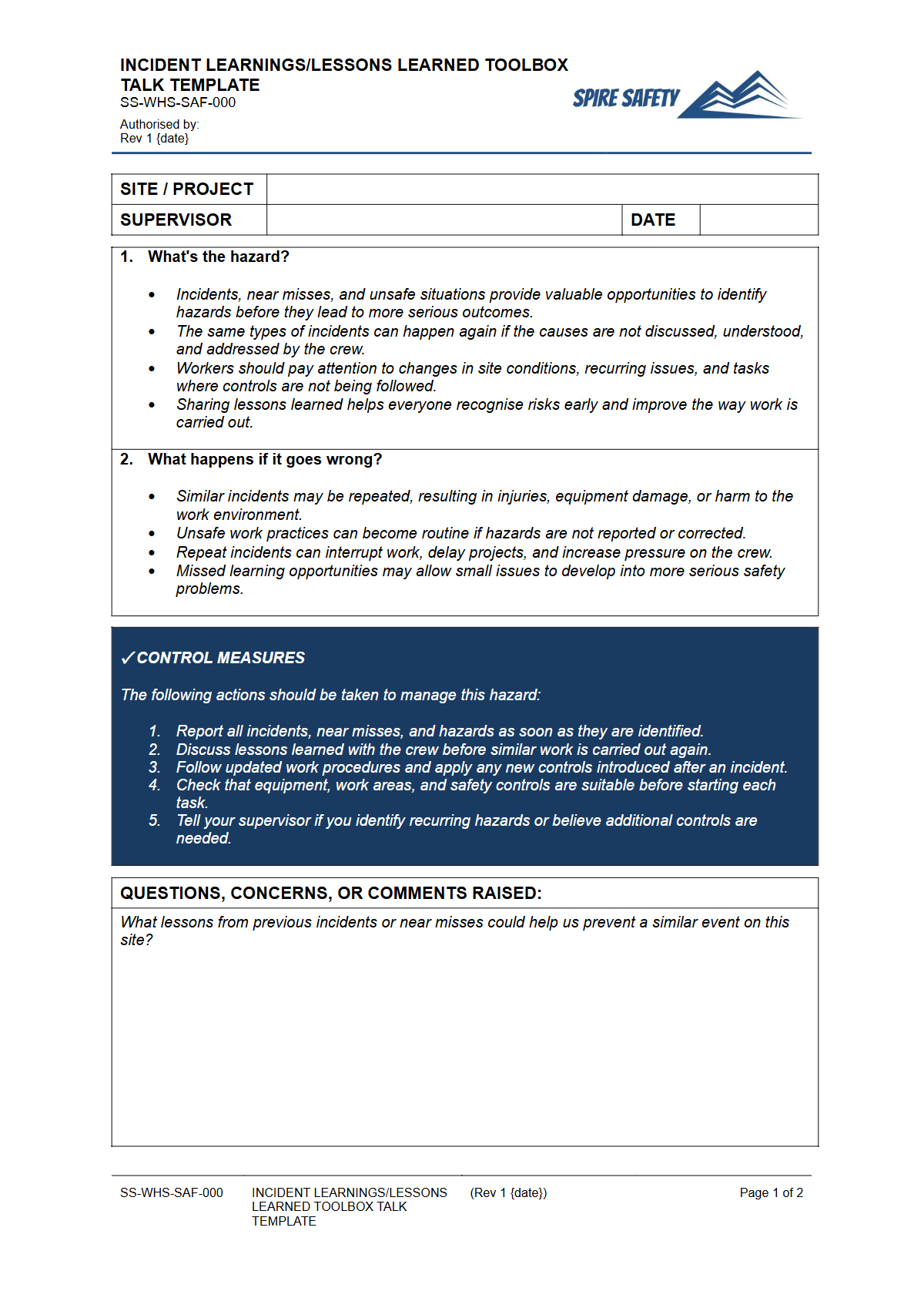
Our free Incident Lessons Learned Toolbox Talk Template provides a structured framework for discussing workplace incidents, near misses, and hazards. This resource is designed to help organisations foster a proactive safety culture by converting adverse events into valuable learning opportunities. Regularly reviewing incidents and sharing lessons learned is a critical part of continuous improvement in WHS, helping to prevent recurrence and enhance overall workplace safety.
By utilising this template, you can facilitate meaningful discussions among your workers, ensuring that the root causes of incidents are understood and that effective preventative measures are consistently applied. This approach not only aligns with Australian WHS practice but also empowers workers to contribute actively to a safer working environment, strengthening your WHS management systems.
Video walkthrough
How to use this Toolbox Talk
This Incident Lessons Learned Toolbox Talk Template is a starting point for conducting effective safety discussions. It provides prompts and sections to guide you through the process of presenting incident details, identifying contributing factors, discussing controls, and agreeing on actionable steps. Remember, this template is a guide; it must be customised to your specific workplace, the nature of the incident, and the unique risks present in your operations.
Before conducting the Toolbox Talk, ensure you have gathered all relevant information about the incident(s) you wish to discuss. This includes incident reports, investigation findings, and any new control measures implemented or proposed. Present the information clearly and encourage open discussion, ensuring all workers have the opportunity to share their perspectives and ask questions. Document attendance and key takeaways for future reference, demonstrating your commitment to continuous improvement and reinforcing the importance of safety communication.
When to use it
Regular Toolbox Talks are an essential component of an effective WHS program. An Incident Lessons Learned Toolbox Talk is particularly valuable to conduct:
- After any significant incident or near miss has occurred and been investigated.
- Periodically (e.g., monthly, quarterly) to review incident trends or significant safety findings from previous periods.
- When introducing new procedures or equipment that are a direct result of lessons learned from an incident.
- To reinforce safety procedures and controls based on historical incident data.
- As part of an induction for new workers, highlighting critical safety lessons from the past.
Who should use it
This Toolbox Talk is designed for anyone responsible for leading safety discussions and promoting a safe working environment. This includes:
- Team Leaders and Supervisors
- WHS Officers and Managers
- Project Managers
- Site Managers and Forepersons
- Safety Committees and Worker Representatives
- Business Owners and Directors seeking to reinforce a positive safety culture.
It is suitable for all industries and workplaces where incidents or near misses occur and where there is a commitment to learning from these events to prevent future harm. For more helpful resources, explore our free WHS resources library available on Spire Safety.
Common mistakes
Common mistakes to avoid
- Failing to conduct a thorough incident investigation before the Toolbox Talk.
- Blaming individuals rather than focusing on systemic causes and preventative measures.
- Not documenting attendance, discussion points, or agreed-upon actions for follow-up.
- Presenting information in a way that discourages open discussion or critical feedback from workers.
Legal references
Legal considerations
The following legal requirements may be relevant to this type of work.
- Work Health and Safety Act (Harmonised) — Provides the primary duties for protecting workers and other people from work health and safety risks.
- Work Health and Safety Regulations (Harmonised) — Sets out requirements supporting the management of workplace hazards and risks.
The following codes may be relevant to this type of work.
- Managing WHS Risks Code of Practice — Provides practical guidance on identifying hazards, assessing risks and applying effective controls.
- Work Health and Safety Consultation, Cooperation and Coordination Code of Practice — Provides practical guidance on consulting workers and coordinating with other duty holders.
- Managing the Work Environment and Facilities Code of Practice — Provides practical guidance on safe work environments, workplace facilities and related controls.
Did you know
Proactive vs. Reactive Safety
Organisations that actively learn from incidents and near misses demonstrate a proactive approach to safety, which is far more effective than merely reacting after harm has occurred.
The Iceberg of Incident Costs
For every visible cost of an incident (e.g., medical expenses, property damage), there are often many hidden costs, such as lost productivity, morale impact, and reputational damage, making incident prevention critical.
FAQ
Frequently asked questions
01What is the primary goal of an Incident Lessons Learned Toolbox Talk?
02How often should I conduct an Incident Lessons Learned Toolbox Talk?
03Can this template be used for psychosocial incidents?
04Is this Incident Lessons Learned Toolbox Talk Template a WHS-aligned document?
Share this resource
Incident Lessons Learned Toolbox Talk Template
Browse Categories
How To Use It
- 1Download and open in Word or PDF.
- 2Replace the placeholders with your business details.
- 3Get it reviewed by a WHS specialist before rollout.
Need it customised?
Our WHS consultants can adapt this template to your site, run a gap analysis, or audit what you already have in place.
Book a Free Consultation WHS consulting servicesor call 1300 156 382