
Lone Worker Safety Toolbox Talk Template
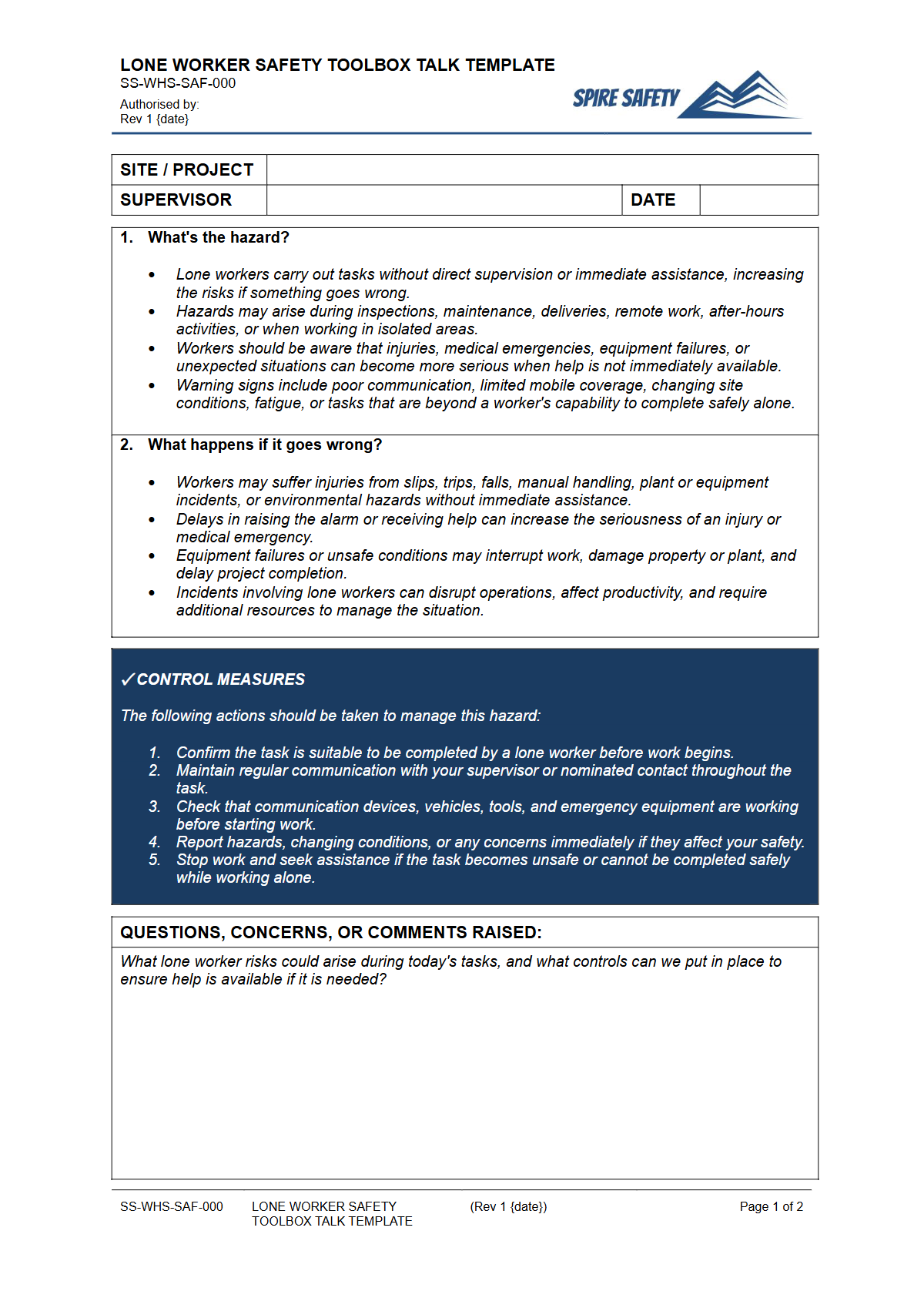
Download our free Lone Worker Safety Toolbox Talk Template. A structured starting point for discussing lone worker risks and controls in your workplace.
Lone Worker Safety Toolbox Talk Template
DOCX • 138 KB + PDF
Updated Oct 2026
No signup required
Purpose of this document
This free Lone Worker Safety Toolbox Talk Template is designed to facilitate discussions about the risks associated with lone work and the essential control measures required to protect workers in Australia. It provides a structured agenda to help supervisors and safety officers conduct effective toolbox talks, fostering a proactive safety culture. By clarifying responsibilities and highlighting potential hazards, this template supports a consistent approach to managing lone worker safety across your organisation. It serves as a valuable educational tool, promoting awareness and understanding of safe work practices when working alone, contributing to overall WHS management systems.
Video walkthrough
How to use this Toolbox Talk
Our Lone Worker Safety Toolbox Talk template offers a foundational structure for your safety discussions. To ensure its effectiveness, download the DOCX version and customise it to reflect the specific hazards, risks, control measures, and organisational policies relevant to your workplace and industry. You must update the template with examples pertinent to your operations, include details of your emergency procedures, and reference any specific equipment or communication protocols used by your lone workers. Remember, this is a starting point; its true value comes from tailoring it precisely to your work environment and the unique circumstances of your lone workers.
Gather your team, present the key discussion points, and encourage open dialogue about lone worker safety challenges and solutions. Document attendance and any actions agreed upon during the talk. Regular toolbox talks, adapted to evolving circumstances, are crucial for maintaining vigilance and ensuring worker well-being.
When to use it
This Lone Worker Safety Toolbox Talk template is ideal for regular safety meetings, particularly before tasks involving lone work or when new lone workers join the team. It's also valuable for refresher training, following an incident involving a lone worker, or when new equipment, procedures, or work environments are introduced that may impact lone worker safety. Incorporate it into your routine WHS schedule to maintain ongoing awareness and reinforce safe behaviours.
Who should use it
This template is primarily intended for supervisors, team leaders, safety officers, and anyone responsible for conducting safety briefings or managing teams that include lone workers. Workers who perform tasks alone will also benefit from participating in these discussions, as it helps them understand their responsibilities and the support systems available. Companies seeking to enhance their WHS practices and provide clear guidance on lone working will find this a useful addition to their free WHS resources library.
Common mistakes
Common mistakes to avoid
- Assuming lone workers will always report issues without prompting.
- Implementing 'one-size-fits-all' Lone Worker Safety Toolbox Talk Template solutions without customisation.
- Not training lone workers on all emergency procedures relevant to their specific tasks.
- Failing to regularly review and update lone worker risk assessments and control measures.
Legal references
Legal considerations
The following legal requirements may be relevant to this type of work.
- Work Health and Safety Act (Harmonised) — Provides the primary duties for protecting workers and other people from work health and safety risks.
- Work Health and Safety Regulations (Harmonised) — Sets out requirements supporting the management of workplace hazards and risks.
The following codes may be relevant to this type of work.
- Managing WHS Risks Code of Practice — Provides practical guidance on identifying hazards, assessing risks and applying effective controls.
- Work Health and Safety Consultation, Cooperation and Coordination Code of Practice — Provides practical guidance on consulting workers and coordinating with other duty holders.
- Managing the Work Environment and Facilities Code of Practice — Provides practical guidance on safe work environments, workplace facilities and related controls.
Did you know
Mental Health Impact
Lone workers can experience increased stress, anxiety, and feelings of isolation, highlighting the importance of robust communication and support systems.
Beyond the Workplace
Working from home, especially for extended periods without colleagues, can also constitute lone work, requiring similar safety considerations and check-in procedures.
FAQ
Frequently asked questions
01What is a lone worker?
02What are common risks for lone workers?
03How can I check on lone workers effectively?
04Does WHS law specifically mention lone workers?
Share this resource
Lone Worker Safety Toolbox Talk Template
Browse Categories
How To Use It
- 1Download and open in Word or PDF.
- 2Replace the placeholders with your business details.
- 3Get it reviewed by a WHS specialist before rollout.
Need it customised?
Our WHS consultants can adapt this template to your site, run a gap analysis, or audit what you already have in place.
Book a Free Consultation WHS consulting servicesor call 1300 156 382