
Mental Health at Work Toolbox Talk Template
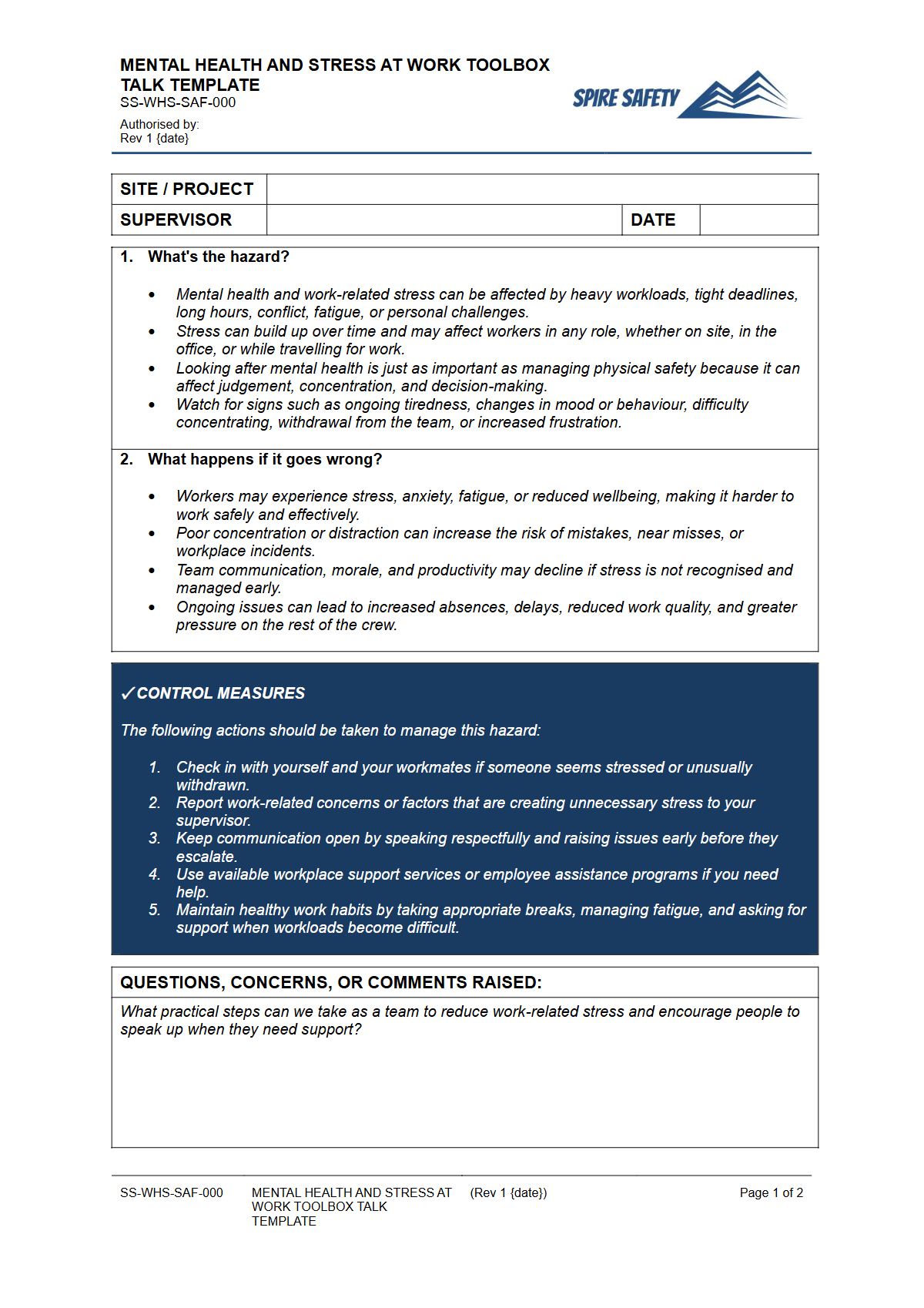
Download our free Mental Health at Work Toolbox Talk template. A structured starting point for discussing psychosocial risks in Australian workplaces.
Mental Health at Work Toolbox Talk Template
DOCX • 141 KB + PDF
Updated Oct 2026
No signup required
Purpose of this document
This free WHS resource provides a foundational mental health at work toolbox talk template designed to help Australian workplaces initiate discussions around psychosocial hazards and foster a supportive work environment. It serves as a practical tool for managers and WHS professionals to regularly address mental health, aligning with recognised WHS practices. The template encourages open communication and proactive identification of workplace factors that can impact mental wellbeing. By utilising this template, organisations can take a step towards building a culture where mental health is openly discussed and supported, contributing to overall worker safety and productivity. It's a key component for any comprehensive WHS management system.
Video walkthrough
How to use this Toolbox Talk
This template is intended as a guide to assist you in preparing and delivering a toolbox talk on mental health at work. It includes prompts for discussion, key topics to cover, and suggestions for encouraging worker participation. To be effective, this template must be customised to your workplace’s specific context, hazards, and control measures. Consider local WHS regulations and the unique psychosocial risks present in your work environment. Adapt the language, examples, and discussion points to resonate with your workers and reflect your organisation’s policies and procedures. It can also be integrated into broader WHS consulting strategies.
When to use it
This mental health at work toolbox talk template can be used in various scenarios. It is ideal for regular WHS meetings, pre-shift briefings, or as part of an ongoing WHS training schedule. It’s particularly valuable when introducing new mental health initiatives, after a significant workplace change, or in response to identified psychosocial risks. The template can also be used as a refresher to reinforce positive mental health practices and remind workers of available support. Consistent use helps embed mental health into the daily WHS dialogue.
Who should use it
This template is suitable for anyone responsible for leading WHS discussions or promoting worker wellbeing in an Australian workplace. This includes WHS managers, supervisors, team leaders, and WHS representatives. While designed to be accessible, it is most effective when delivered by someone with a good understanding of the workplace's specific WHS landscape and a commitment to fostering a mentally healthy environment. The person delivering the talk should also be prepared to facilitate open discussion and guide workers towards appropriate support if needed.
Common mistakes
Common mistakes to avoid
- Not customising the generic template to fit your specific workplace risks and culture.
- Delivering the talk without genuinely encouraging open discussion and feedback from workers.
- Failing to follow up on concerns raised during the talk, eroding worker trust.
- Treating the toolbox talk as a one-off event instead of part of an ongoing WHS commitment.
Legal references
Legal considerations
The following legal requirements may be relevant to this type of work.
- Work Health and Safety Act (Harmonised) — Provides the primary duties for protecting workers and other people from work health and safety risks.
- Work Health and Safety Regulations (Harmonised) — Sets out requirements supporting the management of workplace hazards and risks.
The following codes may be relevant to this type of work.
- Managing WHS Risks Code of Practice — Provides practical guidance on identifying hazards, assessing risks and applying effective controls.
- Work Health and Safety Consultation, Cooperation and Coordination Code of Practice — Provides practical guidance on consulting workers and coordinating with other duty holders.
- Managing the Work Environment and Facilities Code of Practice — Provides practical guidance on safe work environments, workplace facilities and related controls.
Did you know
Impact of Psychosocial Hazards
Work-related mental health conditions cost the Australian economy an estimated $6 billion per year in lost productivity and healthcare.
Early Intervention Benefits
Every $1 invested in creating a mentally healthy workplace can yield an average return of $2.30 through increased productivity and reduced absenteeism.
FAQ
Frequently asked questions
01What is a 'toolbox talk' for mental health?
02Why is mental health important in Australian workplaces?
03How can I customise this template for my workplace?
04What are common psychosocial hazards in the workplace?
Share this resource
Mental Health at Work Toolbox Talk Template
Browse Categories
How To Use It
- 1Download and open in Word or PDF.
- 2Replace the placeholders with your business details.
- 3Get it reviewed by a WHS specialist before rollout.
Need it customised?
Our WHS consultants can adapt this template to your site, run a gap analysis, or audit what you already have in place.
Book a Free Consultation WHS consulting servicesor call 1300 156 382