
Noise and Hearing Protection Toolbox Talk Template
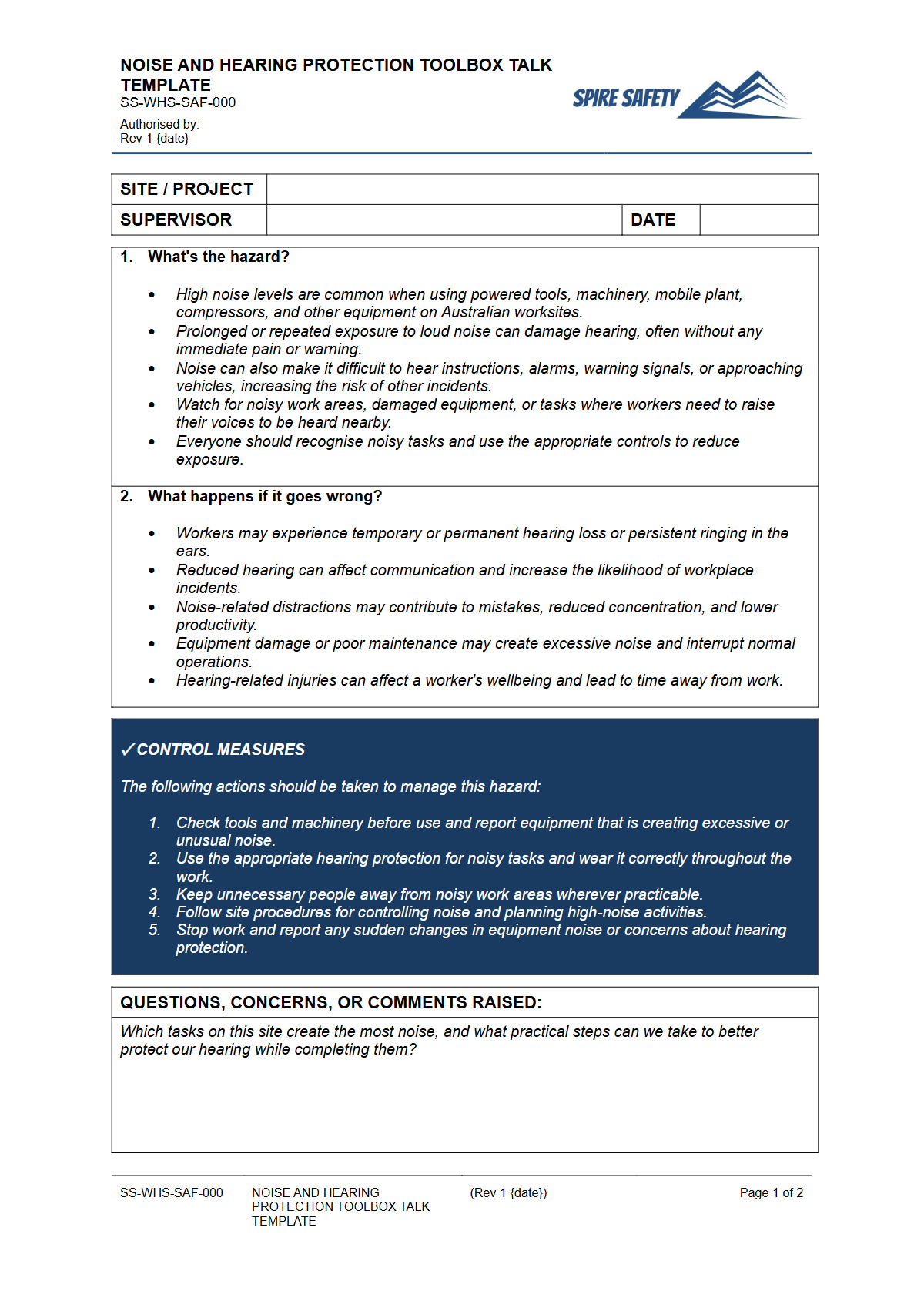
Download your free Noise and Hearing Protection Toolbox Talk Template. A structured resource to help workers understand noise hazards and preventative measures.
Noise and Hearing Protection Toolbox Talk Template
DOCX • 138 KB + PDF
Updated Oct 2026
No signup required
Purpose of this document
This Noise and Hearing Protection Toolbox Talk Template is designed to facilitate discussions with your team about a critical workplace hazard: noise. High noise levels can cause permanent hearing damage, increase stress, and impair communication, leading to other safety risks. This template provides a structured starting point for educating workers on the importance of hearing protection, how to recognise noise hazards, and the control measures in place to manage these risks.
Using this template will help businesses align with Australian WHS practice by promoting a proactive approach to hearing conservation. It encourages open dialogue about shared responsibilities in maintaining a safe work environment, highlighting the collective effort required to manage noise-related risks effectively.
Video walkthrough
How to use this Toolbox Talk
This Toolbox Talk template is provided in both DOCX (editable) and PDF formats, allowing for easy customisation to suit your specific workplace. The DOCX version is particularly useful as it enables you to tailor the content, add specific examples relevant to your operations, and incorporate details about the hearing protection PPE used on your site. Once customised, save and distribute the PDF version to ensure consistent delivery across your organisation.
To utilise this resource effectively, download the DOCX file and review its contents. You must customise this template to your workplace's specific risks, control measures, and procedures. Add details about your site-specific noise assessments, types of hearing protection provided, and any particular work practices that generate high noise levels. Include information on how workers can report concerns or suggest improvements related to noise management. Remember to include attendance sheets or sign-off sections to record participation when conducting the talk. Regular toolbox talks are a cornerstone of effective WHS management systems.
When to use it
This Noise and Hearing Protection Toolbox Talk template should be used regularly as part of your ongoing WHS program. It's particularly relevant:
- Before commencing work in high-noise environments.
- When new equipment or processes that may generate noise are introduced.
- After any incidents or near misses related to noise exposure or hearing protection.
- As a refresher during WHS inductions or annual training sessions.
- Following reviews of noise control measures or hearing protection protocols.
- When new workers join the team, especially if they will be working in noisy areas.
Consistent use reinforces safety messages and ensures that workers remain aware of their responsibilities regarding noise hazards and hearing conservation.
Who should use it
This Noise and Hearing Protection Toolbox Talk template is suitable for a wide range of individuals within your organisation, including:
- Managers and Supervisors: To lead discussions and reinforce safety messages with their teams.
- Safety Officers and WHS Representatives: To plan and deliver regular toolbox talks and contribute to continuous improvement processes.
- Team Leaders: To conduct discussions with their work groups, focusing on specific area hazards.
- Workers: As participants in the discussion, contributing their insights and committing to safe work practices.
It's an essential resource for any business operating in environments where noise exposure is a known risk. Access more tools and templates from our free WHS resources library.
Common mistakes
Common mistakes to avoid
- Not customising generic toolbox talk templates to site-specific hazards and equipment.
- Failing to consistently enforce the use of required hearing protection in noisy areas.
- Not providing workers with training on the correct fitting and maintenance of PPE.
- Neglecting to regularly review and update noise hazard assessments and control measures.
Legal references
Legal considerations
The following legal requirements may be relevant to this type of work.
- Work Health and Safety Act (Harmonised) — Provides the primary duties for protecting workers and other people from work health and safety risks.
- Work Health and Safety Regulations (Harmonised) — Sets out requirements supporting the management of workplace hazards and risks.
The following codes may be relevant to this type of work.
- Managing WHS Risks Code of Practice — Provides practical guidance on identifying hazards, assessing risks and applying effective controls.
- Work Health and Safety Consultation, Cooperation and Coordination Code of Practice — Provides practical guidance on consulting workers and coordinating with other duty holders.
- Managing the Work Environment and Facilities Code of Practice — Provides practical guidance on safe work environments, workplace facilities and related controls.
Did you know
Hearing damage is permanent
Unlike some other injuries, noise-induced hearing loss is irreversible. Once damaged, the delicate hair cells in the inner ear cannot regenerate, making prevention through effective controls and hearing protection crucial.
Noise limits are strict
In Australia, the WHS Regulations generally specify a noise exposure standard of an average of 85 dB(A) over an eight-hour working day, or a peak noise level of 140 dB(C), above which control measures become mandatory.
FAQ
Frequently asked questions
01What is a Noise and Hearing Protection Toolbox Talk?
02How often should noise and hearing protection toolbox talks be conducted?
03What are the common types of hearing protection workers might use?
04Can noise exposure cause health issues other than hearing loss?
Share this resource
Noise and Hearing Protection Toolbox Talk Template
Browse Categories
How To Use It
- 1Download and open in Word or PDF.
- 2Replace the placeholders with your business details.
- 3Get it reviewed by a WHS specialist before rollout.
Need it customised?
Our WHS consultants can adapt this template to your site, run a gap analysis, or audit what you already have in place.
Book a Free Consultation WHS consulting servicesor call 1300 156 382