
Painting Safety Toolbox Talk Template
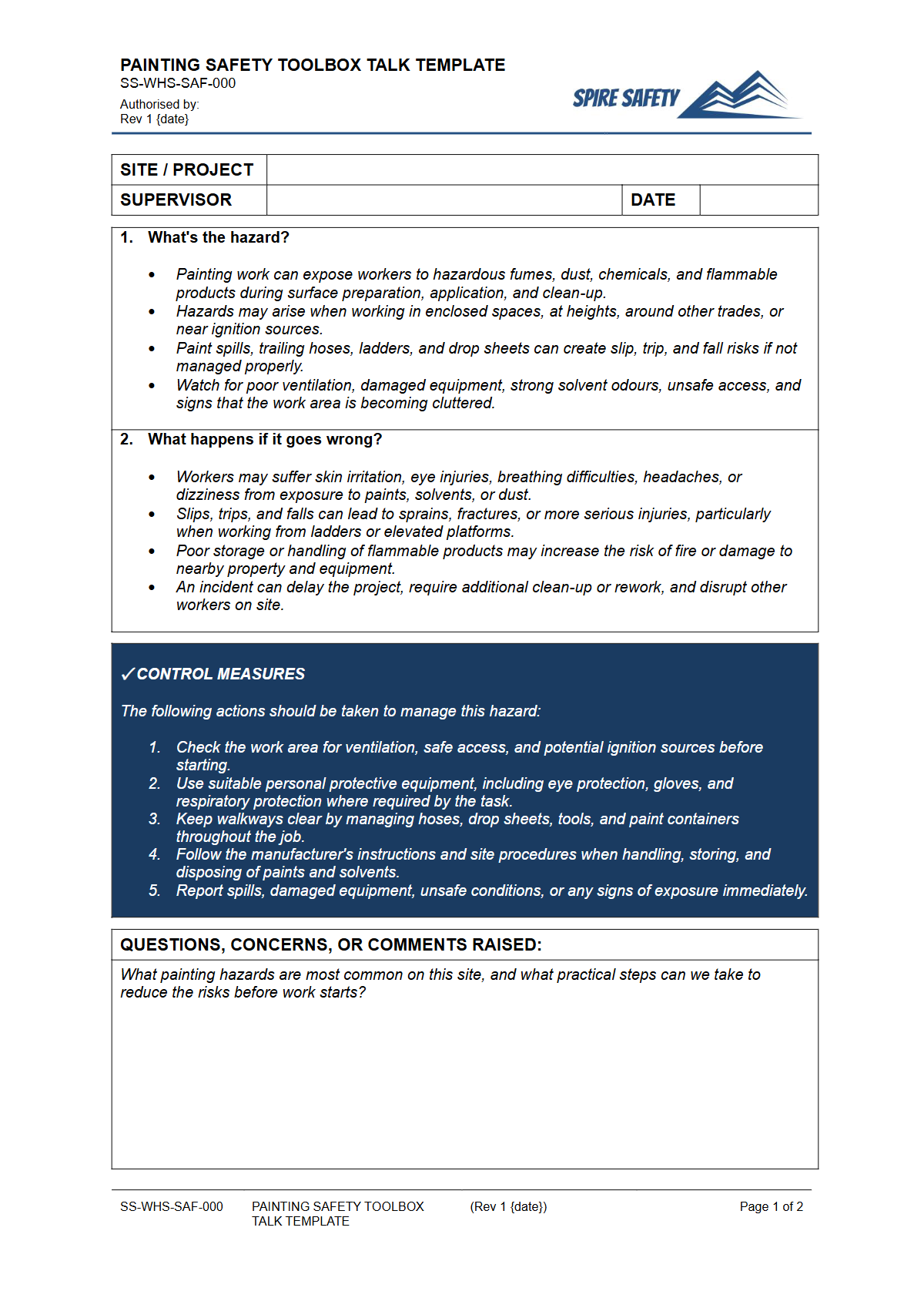
Download our Painting Safety Toolbox Talk Template to discuss critical WHS topics with your team. A structured starting point for your safety meetings.
Painting Safety Toolbox Talk Template
DOCX • 141 KB + PDF
Updated Oct 2026
No signup required
Purpose of this document
This Painting Safety Toolbox Talk Template provides a structured framework for delivering essential safety information to your team before undertaking painting tasks. It helps facilitate discussions on potential hazards, control measures, and safe work procedures specific to painting operations. By using this template, organisations can proactively address WHS risks, align with Australian WHS practices, and foster a culture of safety among workers.
Painting work often involves various risks, including exposure to hazardous chemicals, working at heights, manual handling, and electrical hazards. This template aims to prompt conversations that raise awareness and reinforce safe work behaviours, ensuring all workers understand their responsibilities in maintaining a safe work environment.
Video walkthrough
How to use this Toolbox Talk
Download our Painting Safety Toolbox Talk Template in DOCX or PDF format. The DOCX version allows you to easily edit and tailor the content to directly reflect the specific risks, control measures, and work practices within your workplace. Remember, this is a starting point; it must be customised to your workplace’s unique painting tasks, equipment, and environment to be effective and relevant.
Before conducting the toolbox talk, review the template and insert details pertinent to your current project, including specific paint types, equipment used, work locations, and emergency procedures. Encourage open discussion, questions, and worker input during the session to ensure active participation and understanding. Document attendance and any key outcomes or actions agreed upon during the talk as part of your WHS records.
When to use it
Use this Painting Safety Toolbox Talk Template:
- Before commencing any new painting project or task.
- When introducing new painting materials, equipment, or work methods.
- As a refresher training session for your painting crew.
- Following an incident or near-miss related to painting activities to reinforce safe practices.
- As part of your regular WHS meeting schedule to maintain ongoing safety awareness.
Who should use it
This resource is valuable for:
- Supervisors and team leaders responsible for overseeing painting work.
- WHS officers and managers implementing and maintaining WHS management systems.
- Project managers in construction, maintenance, or facilities management.
- Any worker involved in planning, executing, or managing painting operations who needs to conduct a Painting Safety Toolbox Talk.
- Small to medium enterprises (SMEs) looking for an accessible and practical tool to improve their WHS communication and practices. For comprehensive support, consider engaging WHS consulting services.
Common mistakes
Common mistakes to avoid
- Not customising the toolbox talk to specific site conditions or tasks.
- Failing to encourage worker participation and feedback during the session.
- Not documenting the toolbox talk, including attendees and discussion points.
- Using outdated or irrelevant safety information.
Legal references
Legal considerations
The following legal requirements may be relevant to this type of work.
- Work Health and Safety Act (Harmonised) — Provides the primary duties for protecting workers and other people from work health and safety risks.
- Work Health and Safety Regulations (Harmonised) — Sets out requirements supporting the management of workplace hazards and risks.
The following codes may be relevant to this type of work.
- Managing WHS Risks Code of Practice — Provides practical guidance on identifying hazards, assessing risks and applying effective controls.
- Work Health and Safety Consultation, Cooperation and Coordination Code of Practice — Provides practical guidance on consulting workers and coordinating with other duty holders.
- Managing the Work Environment and Facilities Code of Practice — Provides practical guidance on safe work environments, workplace facilities and related controls.
Did you know
Hazardous substances in paint
Many paints contain volatile organic compounds (VOCs) and other hazardous chemicals that can pose health risks through inhalation or skin contact. Adequate ventilation and personal protective equipment (PPE) are critical control measures.
Falls from height
Falls from ladders or scaffolding are a leading cause of serious injuries in painting work. Always ensure correct equipment setup, regular inspections, and appropriate training for working at heights.
FAQ
Frequently asked questions
01What is a Toolbox Talk?
02How often should painting safety toolbox talks be conducted?
03Can this template be used for commercial and residential painting?
04Where can I find more free WHS resources?
Share this resource
Painting Safety Toolbox Talk Template
Browse Categories
How To Use It
- 1Download and open in Word or PDF.
- 2Replace the placeholders with your business details.
- 3Get it reviewed by a WHS specialist before rollout.
Need it customised?
Our WHS consultants can adapt this template to your site, run a gap analysis, or audit what you already have in place.
Book a Free Consultation WHS consulting servicesor call 1300 156 382