
Manual Handling Toolbox Talk Template
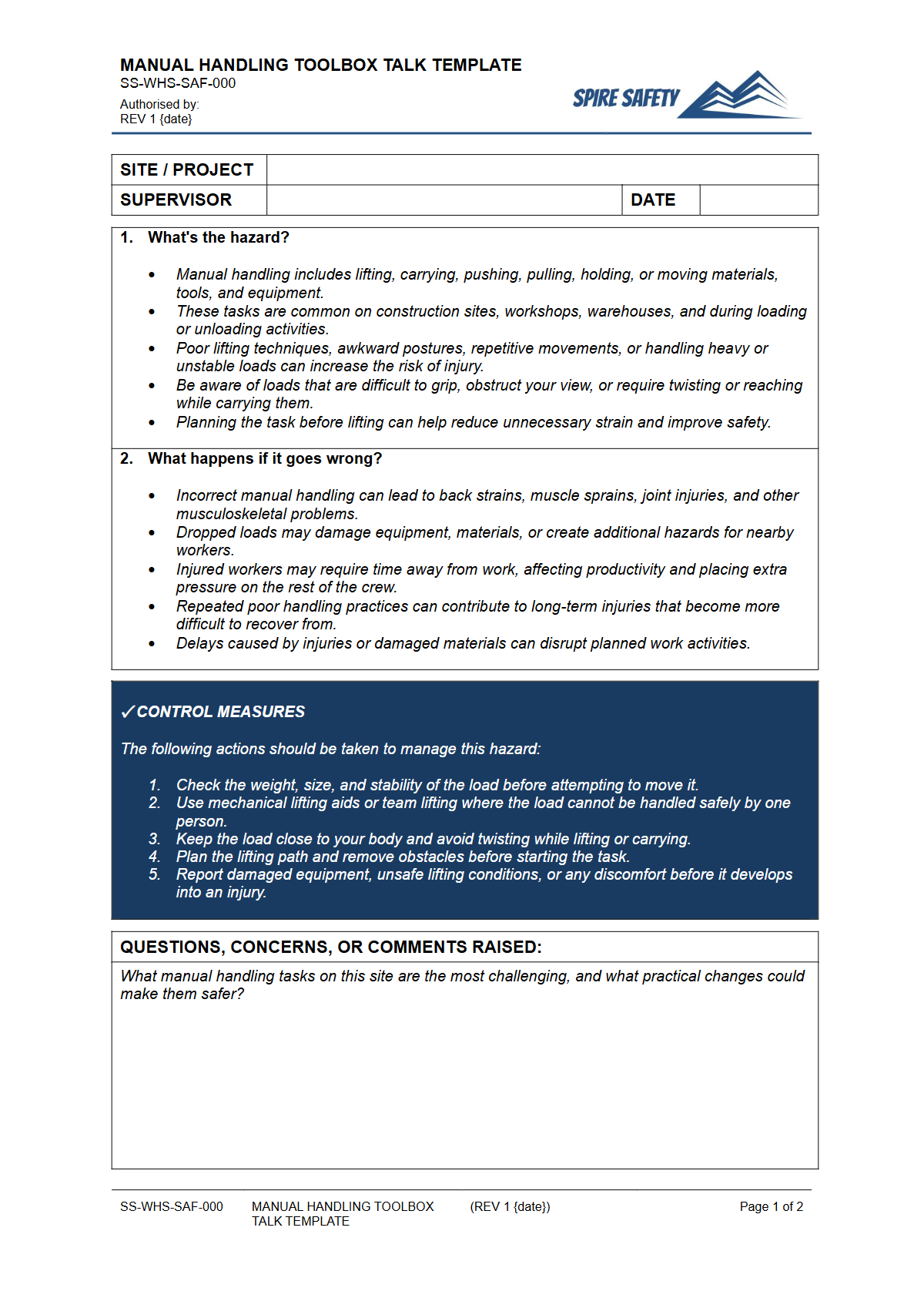
Download this free Manual Handling Toolbox Talk Template. A structured starting point for discussing hazardous manual tasks and risk controls with your team.
Manual Handling Toolbox Talk Template
DOCX • 142 KB + PDF
Updated Oct 2026
No signup required
Purpose of this document
This Manual Handling Toolbox Talk Template provides a structured starting point for conducting essential safety discussions with your team. Manual handling, defined as any activity requiring the use of force by a person to lift, lower, push, pull, carry, or otherwise move, hold, or restrain something, is a significant source of workplace injury in Australia.
This template is designed to help organisations facilitate regular, concise safety briefings to reinforce safe manual handling practices and minimise risks associated with hazardous manual tasks.
By utilising this template, you can effectively communicate key WHS information regarding manual handling, encourage open discussion about workplace-specific hazards, and promote a proactive approach to risk management. It aims to improve worker awareness, foster a culture of safety, and contribute to the prevention of musculoskeletal disorders and other injuries related to manual handling.
Video walkthrough
How to use this Toolbox Talk
Our Manual Handling Toolbox Talk Template is provided as a downloadable DOCX document, making it fully editable and adaptable for your specific workplace needs. To use it effectively:
- Download and Customise: Obtain the free template in DOCX format (a PDF version is also provided for reference). We cannot stress enough that this template must be customised to your workplace conditions and specific hazardous manual tasks. It is a guide, not a one-size-fits-all solution.
- Review and Adapt Content: Read through the template. Identify sections that require modification to reflect your organisation's unique manual handling processes, equipment, and identified risks. Include images, diagrams, or examples relevant to your work environment.
- Schedule and Prepare: Plan a convenient time to deliver the toolbox talk. This is often best done during routine pre-shift briefings or at the start of a project. Ensure the discussion area is free from distractions.
- Facilitate Discussion: Present the key points from the adapted template. Encourage workers to share their experiences, identify manual handling hazards they encounter, and suggest practical solutions. This interactive approach is crucial for effective learning and engagement.
- Document Attendance and Outcomes: Use the provided sign-in sheet in the template to record attendees. Note down any actions or follow-up tasks identified during the discussion. This documentation is vital for demonstrating your commitment to WHS and for ongoing WHS management systems.
- Integrate into WHS Systems: Regularly conducted toolbox talks, like this one, are an important component of a comprehensive approach to WHS management systems.
When to use it
This Manual Handling Toolbox Talk Template is best used:
- Regularly: Incorporate it into a routine schedule of safety meetings (e.g., weekly, fortnightly, monthly) to keep manual handling safety top of mind.
- Before New Tasks or Projects: Conduct a toolbox talk when new tasks involving manual handling are introduced, or before starting a project with significant manual handling components.
- After Incidents or Near Misses: Utilise the template to discuss lessons learned following any manual handling-related incidents, injuries, or near misses.
- When New Equipment is Introduced: If new lifting aids or handling equipment are brought into use, a specific toolbox talk can cover their safe operation.
- As Part of Induction Training: While not a substitute for formal training, this template can reinforce key manual handling safety messages during worker inductions.
- Following Risk Assessments: After conducting or reviewing manual handling risk assessments, use the template to communicate findings and new control measures to affected workers.
Who should use it
This Manual Handling Toolbox Talk Template is designed for use by:
- Team Leaders and Supervisors: Those directly responsible for overseeing teams and daily operations will find this a valuable tool for engaging their workers on safety.
- WHS Officers and Managers: For ensuring consistent messaging and compliance across different teams and departments.
- Site Managers: To facilitate safety discussions on construction sites or other project-based environments where manual handling is prevalent.
- Small Business Owners: Who may not have dedicated WHS personnel but need a structured way to address manual handling risks with their teams.
- Anyone Facilitating Safety Briefings: This resource provides a foundation for anyone tasked with communicating WHS information about manual handling to a work group.
Common mistakes
Common mistakes to avoid
- Not customising the generic template to specific workplace tasks and risks.
- Delivering the talk without encouraging worker participation and feedback.
- Failing to follow up on actions or concerns raised during the talk.
- Treating the talk as a tick-box exercise rather than a genuine safety discussion.
Legal references
Legal considerations
The following legal requirements may be relevant to this type of work.
- Work Health and Safety Act (Harmonised) — Provides the primary duties for protecting workers and other people from work health and safety risks.
- Work Health and Safety Regulations (Harmonised) — Sets out requirements supporting the management of workplace hazards and risks.
The following codes may be relevant to this type of work.
- Managing WHS Risks Code of Practice — Provides practical guidance on identifying hazards, assessing risks and applying effective controls.
- Work Health and Safety Consultation, Cooperation and Coordination Code of Practice — Provides practical guidance on consulting workers and coordinating with other duty holders.
- Managing the Work Environment and Facilities Code of Practice — Provides practical guidance on safe work environments, workplace facilities and related controls.
Did you know
Manual Handling Injuries
Manual handling accounts for a significant proportion of workplace injuries in Australia, frequently leading to sprains, strains, and back injuries. Many of these are preventable through effective risk management.
Psychosocial Risks
Excessive or repetitive manual handling can also contribute to psychosocial risks, such as fatigue or work-related stress, due to physical strain and pressure. Managing these tasks contributes to overall worker wellbeing.
FAQ
Frequently asked questions
01What is a Manual Handling Toolbox Talk?
02How often should manual handling toolbox talks be held?
03What topics should be covered in a manual handling toolbox talk?
04Is this Manual Handling Toolbox Talk Template compliant with Australian WHS laws?
Share this resource
Manual Handling Toolbox Talk Template
Browse Categories
How To Use It
- 1Download and open in Word or PDF.
- 2Replace the placeholders with your business details.
- 3Get it reviewed by a WHS specialist before rollout.
Need it customised?
Our WHS consultants can adapt this template to your site, run a gap analysis, or audit what you already have in place.
Book a Free Consultation WHS consulting servicesor call 1300 156 382