
Returning to Work After Injury Toolbox Talk Template
Download your free Returning to Work After Injury Toolbox Talk Template. A structured starting point for discussions on supporting injured workers.
Returning to Work After Injury Toolbox Talk Template
DOCX • 141 KB + PDF
Updated Oct 2026
No signup required
Purpose of this document
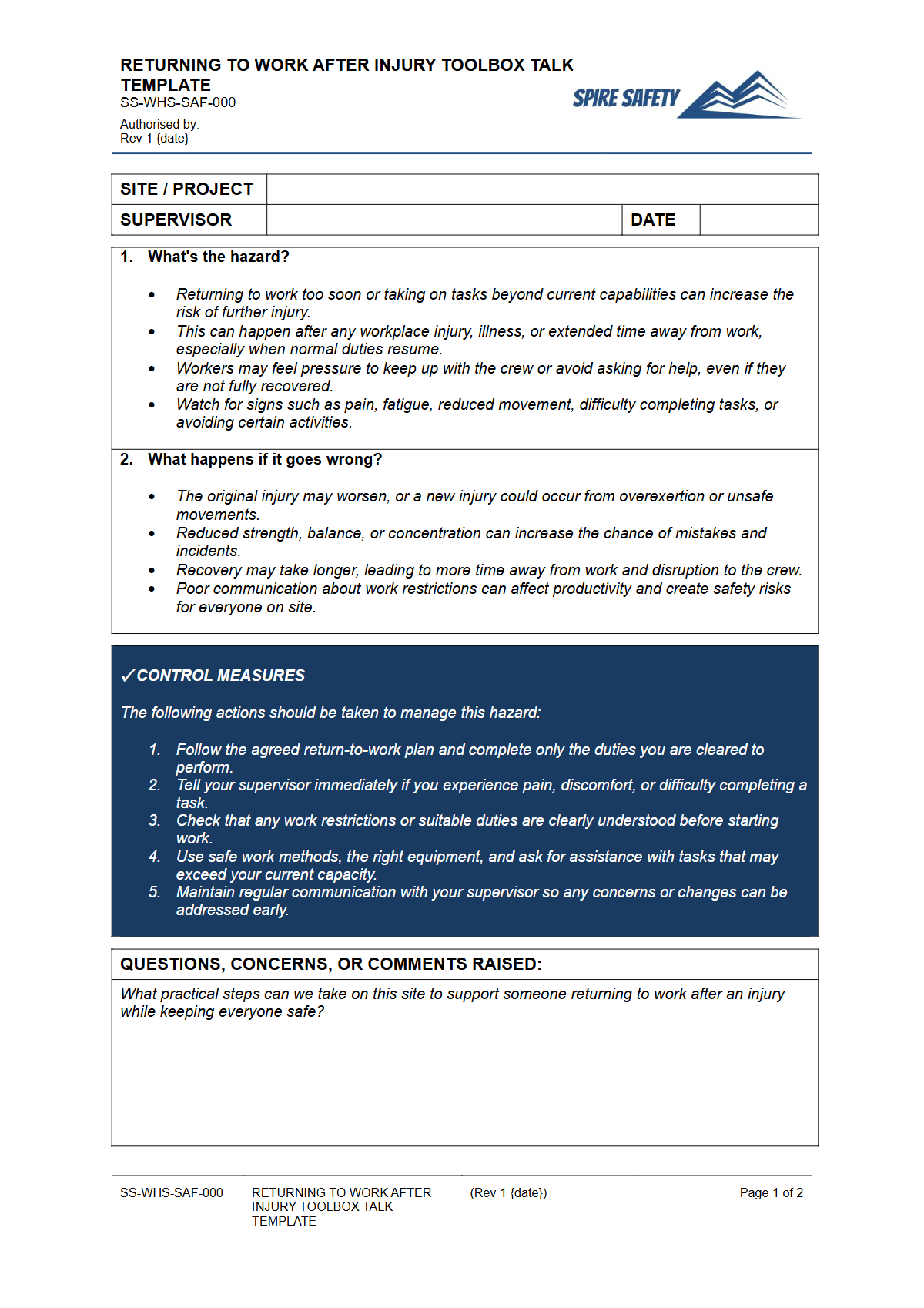
This Returning to Work After Injury Toolbox Talk Template provides a structured framework for facilitating discussions with workers about the process of returning to work following an injury or illness. Its primary purpose is to educate workers on their role, the PCBU's (Person Conducting a Business or Undertaking) responsibilities, and the importance of a transparent and supportive return-to-work (RTW) program.
This template helps foster an understanding of how an effective RTW program benefits both the injured worker and the organisation, promoting recovery and safe reintegration into the workplace.
By utilising this Toolbox Talk, organisations can proactively communicate their commitment to worker wellbeing, clarify procedures, and address common concerns related to workplace injuries and the recovery process. It serves as a valuable tool for reinforcing a positive safety culture and demonstrating adherence to Australian WHS practice regarding worker support and rehabilitation.
Video walkthrough
How to use this Toolbox Talk
This Toolbox Talk is designed to be facilitated by a supervisor, team leader, or WHS professional. Before conducting the talk, download the template in your preferred format (DOCX or PDF).
Review the content carefully and, importantly, customise it to reflect your specific workplace’s return-to-work policies, procedures, and available resources. It must be customised to your workplace and its unique circumstances, including any specific hazards, roles, or rehabilitation programs currently in place.
I cannot stress this enough: this document is a starting point, not a one-size-fits-all solution.
Gather your team in a suitable area, free from distractions. Present the information clearly, encouraging active participation and questions.
This Toolbox Talk should be an interactive session, allowing workers to contribute their insights and raise concerns. Document attendance and any key discussion points or actions arising from the talk.
Integrate this template into your broader WHS management systems to ensure consistent communication and support for all workers.
When to use it
This Returning to Work After Injury Toolbox Talk Template is ideal for use:
- Proactively, as part of regular WHS discussions, to familiarise workers with the RTW process before an incident occurs.
- When a worker is about to return to work after an injury, or during their early stages of return, to align expectations and offer support.
- As an induction component for new employees, ensuring they understand the organisation’s approach to injury management and rehabilitation.
- Following any significant changes to your organisation’s return-to-work policies or procedures.
- As a refresher session for all employees, particularly after any workplace incidents, to reinforce the importance of early intervention and supportive recovery.
Regular communication about returning to work after injury helps to reduce anxiety, manage expectations, and facilitate smoother transitions for workers who have experienced an injury or illness.
Who should use it
This free Toolbox Talk resource is primarily intended for:
- Managers and Supervisors: To lead discussions with their teams and understand their role in supporting injured workers.
- WHS Officers and Coordinators: To integrate into their ongoing safety training programs and ensure consistent messaging across various departments.
- Human Resources Professionals: To complement existing HR policies on injury management and worker rehabilitation.
- Worker Representatives: To better understand the RTW process and advocate for their colleagues effectively.
- All Workers: As participants in the discussion, gaining knowledge about the support available and their responsibilities in a return-to-work scenario.
Ultimately, anyone involved in fostering a safe and supportive workplace culture where injured workers are appropriately cared for will find value in this template. For further tailored guidance on WHS practices, consider engaging in WHS consulting services.
Common mistakes
Common mistakes to avoid
- Not customising the Toolbox Talk to your specific workplace's policies and procedures.
- Failing to encourage open discussion and questions from workers during the session.
- Not documenting attendance or any actions arising from the Toolbox Talk.
- Presenting the RTW process as a burden rather than a supportive measure.
Legal references
Legal considerations
The following legal requirements may be relevant to this type of work.
- Work Health and Safety Act (Harmonised) — Provides the primary duties for protecting workers and other people from work health and safety risks.
- Work Health and Safety Regulations (Harmonised) — Sets out requirements supporting the management of workplace hazards and risks.
The following codes may be relevant to this type of work.
- Managing WHS Risks Code of Practice — Provides practical guidance on identifying hazards, assessing risks and applying effective controls.
- Work Health and Safety Consultation, Cooperation and Coordination Code of Practice — Provides practical guidance on consulting workers and coordinating with other duty holders.
- Managing the Work Environment and Facilities Code of Practice — Provides practical guidance on safe work environments, workplace facilities and related controls.
Did you know
Early Intervention Matters
Evidence suggests that early intervention and a well-managed return to work program can significantly reduce the duration of time off work and improve long-term recovery outcomes for injured workers.
Boosted Morale & Productivity
Organisations with effective return to work programs often report higher employee morale, reduced workers' compensation costs, and improved overall productivity, highlighting the benefits beyond just compliance.
FAQ
Frequently asked questions
01What is a 'return to work' program?
02Who is responsible for developing a return to work plan?
03Can an injured worker refuse to participate in a return to work program?
04What are suitable duties?
Share this resource
Returning to Work After Injury Toolbox Talk Template
Browse Categories
How To Use It
- 1Download and open in Word or PDF.
- 2Replace the placeholders with your business details.
- 3Get it reviewed by a WHS specialist before rollout.
Need it customised?
Our WHS consultants can adapt this template to your site, run a gap analysis, or audit what you already have in place.
Book a Free Consultation WHS consulting servicesor call 1300 156 382