
Roofing Safety Toolbox Talk Template
Download our complimentary Roofing Safety Toolbox Talk Template. A structured starting point for discussing critical WHS risks and controls on site.
Roofing Safety Toolbox Talk Template
DOCX • 141 KB + PDF
Updated Oct 2026
No signup required
Purpose of this document
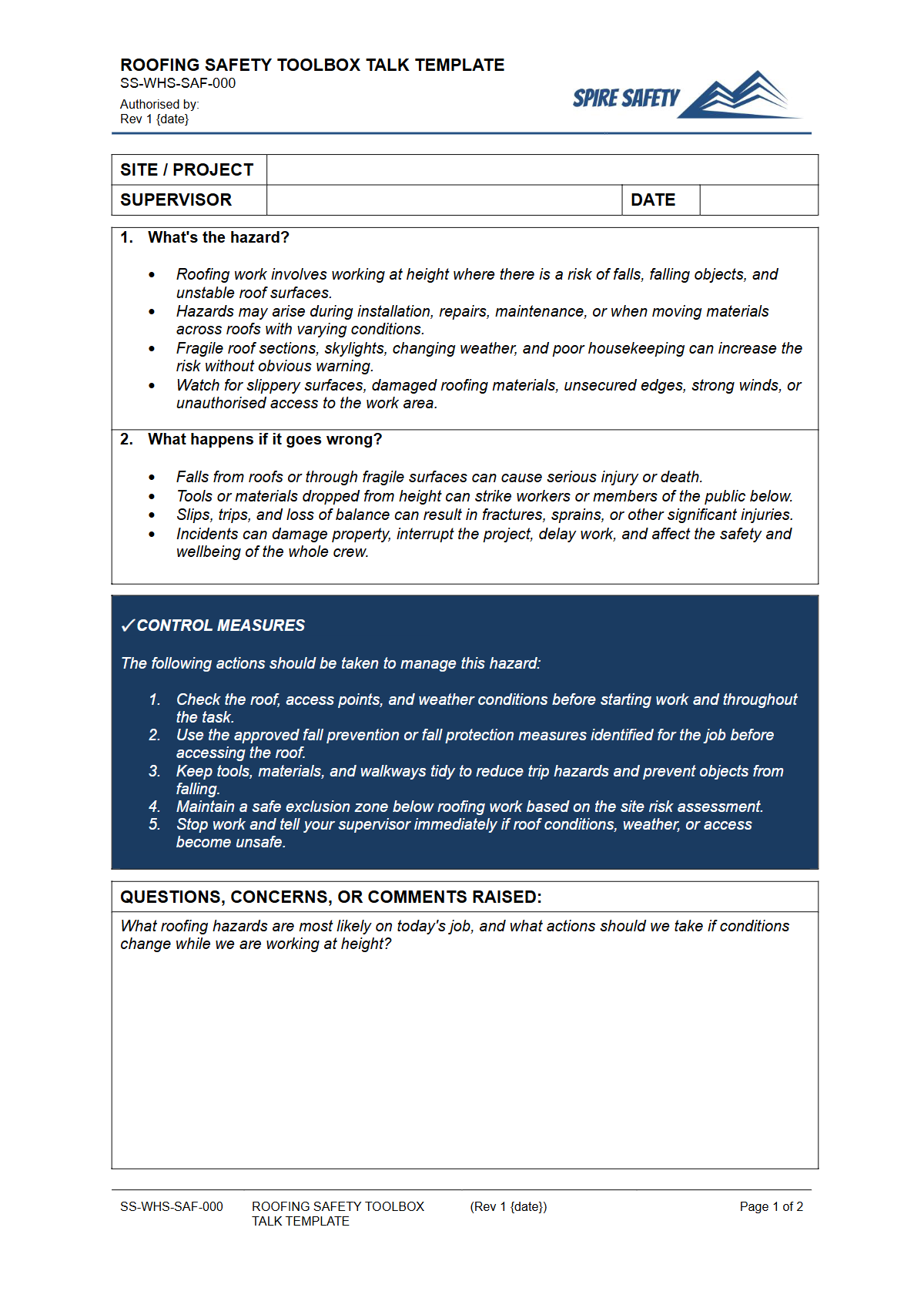
Our Roofing Safety Toolbox Talk Template is designed to provide a structured framework for conducting essential safety discussions on roofing work. This free downloadable resource helps teams address the specific hazards associated with working at heights and other risks inherent in roofing projects.
It acts as a prompt for supervisors and team leaders to cover crucial safety aspects before work commences, ensuring that all workers are aware of potential dangers and the necessary control measures. Utilising such a template helps foster a proactive safety culture within your organisation, aligning with Australian WHS practice where ongoing communication about hazards and risks is paramount.
Regular toolbox talks, supported by resources like this template, are a cornerstone of effective WHS management systems. They serve as a practical tool for reinforcing safety messages, discussing recent incidents or near misses, and ensuring that control measures are understood and implemented correctly on site. This particular template focuses on the unique challenges presented by roofing work, such as fall prevention, electrical hazards, and material handling.
Video walkthrough
How to use this Toolbox Talk
This Roofing Safety Toolbox Talk Template is provided in an editable DOCX format for your convenience, alongside a PDF version. To use it effectively, download the DOCX file and customise it to reflect the specific tasks, site conditions, and risks present in your workplace.
I cannot stress enough that this template is a starting point; it must be customised to your workplace's specific risks, procedures, and controls. Generic content may not adequately address your unique circumstances, and relying solely on an unadapted template will not fulfil your WHS obligations.
Before conducting the toolbox talk, review the template thoroughly. Add or remove discussion points to make it relevant to the day's work.
Include specific details about the equipment being used, the type of roof, weather conditions, and any unique site hazards. Encourage active participation from your team, allowing them to ask questions and contribute their own insights.
Document attendance and key discussion points, as this provides a valuable record of your safety briefings. Remember, effective communication is a two-way street.
When to use it
A Roofing Safety Toolbox Talk should be conducted at the start of any shift involving roofing work, especially when commencing new tasks, working in new or changed environments, or when new workers join the team. It is also highly beneficial to hold such discussions after any incident or near miss involving roofing activities, to learn from the experience and reinforce preventative measures.
Furthermore, periodic refreshers are crucial to maintain high safety standards and ensure that all workers remain vigilant regarding the risks associated with working at heights and other roofing hazards. Incorporating these talks into routine operations demonstrates a commitment to worker safety and contributes to a safer working environment.
For additional support, consider engaging in WHS consulting to tailor your safety programs.
Who should use it
This Roofing Safety Toolbox Talk Template is primarily designed for supervisors, team leaders, and WHS officers responsible for overseeing roofing work or other construction activities involving work at heights. Anyone in a position of leadership who is tasked with conducting safety briefings will find this a valuable resource.
It is also beneficial for WHS managers looking to standardise their toolbox talk content across different projects and teams. While the template provides the structure, the effectiveness of the toolbox talk relies on the presenter's ability to engage with the team, facilitate discussion, and ensure understanding among all participants.
This resource is part of our comprehensive free WHS resources library, aimed at supporting Australian businesses.
Common mistakes
Common mistakes to avoid
- Not customising the talk to specific site conditions and tasks.
- Failing to encourage worker participation and feedback.
- Not documenting attendees and key discussion points.
- Overlooking new or inexperienced workers' understanding of complex risks.
Legal references
Legal considerations
The following legal requirements may be relevant to this type of work.
- Work Health and Safety Act (Harmonised) — Provides the primary duties for protecting workers and other people from work health and safety risks.
- Work Health and Safety Regulations (Harmonised) — Sets out requirements supporting the management of workplace hazards and risks.
The following codes may be relevant to this type of work.
- Managing WHS Risks Code of Practice — Provides practical guidance on identifying hazards, assessing risks and applying effective controls.
- Work Health and Safety Consultation, Cooperation and Coordination Code of Practice — Provides practical guidance on consulting workers and coordinating with other duty holders.
- Managing the Work Environment and Facilities Code of Practice — Provides practical guidance on safe work environments, workplace facilities and related controls.
Did you know
Falls are a leading cause of injury
Falls from heights remain a leading cause of serious injuries and fatalities in the construction industry in Australia. Robust safety discussions are crucial for prevention.
Weather impacts roofing safety
Wind, rain, and extreme heat can significantly increase risks on a roof. Always consider prevailing and forecast weather conditions when planning and performing roofing work.
FAQ
Frequently asked questions
01What is a Roofing Safety Toolbox Talk?
02How often should I conduct a Roofing Safety Toolbox Talk?
03Is this template compliant with Australian WHS laws?
04What are the common hazards discussed in a Roofing Safety Toolbox Talk?
Share this resource
Roofing Safety Toolbox Talk Template
Browse Categories
How To Use It
- 1Download and open in Word or PDF.
- 2Replace the placeholders with your business details.
- 3Get it reviewed by a WHS specialist before rollout.
Need it customised?
Our WHS consultants can adapt this template to your site, run a gap analysis, or audit what you already have in place.
Book a Free Consultation WHS consulting servicesor call 1300 156 382