
Free Inspection & Test Plan (Defects Liability Inspection) Template
Download our free Inspection & Test Plan (Defects Liability Inspection) Template. A structured DOCX and PDF to formalise project handover quality checks.
Free Inspection & Test Plan (Defects Liability Inspection) Template
DOCX • 139 KB + PDF
Updated Oct 2026
No signup required
Purpose of the Free Inspection & Test Plan (Defects Liability Inspection) Template
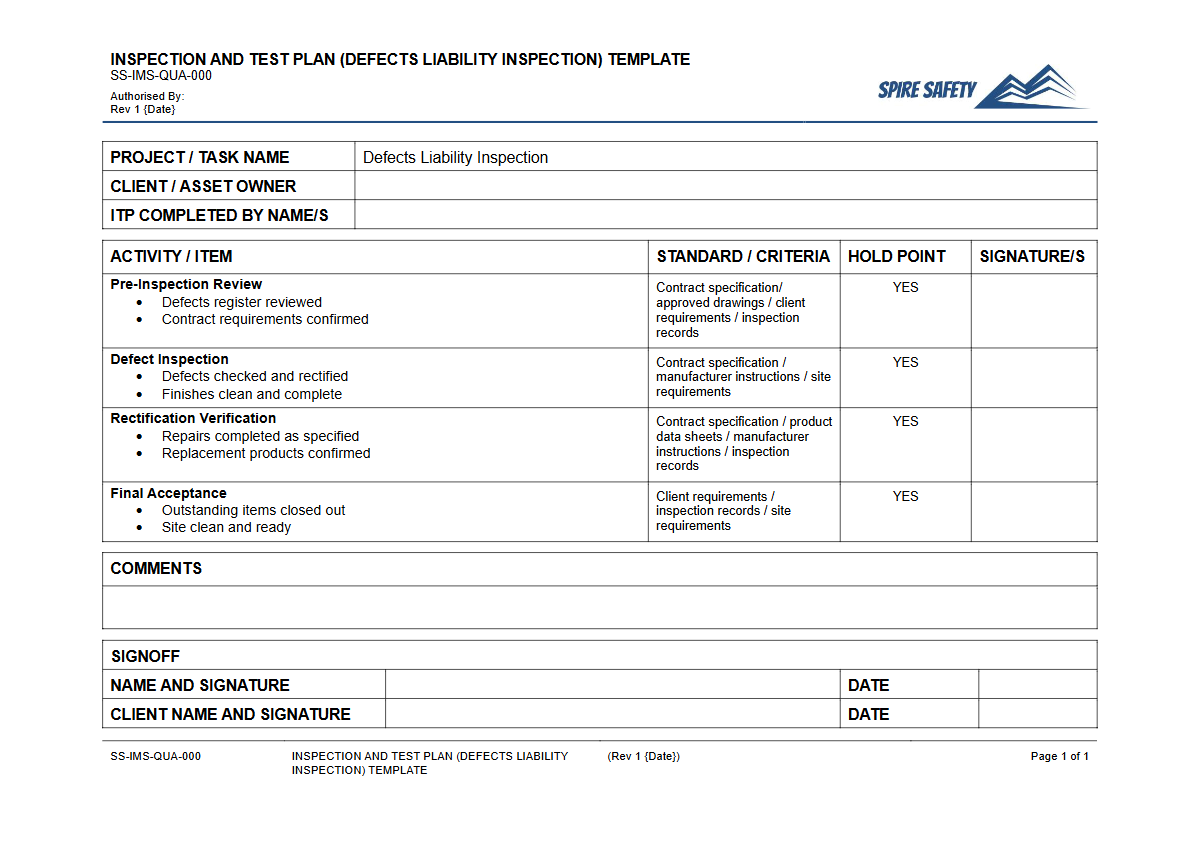
This Free Inspection & Test Plan (Defects Liability Inspection) Template provides a structured framework for managing and documenting quality inspections during a project's defects liability period (DLP). Finalising a construction or engineering project involves more than just handover; it requires a systematic process to identify, document, and rectify any defects that arise after practical completion.
An Inspection & Test Plan (ITP) is a critical quality assurance tool that formalises this process, ensuring all parties are clear on the standards, responsibilities, and verification methods required to close out a project successfully.
The primary purpose of this template is to outline the specific checks and tests needed to confirm that all works comply with contractual and quality specifications. By creating a detailed plan before the inspection takes place, you establish objective acceptance criteria, minimise disputes between clients and contractors, and create a verifiable audit trail.
Using a formal ITP demonstrates a commitment to quality and is a core component of professional WHS management systems, helping to ensure that the final product is safe, compliant, and fit for purpose.
Video walkthrough
How to use the Free Inspection & Test Plan (Defects Liability Inspection) Template
This template is designed to be a comprehensive starting point. To use it effectively, begin by populating the project details at the top.
Then, for each element or area of the works to be inspected, create a new line item in the plan. Detail the specific feature to be checked, the type of inspection required (e.g., visual, measurement, functional test), and the clear, measurable acceptance criteria derived from your project's specifications, drawings, and relevant Australian Standards.
Assign responsibility for conducting the inspection, witnessing it, and approving the results to specific roles (e.g., Site Supervisor, Client Representative).
The plan includes columns for recording the date of inspection and the results, along with space for referencing supporting documents like photos or test reports. This creates an auditable record essential for contractual closeout.
The process of verifying works against a pre-agreed plan is a form of internal audit, and for more complex projects or regulatory environments, engaging external specialists for WHS compliance auditing can provide additional assurance.
Important: This document is a template only. The effectiveness of an Inspection & Test Plan is entirely dependent on its content.
We recommend you customise this template to your specific project, site, and legislative requirements, ensuring it accurately reflects the scope and quality standards of your works.
When to use a Defects Liability ITP
An ITP for defects liability is used specifically during the period following a project's practical completion. This timeframe, known as the Defects Liability Period (DLP) or maintenance period, typically lasts for 12 months.
During the DLP, the contractor remains responsible for rectifying any defects in materials or workmanship that become apparent. This ITP should be developed prior to the end of the DLP to guide the final inspection walkthrough with the client or superintendent.
It serves as the official checklist to confirm all outstanding issues have been resolved and the asset meets the agreed-upon quality standards before the final security or retention is released.
While this ITP is focused on post-completion quality, the principles of structured inspection are applicable throughout a project's lifecycle. For example, regular safety walkthroughs are essential for maintaining a safe work environment from mobilisation to demobilisation.
A document like a WHS inspection for an agricultural site serves a different purpose—hazard identification—but follows a similar structured, evidence-based methodology.
Who should use this template
This template is valuable for a range of personnel involved in the delivery and handover of construction, engineering, and infrastructure projects. Key users include:
- Project Managers: To oversee the quality assurance process and ensure contractual obligations for handover are met.
- Contract Administrators: To manage the contractual aspects of the defects liability period, including the release of retentions based on the successful completion of the ITP.
- Quality Managers / Engineers: To develop, implement, and manage the ITP, ensuring it aligns with the project's Quality Management Plan and relevant standards.
- Site Supervisors & Forepersons: To conduct the on-ground inspections, coordinate rectification works for any identified defects, and sign off on completed items.
- Client Representatives & Superintendents: To use the ITP as a basis for witnessing inspections and formally accepting the completed works on behalf of the asset owner.
Effectively managing project documentation is crucial for every role. For more templates and guides to support your project and safety management activities, browse our complete free WHS resources library.
Common mistakes
Common mistakes to avoid
- Using vague or subjective acceptance criteria like 'good finish' instead of measurable standards.
- Failing to clearly assign responsibility for each inspection and sign-off point.
- Poor record-keeping, making it difficult to prove that an inspection or rectification was completed.
- Using a generic template without customising it to the specific project scope, materials, and quality standards.
Legal references
Legal considerations
The following legal requirements may be relevant to this type of work.
- Work Health and Safety Act (Harmonised) — Provides the primary duties for protecting workers and other people from work health and safety risks.
- Work Health and Safety Regulations (Harmonised) — Sets out requirements supporting the management of workplace hazards and risks.
The following codes may be relevant to this type of work.
- Managing WHS Risks Code of Practice — Provides practical guidance on identifying hazards, assessing risks and applying effective controls.
- Work Health and Safety Consultation, Cooperation and Coordination Code of Practice — Provides practical guidance on consulting workers and coordinating with other duty holders.
- Managing the Work Environment and Facilities Code of Practice — Provides practical guidance on safe work environments, workplace facilities and related controls.
Did you know
Cost of Defects
Research has suggested that the cost of correcting errors and defects in the Australian construction industry can account for over 10% of total project costs, highlighting the importance of robust quality assurance processes like ITPs.
Standard Period
In Australia, a 12-month Defects Liability Period is standard for most commercial and civil construction contracts, though this can be negotiated and may be longer for specific components like waterproofing or structural elements.
FAQ
Frequently asked questions
01What is the purpose of a defects liability period (DLP)?
02Who is responsible for rectifying defects found during an inspection?
03How detailed should an Inspection & Test Plan be?
04Can this ITP template be used for any construction project?
Share this resource
Free Inspection & Test Plan (Defects Liability Inspection) Template
Browse Categories
How To Use It
- 1Download and open in Word or PDF.
- 2Replace the placeholders with your business details.
- 3Get it reviewed by a WHS specialist before rollout.
Need it customised?
Our WHS consultants can adapt this template to your site, run a gap analysis, or audit what you already have in place.
Book a Free Consultation WHS consulting servicesor call 1300 156 382
Related templates
- Free Inspection & Test Plan (Demolition) Template
- Free Inspection & Test Plan (Double Brick Construction) Template
- Free Inspection & Test Plan (Ductwork Installation) Template
- Free Inspection & Test Plan (Earthworks Excavation) Template
- Free Inspection & Test Plan (Electrical Installation) Template
- Free Inspection & Test Plan (Electrical Rough-In (First Fix)) Template