
Free Inspection & Test Plan (Final Handover Defects Inspection) Template
Download our free Inspection & Test Plan (Final Handover Defects Inspection) Template.
Free Inspection & Test Plan (Final Handover Defects Inspection) Template
DOCX • 140 KB + PDF
Updated Oct 2026
No signup required
Purpose of the Free Inspection & Test Plan (Final Handover Defects Inspection) Template
A final handover defects inspection is a critical stage in any construction or engineering project. It's the last opportunity to formally identify, document, and schedule rectification for any defects before the asset is handed over to the client.
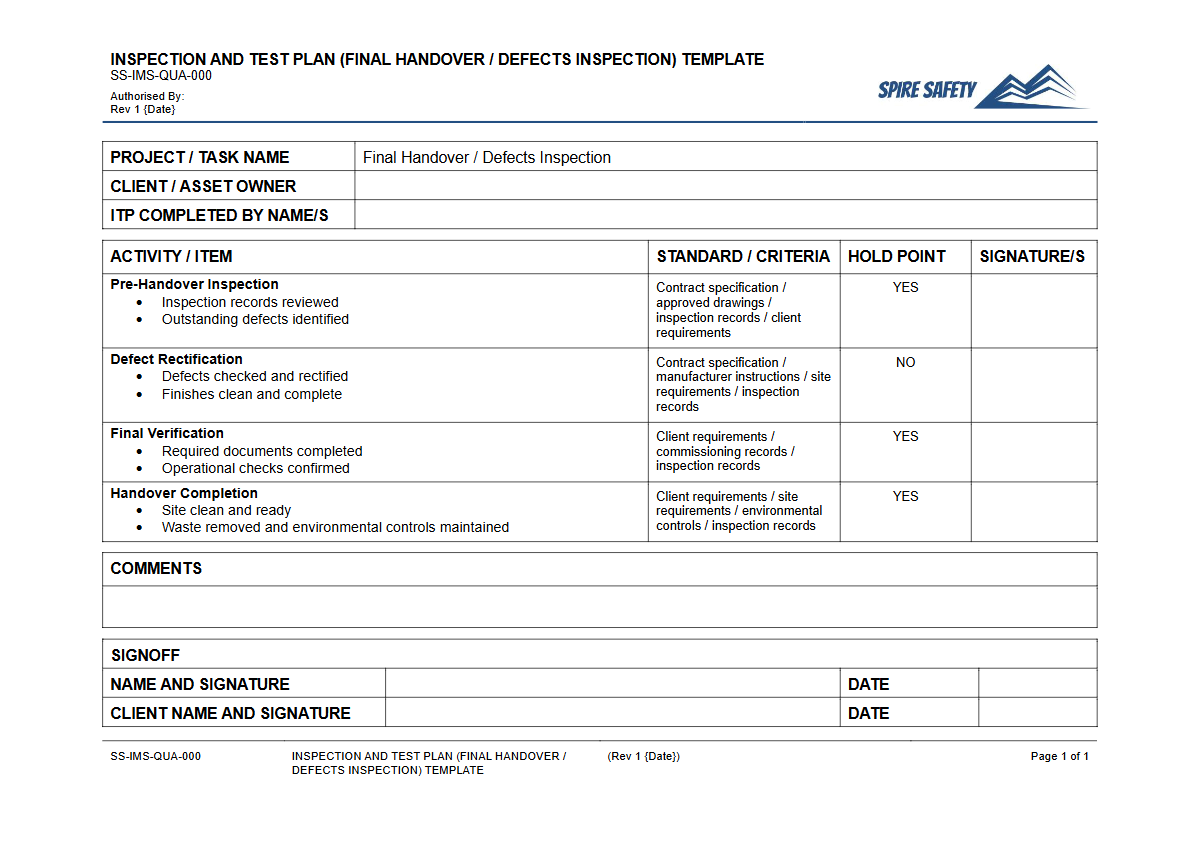
This free Inspection & Test Plan (Final Handover Defects Inspection) Template provides a structured framework for managing this process. It helps ensure that all quality standards and contractual obligations have been met, providing a clear, documented record of the project's condition at the point of practical completion.
Using a formal ITP demonstrates a commitment to quality and professionalism, helping to prevent disputes and ensure client satisfaction.
An effective handover process is a cornerstone of a project's quality assurance framework. By systematically verifying that all components of the build meet specified standards, you protect your organisation from future liability and ensure a smooth transition for the end-user.
This process is just one part of a holistic safety and quality program, which often includes comprehensive WHS management systems that govern all on-site activities from commencement to completion. A well-executed defects inspection provides objective evidence that the project is fit for its intended purpose.
Video walkthrough
How to use the Free Inspection & Test Plan (Final Handover Defects Inspection) Template
This Inspection & Test Plan template is designed as a starting point. After downloading the DOCX or PDF file, you must adapt it to the specific requirements of your project.
The plan includes columns for listing inspection items (e.g., finishes, services, fixtures), acceptance criteria, inspection methods, responsible persons, and sign-off provisions. The key is to populate these sections with detail relevant to your build.
For instance, the acceptance criteria for joinery in a high-end residential build will differ significantly from that in an industrial warehouse.
Important: This document must be customised to your specific project, site, and legal obligations. We are not responsible for any deficiencies in your final document.
Be sure to consult with project managers, engineers, and the client to ensure the ITP covers all critical aspects. A thorough defects inspection process may also be a key component of undergoing formal WHS compliance auditing, demonstrating procedural rigour.
Once customised, the ITP serves as the primary checklist during the final site walk-through with relevant stakeholders.
When to use it
This Inspection & Test Plan should be prepared in the lead-up to practical completion and implemented just before the official handover to the client. It is used during the final walk-through inspection, an event that typically involves the principal contractor, the client or their representative, and the project superintendent or architect.
The goal is to create a definitive list of all outstanding defects or incomplete works that must be addressed before final completion is granted and the final payment or release of securities occurs. It's a proactive tool used to manage the project's closing stages, rather than a reactive list created after problems have been reported post-handover.
The timing is crucial. Executing the inspection too early means some works may not be finished, while doing it too late can delay the handover and impact contractual deadlines.
The ITP should be treated as a live document during the inspection, with defects recorded in real-time. This ensures all parties agree on the identified issues at the same time. This process is equally important when preparing specialised facilities for handover, requiring specific checks like those detailed in a WHS inspection template for an aged care home.
Who should use it
This template is designed for professionals responsible for quality assurance and project completion in the construction, building, and engineering industries. Key users include:
- Project Managers: To oversee and ensure the successful completion and handover of projects.
- Construction Managers and Site Supervisors: To conduct the physical inspection and manage the rectification of identified defects.
- Quality Assurance (QA) Managers: To ensure that project delivery meets organisational and industry quality standards.
- Principal Contractors: To fulfil their contractual obligations to deliver a defect-free asset to the client.
- Client Representatives and Superintendents: To verify that the final product meets their expectations and the contract's requirements.
Effectively managing project close-out requires expertise and structured processes. For organisations needing assistance in developing these frameworks or upskilling their teams, engaging with specialist WHS consulting services can provide valuable guidance and support.
You can find more templates and tools for specific site needs in our free WHS resources library, covering everything from initial site setup to final verification.
Common mistakes
Common mistakes to avoid
- Using a generic checklist without customising it for the specific project's scope, finishes, and specifications.
- Failing to define clear, objective, and measurable acceptance criteria for each inspection point.
- Not involving the client or their designated representative in the final inspection walk-through, leading to disputes.
- Poor or incomplete record-keeping, making it difficult to track the status of defect rectification and prove completion.
Legal references
Legal considerations
The following legal requirements may be relevant to this type of work.
- Work Health and Safety Act (Harmonised) — Provides the primary duties for protecting workers and other people from work health and safety risks.
- Work Health and Safety Regulations (Harmonised) — Sets out requirements supporting the management of workplace hazards and risks.
The following codes may be relevant to this type of work.
- Managing WHS Risks Code of Practice — Provides practical guidance on identifying hazards, assessing risks and applying effective controls.
- Work Health and Safety Consultation, Cooperation and Coordination Code of Practice — Provides practical guidance on consulting workers and coordinating with other duty holders.
- Managing the Work Environment and Facilities Code of Practice — Provides practical guidance on safe work environments, workplace facilities and related controls.
Did you know
Practical vs. Final Completion
Practical Completion is when a building is fit for its intended use, even with minor defects. The defects inspection is the key process that enables the rectification of these minor items to achieve Final Completion.
The 'Hold Point' Concept
ITPs often use 'Hold Points'—mandatory verification stages that require approval before work proceeds. In a handover ITP, the final joint sign-off acts as the ultimate hold point before the client officially accepts the property.
FAQ
Frequently asked questions
01What's the difference between a simple defects list and a final handover ITP?
02Is this template suitable for small residential construction projects?
03Who is responsible for signing off on a final handover ITP?
04How should I store completed handover inspection records?
Share this resource
Free Inspection & Test Plan (Final Handover Defects Inspection) Template
Browse Categories
How To Use It
- 1Download and open in Word or PDF.
- 2Replace the placeholders with your business details.
- 3Get it reviewed by a WHS specialist before rollout.
Need it customised?
Our WHS consultants can adapt this template to your site, run a gap analysis, or audit what you already have in place.
Book a Free Consultation WHS consulting servicesor call 1300 156 382
Related templates
- Free Inspection & Test Plan (Fire Detection and Alarm System) Template
- Free Inspection & Test Plan (Fire Doors and Hardware) Template
- Free Inspection & Test Plan (Fire Hydrant Hose Reel System) Template
- Free Inspection & Test Plan (Fire Services Installation) Template
- Free Inspection & Test Plan (Fire Sprinkler System) Template
- Free Inspection & Test Plan (Floor Levelling Screeding) Template