
Free Pre-Start Checklist (Bus) Template
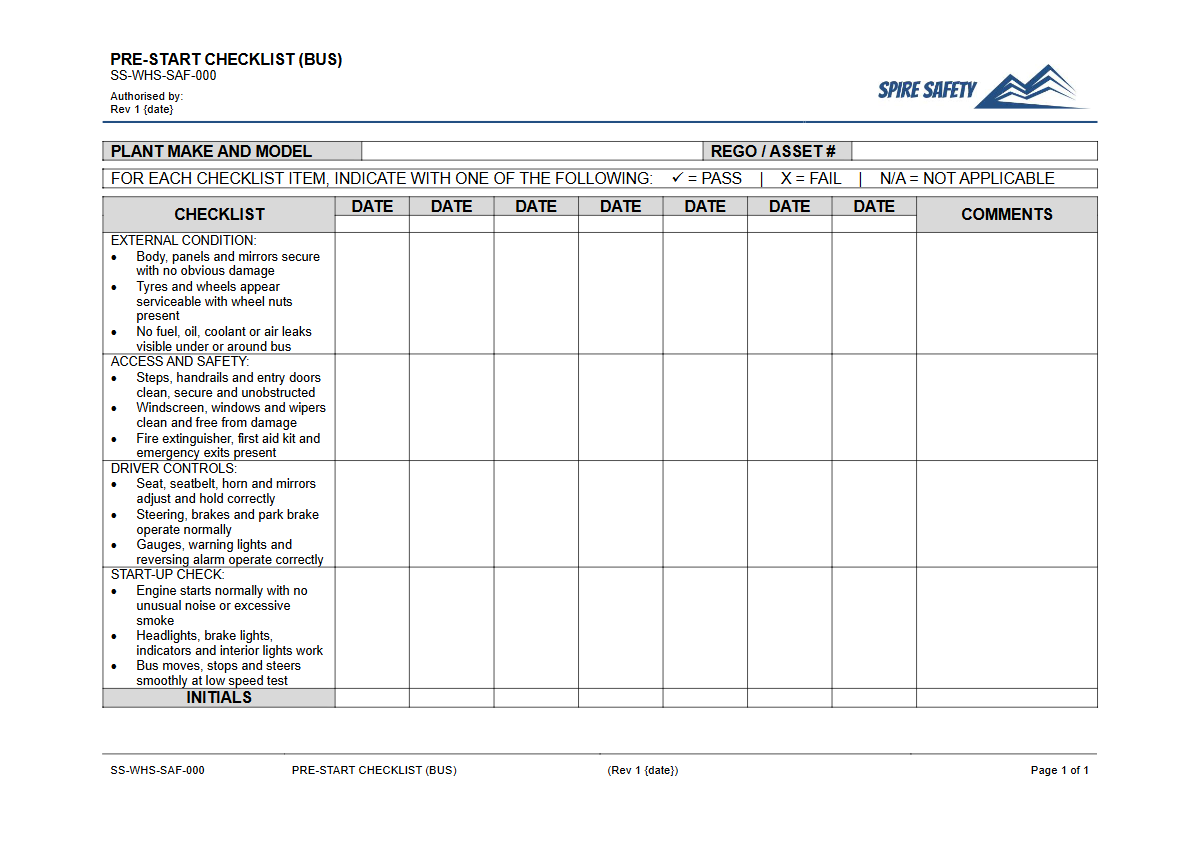
Download our free Pre-Start Checklist (Bus) Template. This structured DOCX & PDF checklist helps formalise daily vehicle safety inspections.
Free Pre-Start Checklist (Bus) Template
DOCX • 125 KB + PDF
Updated Oct 2026
No signup required
Purpose of the Free Pre-Start Checklist (Bus) Template
Ensuring a bus is safe before it begins a route is a fundamental WHS and public safety requirement. This Free Pre-Start Checklist (Bus) Template provides a structured starting point for transport operators to formalise their daily vehicle inspections.
Regular, documented checks are essential for identifying mechanical faults, safety hazards, and maintenance needs before they escalate into serious incidents on the road. Using a systematic checklist helps demonstrate due diligence under the Heavy Vehicle National Law (HVNL) and WHS legislation, creating a safer environment for drivers, passengers, and other road users.
The core purpose is to move from informal walk-arounds to a formal, recordable process. This proactive approach to maintenance and safety helps minimise vehicle downtime, reduces the risk of accidents, and forms a critical part of a transport operator's Safety Management System (SMS).
The principles of pre-start checks apply to all heavy mobile plant, whether it's a passenger bus or industrial equipment like that covered in our Pre-Start Checklist (Forwarder) Template. Consistently applied checks are a key activity verified during a WHS compliance auditing process.
Video walkthrough
How to use the Free Pre-Start Checklist (Bus) Template
This template is provided in both DOCX and PDF formats for ease of use. The DOCX file is fully editable, allowing for customisation to suit your specific fleet and operational needs.
A typical implementation process involves these steps:
- Download and Customise: Open the DOCX file and adapt the checklist items. Add or remove checks based on the specific make and model of your buses (e.g., articulated, coach, minibus), their features (e.g., wheelchair lifts, specific braking systems), and your operational context.
- Integrate Procedures: Ensure the checklist includes clear instructions on what a driver should do if they identify a fault, including who to report it to and the criteria for grounding a vehicle.
- Train Drivers: Conduct training to ensure all drivers understand how to complete the check thoroughly and what each item entails. Emphasise that this is a critical safety task, not just a paperwork exercise.
- Implement and Monitor: Integrate the check into the daily workflow for every driver and every bus. Supervisors should periodically review completed checklists to supports your compliance efforts and identify recurring vehicle issues.
Please note: We have designed this template as a foundational guide. You must customise it to reflect the specific models of buses in your fleet, your operational context (e.g., school bus, charter, public transport), and any unique state or territory regulations.
Key Items on a Bus Pre-Start Checklist
A comprehensive bus inspection covers multiple areas of the vehicle. While your customised list will be specific, it should be organised into logical sections to ensure nothing is missed.
Exterior Checks
- Tyres: Check for correct inflation, adequate tread depth, and any visible damage or cuts.
- Lights & Signals: Test all headlights (high and low beam), tail lights, brake lights, indicators, and hazard lights.
- Mirrors & Windows: Ensure all are clean, securely mounted, and free from cracks.
- Bodywork: Look for any new damage, loose panels, or other structural concerns.
- Fluid Leaks: Check underneath the vehicle for any signs of oil, coolant, or other fluid leaks.
Interior & Cabin Checks
- Driver's Controls: Test the horn, windscreen wipers/washers, and all dashboard warning lights.
- Brakes: Perform a brake test (as per company procedure) to check for responsiveness.
- Emergency Equipment: Verify the presence and serviceability of the fire extinguisher, first aid kit, and any other emergency supplies.
- Seats, Seatbelts & Handrails: Check that all are secure and in good condition.
- Emergency Exits: Ensure all emergency exits, including windows and roof hatches, are clearly marked and unobstructed.
Passenger & Accessibility Features
- Doors: Test the operation of all passenger doors.
- Wheelchair Lift/Ramp: If fitted, test the full cycle of the lift or ramp to ensure smooth and safe operation.
- Communication Systems: Check the public address (PA) system and any internal communication devices.
When to use it
The pre-start inspection should be completed at the beginning of every day or shift before the bus is used for its first passenger-carrying trip. It should also be performed if a new driver takes over the vehicle mid-shift.
A post-trip inspection is also best practice, allowing defects to be reported and scheduled for repair before the next day's service.
Who should use it
The primary user of the checklist is the bus driver or operator assigned to the vehicle for that shift. They are the person best positioned to conduct the physical inspection.
However, the completed records are crucial for other roles within the organisation. Supervisors and transport managers should review the checklists daily to identify and action any reported defects.
Maintenance teams use the reports to prioritise repairs and conduct preventative maintenance, ensuring the long-term health of the fleet. A transport manager overseeing a depot must ensure all equipment is checked; this can include ancillary machinery covered by our free Pre-Start Checklist (Bin Lifter) Template.
Ultimately, these daily records are a key component that feeds into the organisation's overarching WHS management systems. They provide tangible evidence that the organisation is actively managing plant and vehicle safety risks. For a holistic view of safety documentation, you can browse our entire free WHS resources library for other useful templates.
Common mistakes
Common mistakes to avoid
- Using a generic checklist from a car without customising it for the specific bus model and its features (e.g., air brakes, accessibility lifts).
- Drivers 'pencil-whipping' the form (ticking boxes without performing the physical checks) to save time.
- Failing to establish a clear, non-punitive process for reporting defects, which can discourage drivers from flagging issues.
- Poor record-keeping, making it impossible to track recurring faults, identify trends, or demonstrate due diligence during an audit or incident investigation.
Legal references
Legal considerations
The following legal requirements may be relevant to this type of work.
- Work Health and Safety Act (Harmonised) — Provides the primary duties for protecting workers and other people from work health and safety risks.
- Work Health and Safety Regulations (Harmonised) — Sets out requirements supporting the management of workplace hazards and risks.
The following codes may be relevant to this type of work.
- Managing WHS Risks Code of Practice — Provides practical guidance on identifying hazards, assessing risks and applying effective controls.
- Work Health and Safety Consultation, Cooperation and Coordination Code of Practice — Provides practical guidance on consulting workers and coordinating with other duty holders.
- Managing the Work Environment and Facilities Code of Practice — Provides practical guidance on safe work environments, workplace facilities and related controls.
Did you know
Heavy Vehicle National Law
The HVNL includes specific requirements for drivers to perform daily checks to ensure their heavy vehicle is safe to operate on public roads, forming a key part of road transport compliance.
Chain of Responsibility (CoR)
Under CoR laws, everyone in the transport supply chain, including schedulers and managers, can be held legally responsible for safety breaches caused by an unsafe vehicle on the road.
FAQ
Frequently asked questions
01Is a daily pre-start check for a bus a legal requirement in Australia?
02How long should a bus pre-start inspection take?
03What happens if a defect is found during a bus pre-start check?
04Should we use paper or digital pre-start checklists for our buses?
Share this resource
Free Pre-Start Checklist (Bus) Template
Browse Categories
How To Use It
- 1Download and open in Word or PDF.
- 2Replace the placeholders with your business details.
- 3Get it reviewed by a WHS specialist before rollout.
Need it customised?
Our WHS consultants can adapt this template to your site, run a gap analysis, or audit what you already have in place.
Book a Free Consultation WHS consulting servicesor call 1300 156 382