
Free Pre-Start Checklist (Floor Burnisher) Template
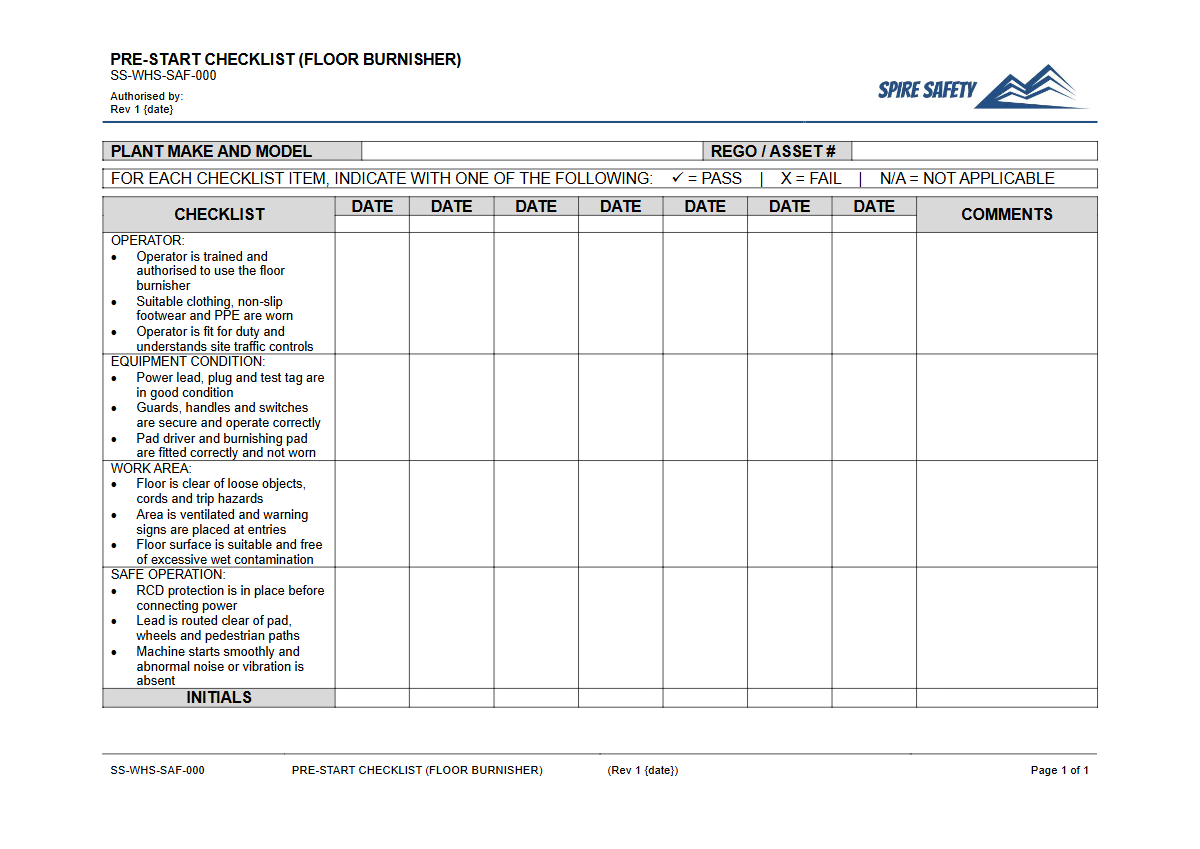
Download our free Pre-Start Checklist (Floor Burnisher) Template. This DOCX & PDF resource helps formalise daily equipment safety checks for your team.
Free Pre-Start Checklist (Floor Burnisher) Template
DOCX • 125 KB + PDF
Updated Oct 2026
No signup required
Purpose of the Free Pre-Start Checklist (Floor Burnisher) Template
Using a floor burnisher introduces several workplace hazards, primarily related to electrical safety, operator ergonomics, and slips, trips, and falls. This Free Pre-Start Checklist (Floor Burnisher) Template provides a structured framework for operators to conduct consistent, documented inspections before each use.
Formalising these checks helps identify potential faults like damaged cords, worn pads, or malfunctioning safety features before they can cause an incident. By identifying and addressing defects early, organisations can better manage risks associated with plant and equipment, reduce downtime, and demonstrate a proactive approach to workplace safety.
A pre-start check is a fundamental component of any equipment safety program. It serves as a practical, on-the-ground tool to reinforce safe work practices and encourage operator ownership of equipment condition.
For broader training on this topic, a Pre-Start Checks and Plant Maintenance Toolbox Talk can help embed these behaviours across your team, covering the 'why' behind the daily check.
Key Risks Addressed by This Pre-Start Checklist
- Electrical Hazards: Inspecting the cord, plug, and connections for damage helps prevent electric shock, a significant risk with portable mains-powered equipment.
- Mechanical Failure: Checking the pad driver, pad condition, and handle security ensures the machine operates as intended, preventing component failure during use.
- Operator Injury: Ensuring safety switches and handles are functional protects the operator from unexpected machine activation or loss of control.
- Slips and Trips: Verifying the cord is positioned safely and the machine is stable minimises the risk of trips and falls in the work area.
Video walkthrough
How to Use the Free Pre-Start Checklist (Floor Burnisher) Template
Our template is provided in both DOCX and PDF formats to be easily adapted to your workplace. To implement it effectively, follow these steps:
- Download and Customise: Download the DOCX file and add your company branding. Most importantly, review and modify the checklist items to match the specific make and model of the floor burnisher(s) used at your site. Different models may have unique features or require specific checks.
- Integrate and Train: Integrate the checklist into your daily operational procedures. Train all operators on how to properly complete the check, what each item means, and the procedure for reporting any identified faults. Store completed checklists as a record of your safety activities.
- Review and Report: Establish a clear process for what an operator must do if they find a fault. This should always include immediately taking the equipment out of service, applying a 'Do Not Use' tag, and reporting the issue to a supervisor for repair.
Important: This document is a template and must be customised to suit the specific make and model of your floor burnisher, your operational environment, and your organisation's procedures. We are not liable for any incidents that may arise from the use of this template. For assistance integrating this process into your safety framework, consider a review of your overall WHS management systems.
When to Use a Floor Burnisher Pre-Start Checklist
A pre-start checklist should be completed by the operator at the beginning of their shift or before they use the floor burnisher for the first time that day. It is a pre-operational check, not a substitute for a scheduled maintenance program.
Regular servicing by a qualified person is still essential for the long-term safety and reliability of the equipment.
These checks also complement operator competency assessments. While a pre-start confirms the machine's condition, competency checks confirm the operator's skill.
If your team also uses similar equipment, our Verification of Competency (Floor Scrubber) template provides a useful starting point for verifying operator skills.
Who Should Use This Checklist
The checklist is designed to be completed by the trained and authorised operator of the floor burnisher. They have the most hands-on interaction with the equipment and are best placed to notice subtle changes or developing faults.
Supervisors and managers also have a role in ensuring the checks are being completed correctly and consistently. They should periodically review completed checklists to look for recurring faults that might indicate a larger problem with the machine or its usage.
Only trained and competent workers should operate this type of machinery. Verifying this competence is a key part of a safe system of work.
For similar floor-preparation equipment, our Floor Grinder Verification of Competency (VOC) template can be adapted to formalise this process. Periodically reviewing these records forms an important part of internal safety reviews and external WHS compliance auditing.
This document is one of many resources designed to help Australian businesses improve their safety practices. For more templates, toolbox talks, and guidance, browse our complete free WHS resources library.
Common mistakes
Common mistakes to avoid
- Using a generic checklist without customising it for the specific machine model.
- Operators 'pencil-whipping' the form without physically inspecting each item.
- Failing to immediately tag out and report faulty equipment found during an inspection.
- Neglecting scheduled preventative maintenance and relying solely on pre-start checks.
Legal references
Legal considerations
The following legal requirements may be relevant to this type of work.
- Work Health and Safety Act (Harmonised) — Provides the primary duties for protecting workers and other people from work health and safety risks.
- Work Health and Safety Regulations (Harmonised) — Sets out requirements supporting the management of workplace hazards and risks.
The following codes may be relevant to this type of work.
- Managing WHS Risks Code of Practice — Provides practical guidance on identifying hazards, assessing risks and applying effective controls.
- Work Health and Safety Consultation, Cooperation and Coordination Code of Practice — Provides practical guidance on consulting workers and coordinating with other duty holders.
- Managing the Work Environment and Facilities Code of Practice — Provides practical guidance on safe work environments, workplace facilities and related controls.
Did you know
Electrical Safety First
The flexible cord is often the most abused part of a portable electrical appliance like a burnisher. The model WHS Regulations place specific duties on businesses to manage risks of electrical shock, making daily cord inspection a critical control.
Pad Speed
High-speed floor burnishers can spin at over 1500 RPM. An incorrectly fitted, damaged, or unbalanced pad at this velocity can detach and become a dangerous projectile, posing a serious risk to the operator and others in the area.
FAQ
Frequently asked questions
01Why is a pre-start check necessary for a floor burnisher?
02How often should a floor burnisher pre-start check be performed?
03What should happen if a fault is found during the check?
04Is this template sufficient for my WHS obligations?
Share this resource
Free Pre-Start Checklist (Floor Burnisher) Template
Browse Categories
How To Use It
- 1Download and open in Word or PDF.
- 2Replace the placeholders with your business details.
- 3Get it reviewed by a WHS specialist before rollout.
Need it customised?
Our WHS consultants can adapt this template to your site, run a gap analysis, or audit what you already have in place.
Book a Free Consultation WHS consulting servicesor call 1300 156 382