
Free Pre-Start Checklist (Floor Scrubber) Template
Download our free Pre-Start Checklist for Floor Scrubbers to formalise your equipment inspections.
Free Pre-Start Checklist (Floor Scrubber) Template
DOCX • 125 KB + PDF
Updated Oct 2026
No signup required
Purpose of the Free Pre-Start Checklist (Floor Scrubber) Template
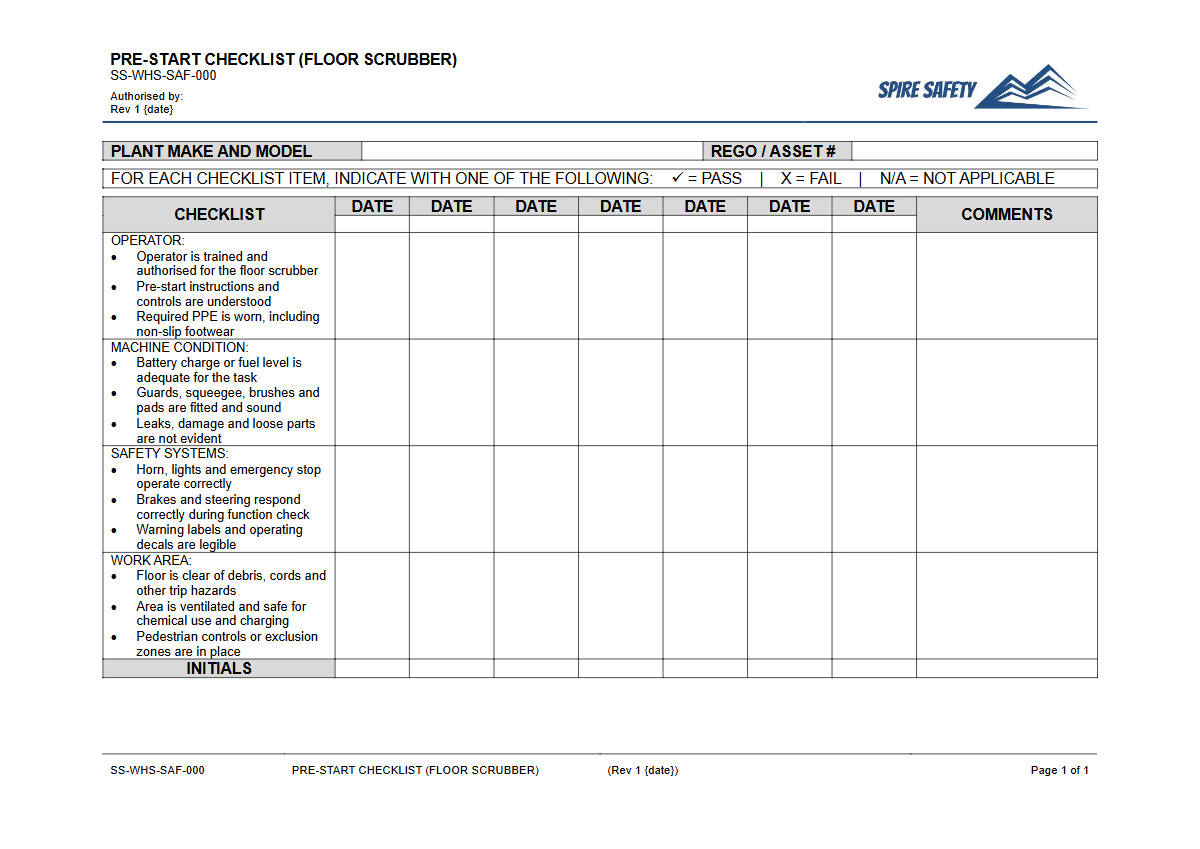
Operating a floor scrubber without proper checks can introduce serious risks, including slips from water spillage, trips over cables, electrical hazards, and ergonomic injuries. This free Pre-Start Checklist (Floor Scrubber) Template provides a structured framework for operators to conduct consistent, thorough inspections before each use.
Formalising this process helps identify and control potential hazards, ensures the machine is in safe working order, and documents due diligence in maintaining a safe system of work. Regular checks are a fundamental component of plant safety, preventing incidents and costly equipment downtime.
Integrating these checks into daily operations is a key part of effective WHS management systems. It moves safety from a reactive to a proactive state, where potential failures are caught before they can cause harm. A documented check also provides a clear record that the equipment was safe to use at the start of a shift, which can be invaluable during safety investigations or audits.
Video walkthrough
How to use the Free Pre-Start Checklist (Floor Scrubber) Template
This document is designed as a starting point. It's crucial that you customise the checklist to align with your specific workplace, the models of floor scrubbers in use, and the associated hazards.
The template covers general inspection points for a standard floor scrubber, but your environment might present unique challenges or your machine may have specific features requiring checks.
To effectively implement the checklist:
- Download: Get the template in your preferred format (DOCX for easy editing or PDF).
- Customise: Add your company branding. Review each item and adapt it to your equipment. Add or remove checks based on the manufacturer’s instructions and a site-specific risk assessment. For example, add checks for specific warning lights, battery types, or squeegee conditions relevant to your model.
- Train: Ensure all operators are trained not just on how to use the floor scrubber, but also on how to complete the pre-start check correctly. They must understand what each item means and what to do if they find a fault. Running a specific session on this topic is highly recommended, perhaps using a Pre-Start Checks and Plant Maintenance Toolbox Talk.
- Implement: Make the checklist readily available near the equipment's storage area. Establish a clear procedure for what an operator must do if the scrubber fails an inspection, such as tagging it out of service and reporting the fault to a supervisor immediately.
Remember, a pre-start check is only one part of ensuring safety. It is equally important to confirm that operators are skilled and knowledgeable.
You can formalise this process using a Verification of Competency (Floor Scrubber) Template to assess and document their capabilities.
When should a Floor Scrubber Pre-Start Checklist be used?
A pre-start check should be completed by the operator before the floor scrubber is used for the first time on any given day or shift. If multiple operators use the same machine during a single shift, it is good practice for each new operator to conduct their own brief check before commencing work.
This ensures continuous oversight and accountability throughout the operational period.
Who should use this checklist?
This checklist is primarily for:
- Equipment Operators: The individuals who will be using the floor scrubber are responsible for conducting the pre-start inspection to ensure the machine is safe for them to use.
- Supervisors and Team Leaders: They are responsible for ensuring operators are completing the checks correctly and for taking action when faults are reported. They may use the completed forms for periodic review.
- Maintenance Personnel: Completed checklists can provide valuable information to the maintenance team, highlighting recurring minor issues that may point to a larger underlying problem requiring servicing.
Conducting regular internal safety reviews can ensure these procedures are being followed consistently. A formal WHS compliance auditing process can verify that your safety systems, including equipment checks, are being implemented effectively across the organisation.
While this checklist is for scrubbers, you might also need to verify competency for other equipment used in similar environments; our Floor Grinder Verification of Competency (VOC) template is another useful resource.
Common mistakes
Common mistakes to avoid
- Using a generic checklist that doesn't match the specific floor scrubber model.
- Pencil-whipping the checklist without physically inspecting the items.
- Failing to remove a faulty machine from service and report the defect.
- Neglecting to check the condition of pads, brushes, or squeegees, leading to poor performance and potential slip hazards.
Legal references
Legal considerations
The following legal requirements may be relevant to this type of work.
- Work Health and Safety Act (Harmonised) — Provides the primary duties for protecting workers and other people from work health and safety risks.
- Work Health and Safety Regulations (Harmonised) — Sets out requirements supporting the management of workplace hazards and risks.
The following codes may be relevant to this type of work.
- Managing WHS Risks Code of Practice — Provides practical guidance on identifying hazards, assessing risks and applying effective controls.
- Work Health and Safety Consultation, Cooperation and Coordination Code of Practice — Provides practical guidance on consulting workers and coordinating with other duty holders.
- Managing the Work Environment and Facilities Code of Practice — Provides practical guidance on safe work environments, workplace facilities and related controls.
Did you know
Slips, Trips, and Falls
According to Safe Work Australia, slips, trips, and falls are a leading cause of serious workplace injuries, making proper floor cleaning and maintenance a critical safety function.
FAQ
Frequently asked questions
01What are the main hazards of using a commercial floor scrubber?
02What happens if a fault is found during a floor scrubber pre-start check?
03Can any employee operate a floor scrubber?
04How often should a floor scrubber be formally inspected?
Share this resource
Free Pre-Start Checklist (Floor Scrubber) Template
Browse Categories
How To Use It
- 1Download and open in Word or PDF.
- 2Replace the placeholders with your business details.
- 3Get it reviewed by a WHS specialist before rollout.
Need it customised?
Our WHS consultants can adapt this template to your site, run a gap analysis, or audit what you already have in place.
Book a Free Consultation WHS consulting servicesor call 1300 156 382