
Free Pre-Start Checklist (Floor Polisher) Template
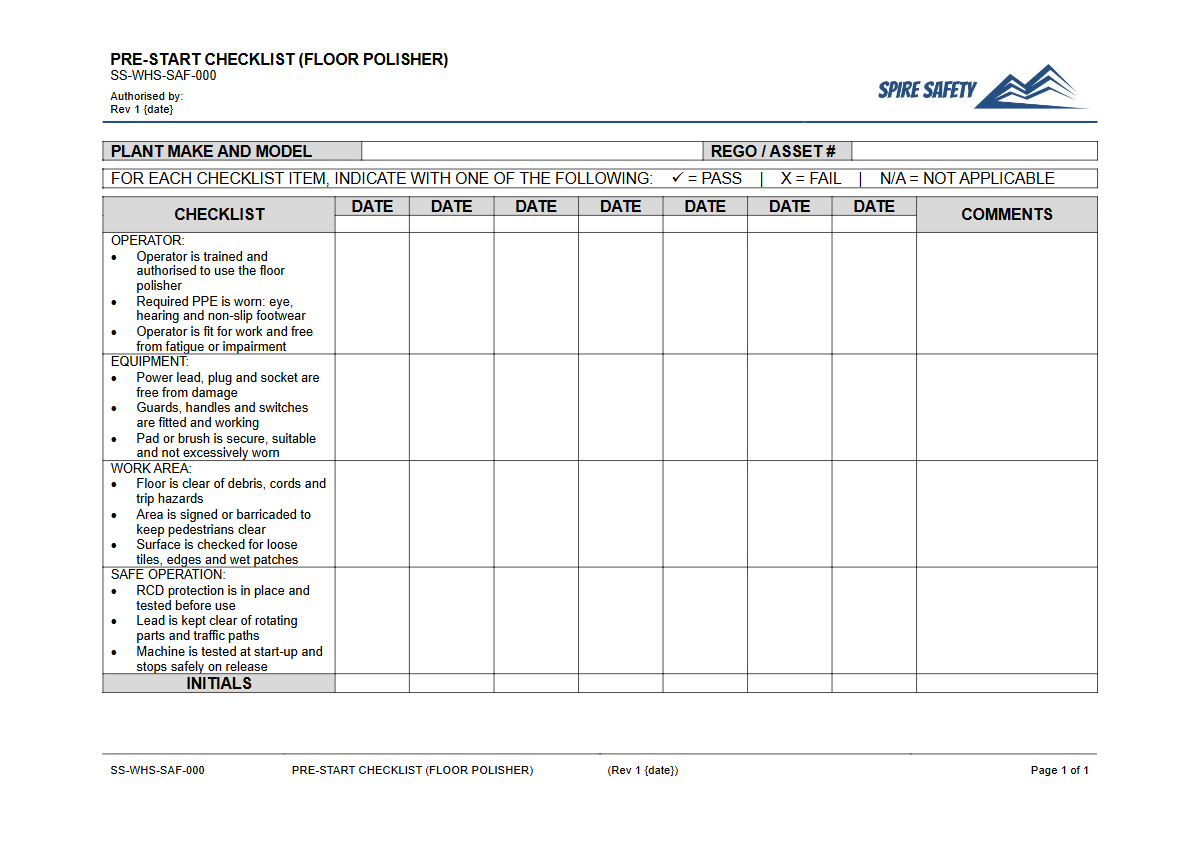
Download our Free Pre-Start Checklist (Floor Polisher) Template to formalise equipment inspections and improve WHS. Available in DOCX & PDF.
Free Pre-Start Checklist (Floor Polisher) Template
DOCX • 125 KB + PDF
Updated Oct 2026
No signup required
Purpose of the Free Pre-Start Checklist (Floor Polisher) Template
Operating a floor polisher, like any piece of powered mobile plant, introduces risks into the workplace. These can include electrical hazards from cords and connections, mechanical hazards from moving parts, and ergonomic risks for the operator.
This Free Pre-Start Checklist (Floor Polisher) Template provides a structured starting point for formalising daily equipment inspections. Systematically checking the machine before each use helps identify potential faults or damage before they can cause an incident, injury, or costly breakdown.
Implementing regular pre-start checks is a fundamental component of proactive safety management. It empowers operators to take ownership of their equipment's condition and provides a documented record of due diligence.
These daily checks are a key part of a holistic safety framework, which should be integrated into your organisation's broader WHS management systems to ensure all aspects of workplace safety are covered.
Video walkthrough
How to Use the Free Pre-Start Checklist (Floor Polisher) Template
This template is provided in both DOCX and PDF formats for your convenience. The DOCX file is fully editable, allowing you to tailor the checklist to the specific make and model of floor polisher used in your workplace, as well as the unique environmental conditions and tasks performed.
A generic checklist is a good start, but a customised one is always more effective.
Important: You must customise this template to suit your specific equipment and operational context. We are not liable for your WHS outcomes.
We recommend consulting the manufacturer’s operating manual and conducting a site-specific risk assessment to identify all relevant inspection points to add to the checklist. Once customised, train all operators on how to properly complete the checklist and what actions to take if a fault is identified.
Beyond the pre-start, it's crucial to ensure operators are fully competent to use the equipment safely. Assessing an operator's skill can be formalised using a specific competency verification.
For instance, you could adapt our Verification of Competency (Floor Scrubber) Template to confirm that operators not only know the machine but also understand the associated risks and safe work procedures.
When to Use This Checklist
A pre-start checklist for a floor polisher should be completed by the operator before the first use on every shift or day. It is a 'pre-operational' check designed to catch obvious faults before the machine is put into service.
If the machine is used by multiple operators during a single shift, it is good practice for each new operator to conduct their own brief inspection before they begin.
Regular safety conversations are also vital for reinforcing safe work habits. Discussing the findings from pre-start checks can be a valuable topic for a safety meeting or briefing.
Use our Pre-Start Checks and Plant Maintenance Toolbox Talk Template to guide a structured discussion with your team about the importance of these inspections.
Who Should Use It
The primary user of this checklist is the equipment operator—the person who will be physically using the floor polisher. They are in the best position to notice any changes or defects with the machine they use daily.
Supervisors and managers also have a role in ensuring the checks are being completed correctly and that any reported issues are addressed promptly. They are responsible for reviewing the completed checklists to identify trends, such as recurring equipment faults or operators who may require retraining.
WHS managers or coordinators can use the data from these checklists as a lagging indicator of equipment health and a leading indicator of safety process adherence. The records can be invaluable during safety audits and investigations. Regular reviews of this and other safety documentation are a core part of confirming your safety systems are working as intended, a process often validated through WHS compliance auditing.
Beyond the Pre-Start: Ensuring Competency
While a pre-start checklist confirms the equipment is safe to use, it does not confirm the operator is competent to use it. A Person Conducting a Business or Undertaking (PCBU) has a duty to provide the necessary information, training, instruction, and supervision to protect people from risks.
For plant like floor polishers and grinders, this includes verifying that the operator can use the machine safely and understands its specific hazards.
This verification process is often documented using a Verification of Competency (VOC). A VOC assessment observes the worker performing the task and confirms their skills and knowledge against a set of criteria.
For similar floor preparation equipment, our Floor Grinder Verification of Competency (VOC) template provides a structured example of how to document this process, which can be adapted for various types of plant and equipment.
This is just one of many templates we offer to help Australian businesses improve their safety management. You can browse our complete free WHS resources library to find more checklists, SWMS, and toolbox talks for your workplace.
Common mistakes
Common mistakes to avoid
- "Pencil-whipping" the form without physically inspecting the floor polisher.
- Using a generic checklist that misses hazards specific to the model or work environment.
- Failing to immediately tag out and report faulty equipment identified during an inspection.
- Not reviewing completed checklists to identify recurring faults or operator knowledge gaps.
Legal references
Legal considerations
The following legal requirements may be relevant to this type of work.
- Work Health and Safety Act (Harmonised) — Provides the primary duties for protecting workers and other people from work health and safety risks.
- Work Health and Safety Regulations (Harmonised) — Sets out requirements supporting the management of workplace hazards and risks.
The following codes may be relevant to this type of work.
- Managing WHS Risks Code of Practice — Provides practical guidance on identifying hazards, assessing risks and applying effective controls.
- Work Health and Safety Consultation, Cooperation and Coordination Code of Practice — Provides practical guidance on consulting workers and coordinating with other duty holders.
- Managing the Work Environment and Facilities Code of Practice — Provides practical guidance on safe work environments, workplace facilities and related controls.
Did you know
Slips, Trips, and Falls
Slips, trips, and falls are a leading cause of workplace injury in Australia. Hazards from floor polishing, such as trailing electrical cords and wet surfaces, are significant contributors that pre-start checks help to manage.
Electrical Safety
A significant number of incidents involving portable electrical equipment are due to faults like damaged plugs, sockets, and cords. A pre-start check is the first line of defence in identifying this type of damage.
FAQ
Frequently asked questions
01Is a pre-start checklist a legal requirement in Australia?
02How often should a floor polisher pre-start check be done?
03What is the difference between a pre-start check and maintenance?
04Can this template be used on a tablet or phone?
Share this resource
Free Pre-Start Checklist (Floor Polisher) Template
Browse Categories
How To Use It
- 1Download and open in Word or PDF.
- 2Replace the placeholders with your business details.
- 3Get it reviewed by a WHS specialist before rollout.
Need it customised?
Our WHS consultants can adapt this template to your site, run a gap analysis, or audit what you already have in place.
Book a Free Consultation WHS consulting servicesor call 1300 156 382