
Free Pre-Start Checklist (Glass Washer) Template
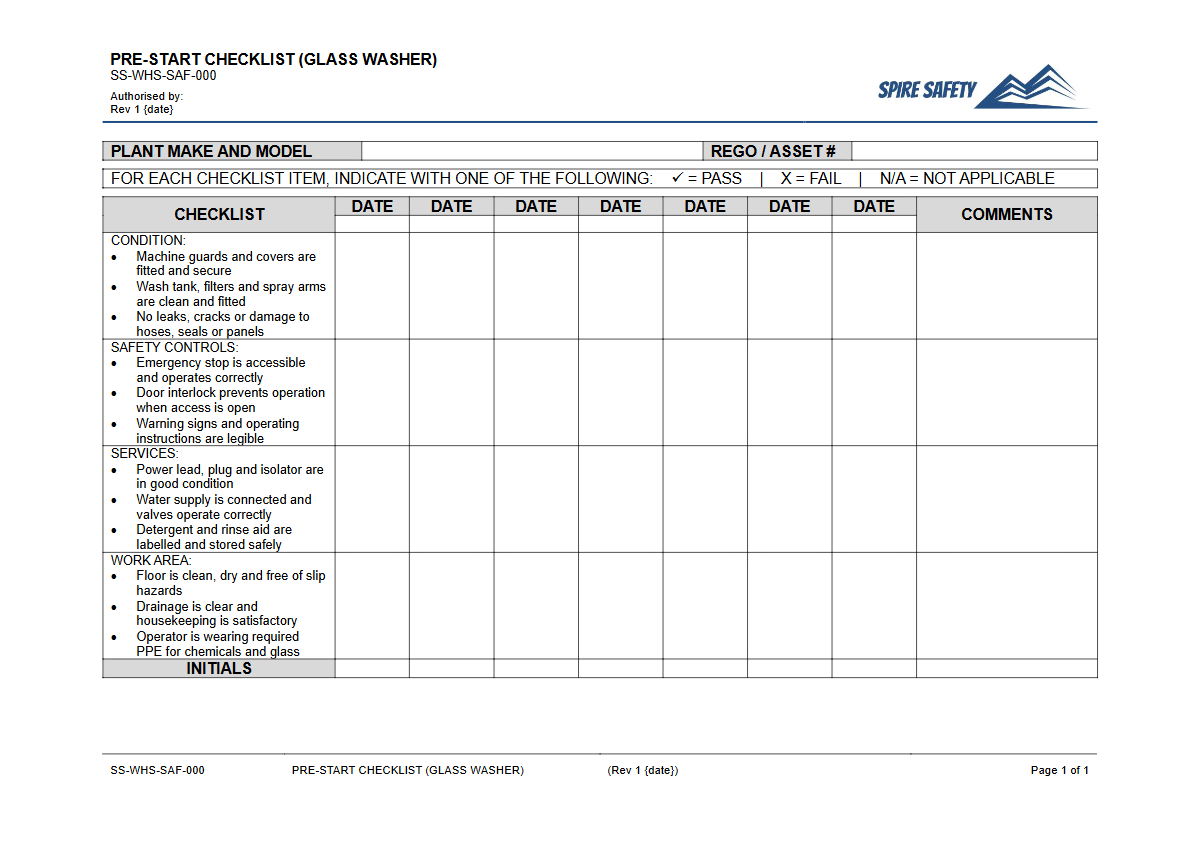
Download our Free Pre-Start Checklist (Glass Washer) Template to formalise daily equipment checks in your hospitality venue. Start improving safety today.
Free Pre-Start Checklist (Glass Washer) Template
DOCX • 125 KB + PDF
Updated Oct 2026
No signup required
Purpose of the Free Pre-Start Checklist (Glass Washer) Template
Ensuring the safe and effective operation of commercial glass washers is a critical daily task in any hospitality environment. This free Pre-Start Checklist (Glass Washer) Template provides a structured framework for operators to conduct consistent safety and operational checks before use.
Regular pre-start inspections help identify potential faults or hazards early, preventing equipment breakdowns, ensuring hygienic results, and protecting workers from risks such as chemical exposure, electrical faults, burns from hot water, or cuts from broken glassware.
By formalising this process, you create a documented record of due diligence, which is a key component of any robust safety system. This checklist helps your organisation maintain a proactive approach to maintenance and reinforces safe work practices among staff.
Implementing consistent checks is a foundational element in developing comprehensive WHS management systems that protect both your team and your business.
Video walkthrough
How to use the Free Pre-Start Checklist (Glass Washer) Template
This template is available for download in both DOCX and PDF formats, allowing for easy customisation or immediate use. The DOCX file can be edited to suit your specific operational needs, adding or removing checks as required.
You can add your company branding and specific details about the make and model of your equipment.
Important: This document is a template and must be customised to your workplace. We recommend you conduct a risk assessment and consult with operators to ensure the checklist comprehensively covers all hazards associated with your specific glass washer model, the cleaning chemicals used, and your unique site conditions.
A generic checklist cannot account for every variable in every workplace.
Once customised, the checklist should be integrated into your daily opening procedures. Train staff on how to complete it correctly, what to look for during each check, and the procedure for reporting faults or issues.
The same diligence should be applied to all kitchen equipment; our Free Pre-Start Checklist (Coffee Grinder) Template offers a similar structure for other common appliances.
When to use it
A glass washer pre-start checklist should be completed before the first cycle of every shift. This ensures that any issues that may have developed overnight or during a previous shift are identified before the machine is put into service.
It is particularly important in high-volume environments like pubs, clubs, and large restaurants where equipment is used intensively. Incorporating these inspections into a regular routine helps normalise safety-conscious behaviour.
This regular, documented process provides valuable data for your maintenance schedule and can be a key point of evidence during a safety review. Regular conversations about equipment safety can also be facilitated through toolbox talks, and you can use a Pre-Start Checks and Plant Maintenance Toolbox Talk Template to guide these important discussions with your team.
Who should use it
This checklist is designed for use by any worker tasked with operating the commercial glass washer. This typically includes bar staff, kitchen hands, and baristas.
Supervisors and managers are responsible for ensuring the checks are being completed correctly and for actioning any reported faults. By empowering operators to take ownership of equipment safety, you foster a stronger safety culture throughout the organisation.
The principles of safe operation extend beyond simple pre-start checks. For equipment that poses a higher risk, a more detailed procedure is often required.
As an example of a more detailed procedure for water-based equipment, you can review our FREE Pressure Washer SOP (Safe Operating Procedure) Template to see how safe systems of work are documented for other types of machinery.
Proper documentation is a cornerstone of modern WHS practice. Whether it's pre-start checklists, safe operating procedures, or risk assessments, having clear and accessible records is vital. For more tools to support your safety framework, you can browse our complete free WHS resources library.
Common mistakes
Common mistakes to avoid
- Failing to check and refill detergent and rinse aid levels before starting a shift.
- Overloading racks, which obstructs water jets and leads to poor cleaning results and potential breakage.
- Neglecting to regularly clean filters, spray arms, and the interior of the machine, causing blockages and odours.
- Ignoring error codes or unusual noises instead of reporting them for maintenance immediately.
Legal references
Legal considerations
The following legal requirements may be relevant to this type of work.
- Work Health and Safety Act (Harmonised) — Provides the primary duties for protecting workers and other people from work health and safety risks.
- Work Health and Safety Regulations (Harmonised) — Sets out requirements supporting the management of workplace hazards and risks.
The following codes may be relevant to this type of work.
- Managing WHS Risks Code of Practice — Provides practical guidance on identifying hazards, assessing risks and applying effective controls.
- Work Health and Safety Consultation, Cooperation and Coordination Code of Practice — Provides practical guidance on consulting workers and coordinating with other duty holders.
- Managing the Work Environment and Facilities Code of Practice — Provides practical guidance on safe work environments, workplace facilities and related controls.
Did you know
Sanitation Temperatures
For effective thermal sanitation, a commercial glass washer's final rinse must typically reach at least 82°C to kill most bacteria and ensure hygienically clean glassware.
FAQ
Frequently asked questions
01What are the most common hazards associated with a commercial glass washer?
02Is specific training required to operate a commercial glass washer?
03What Personal Protective Equipment (PPE) should be worn when using a glass washer?
04How do you know if a glass washer is sanitising correctly?
Share this resource
Free Pre-Start Checklist (Glass Washer) Template
Browse Categories
How To Use It
- 1Download and open in Word or PDF.
- 2Replace the placeholders with your business details.
- 3Get it reviewed by a WHS specialist before rollout.
Need it customised?
Our WHS consultants can adapt this template to your site, run a gap analysis, or audit what you already have in place.
Book a Free Consultation WHS consulting servicesor call 1300 156 382