
Free Pre-Start Checklist (Hot Cabinet) Template
Download our Free Pre-Start Checklist (Hot Cabinet) Template. This structured Word & PDF document helps formalise daily safety checks. Get started today.
Free Pre-Start Checklist (Hot Cabinet) Template
DOCX • 125 KB + PDF
Updated Oct 2026
No signup required
Purpose of the Free Pre-Start Checklist (Hot Cabinet) Template
A hot cabinet, also known as a holding cabinet or warmer, is essential in many commercial kitchens for maintaining food at safe, servable temperatures. However, like any piece of electrical equipment, it presents workplace health and safety risks if not properly maintained.
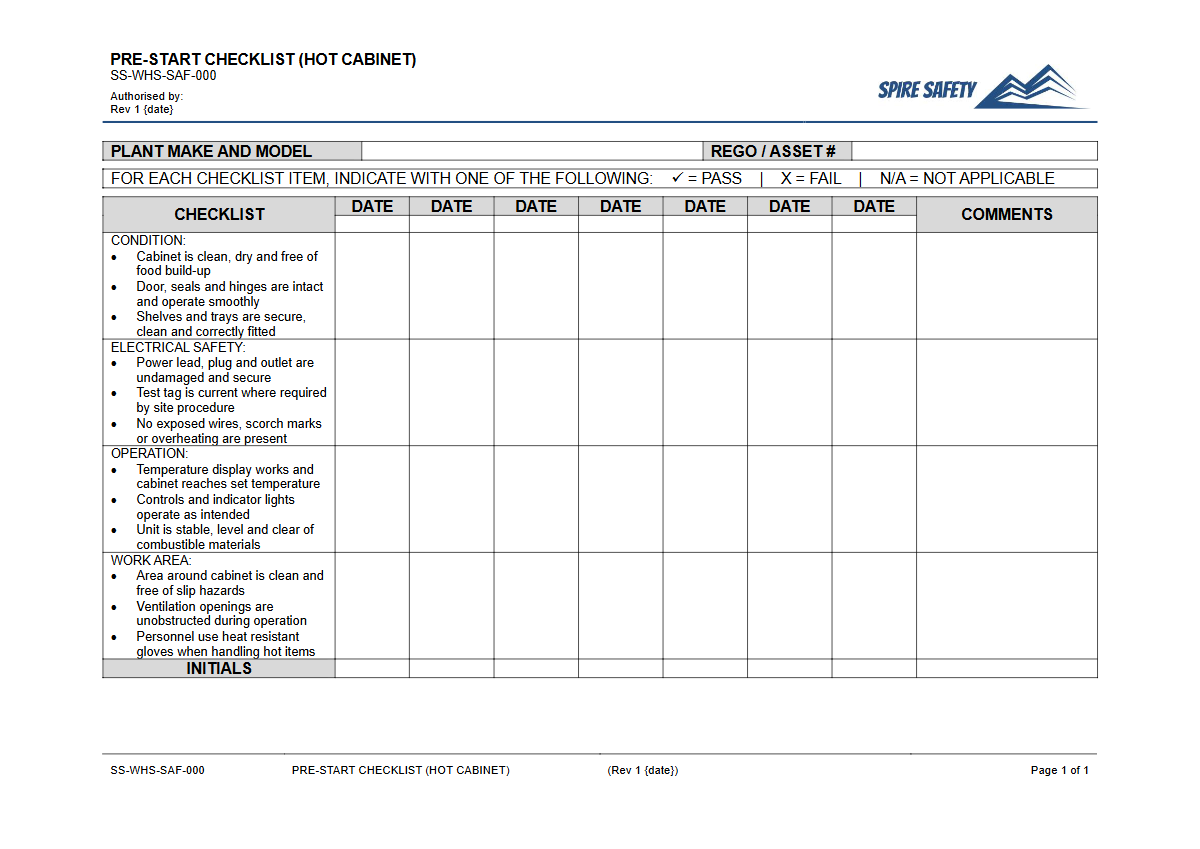
Our Free Pre-Start Checklist (Hot Cabinet) Template provides a structured starting point for formalising daily safety inspections. Using this checklist helps your organisation systematically identify potential hazards before they cause harm, ensuring the equipment is safe for operation.
Regular checks help prevent common incidents such as electrical shocks, burns from hot surfaces, and foodborne illnesses due to temperature control failure. Documenting these inspections creates a clear record of due diligence, demonstrating a commitment to proactive safety management.
This process supports a PCBU's primary duty of care to provide and maintain safe plant and structures. To reinforce the importance of these checks with your team, you can use our Pre-Start Checks and Plant Maintenance toolbox talk.
This template is designed to be a practical tool for daily use in fast-paced environments like restaurants, hospitals, aged care facilities, and catering businesses. While this checklist is for hot cabinets, similar principles apply to other kitchen appliances.
For example, we also offer a Pre-Start Checklist (Coffee Grinder) template to help manage risks associated with different equipment.
Video walkthrough
How to use the Free Pre-Start Checklist (Hot Cabinet) Template
This resource is available for download in both DOCX and PDF formats. The DOCX version is fully editable, allowing you to tailor it to your specific operational needs.
The PDF version is ready for immediate printing and use.
Before implementing this checklist, it is crucial to customise it. Your workplace is unique, and so are your risks.
The provided checklist is a general guide aligned with Australian WHS principles, but it is not a complete solution out of the box. You should review and modify the checklist to include specific items relevant to the make and model of your hot cabinet, your internal safety procedures, and any hazards identified in your risk assessments.
Important Customisation Note
We provide this template as a starting point. To ensure it is effective for your business, we strongly recommend you customise it to reflect the specific equipment in use and your workplace's unique environment and procedures.
Add your company branding, specific procedural steps, and any other checks relevant to your operations.
Integrating this checklist into your daily operational workflow is key to its success. It should form one component of your overall safety framework.
A well-documented pre-start process provides valuable data for your broader WHS management systems, helping to track equipment condition and identify trends over time.
When to use it
The Pre-Start Checklist for a hot cabinet should be completed at the beginning of each workday or before the first use in a shift. This ensures that any faults or issues that may have developed overnight or between shifts are identified before the equipment is energised and loaded with food.
Consistency is vital for creating a strong safety culture.
In settings where food safety is paramount, such as hospitals and aged care facilities, these daily checks are non-negotiable. Consistent temperature control is critical for preventing the growth of harmful bacteria.
Documenting these checks helps meet food safety standards and WHS obligations. Training on safe work practices, such as our Aged Care Manual Handling Toolbox Talk, can further support safety in these sensitive environments.
Who should use it
The checklist should be completed by the workers assigned to operate the hot cabinet. This could include chefs, cooks, kitchen hands, or other catering staff.
These individuals are best placed to notice any changes or faults in the equipment they use daily. They must be trained on how to conduct the checks properly and what to do if they find a fault, such as reporting it to a supervisor and applying a tag-out procedure.
Supervisors and managers have a responsibility to ensure these checks are being completed correctly and consistently. They should periodically review the completed checklists to verify compliance and follow up on any reported defects or maintenance requests.
These records can be a key point of review during internal or external WHS compliance auditing to verify that safety procedures are being followed effectively.
By standardising your equipment checks, you create a safer, more reliable, and more organised workplace. For more tools to help structure your safety processes, explore our free WHS resources library for a wide range of templates, forms, and toolbox talks.
Common mistakes
Common mistakes to avoid
- Failing to customise the generic template for the specific hot cabinet model.
- 'Pencil-whipping' the checklist without physically inspecting the equipment.
- Ignoring seemingly minor issues like a frayed cord or faulty light, which can indicate larger problems.
- Not removing faulty equipment from service immediately, creating a risk for the next user.
Legal references
Legal considerations
The following legal requirements may be relevant to this type of work.
- Work Health and Safety Act (Harmonised) — Provides the primary duties for protecting workers and other people from work health and safety risks.
- Work Health and Safety Regulations (Harmonised) — Sets out requirements supporting the management of workplace hazards and risks.
The following codes may be relevant to this type of work.
- Managing WHS Risks Code of Practice — Provides practical guidance on identifying hazards, assessing risks and applying effective controls.
- Work Health and Safety Consultation, Cooperation and Coordination Code of Practice — Provides practical guidance on consulting workers and coordinating with other duty holders.
- Managing the Work Environment and Facilities Code of Practice — Provides practical guidance on safe work environments, workplace facilities and related controls.
Did you know
The Temperature Danger Zone
According to Food Standards Australia New Zealand (FSANZ), the temperature danger zone where bacteria grow most rapidly is between 5°C and 60°C. Hot cabinets must hold food at 60°C or higher to keep it safe.
Electrical Safety in Kitchens
Commercial kitchens are considered a hostile environment for electrical equipment due to the presence of moisture, heat, and grease. Regular testing and tagging of appliances like hot cabinets is a critical control measure to manage electrical risks.
FAQ
Frequently asked questions
01Why are pre-start checks for hot cabinets important?
02What should be checked on a hot cabinet before use?
03How often should a hot cabinet pre-start checklist be completed?
04What should happen if a fault is found during a pre-start check?
Share this resource
Free Pre-Start Checklist (Hot Cabinet) Template
Browse Categories
How To Use It
- 1Download and open in Word or PDF.
- 2Replace the placeholders with your business details.
- 3Get it reviewed by a WHS specialist before rollout.
Need it customised?
Our WHS consultants can adapt this template to your site, run a gap analysis, or audit what you already have in place.
Book a Free Consultation WHS consulting servicesor call 1300 156 382