
Free Pre-Start Checklist (Hot Plate) Template
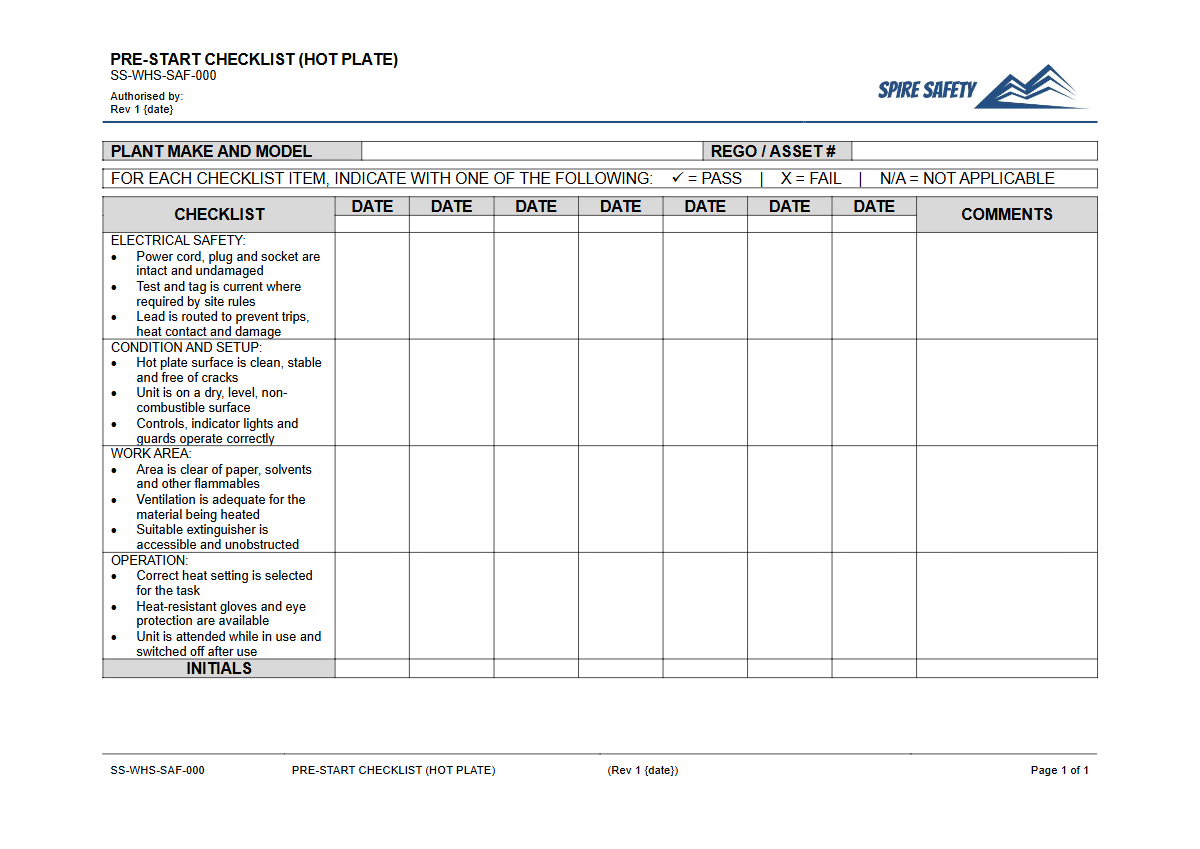
Download our free Pre-Start Checklist (Hot Plate) Template to formalise daily equipment inspections in your commercial kitchen.
Free Pre-Start Checklist (Hot Plate) Template
DOCX • 125 KB + PDF
Updated Oct 2026
No signup required
Purpose of the Free Pre-Start Checklist (Hot Plate) Template
Operating commercial kitchen equipment like hot plates presents significant risks, primarily from burns, electric shock, and fire. A systematic inspection process is crucial for mitigating these hazards.
This Free Pre-Start Checklist (Hot Plate) Template provides a structured framework for operators to verify the safety and integrity of the equipment before commencing work. Using a checklist formalises the inspection process, helping to create a consistent safety standard across all shifts and staff members.
The primary purpose of this template is to guide a user through a logical sequence of checks, ensuring that no critical safety components are overlooked. It serves as a tool to proactively identify faults, damage, or unsafe conditions that could lead to an incident.
Documenting these checks also creates a valuable record for safety audits, incident investigations, and maintenance scheduling. Reinforcing the importance of these inspections through regular safety discussions, such as with a Pre-Start Checks and Plant Maintenance Toolbox Talk, helps embed a culture of safety.
Video walkthrough
How to use the Free Pre-Start Checklist (Hot Plate) Template
This template is designed for ease of use and customisation. After downloading the DOCX or PDF file, you should adapt it to align with the specific make and model of hot plates used in your workplace, as well as the unique environmental and operational risks present.
Follow these steps for effective implementation:
- Customise: Add or remove checklist items to reflect the features of your specific hot plate(s). Include your company branding and specific procedural notes.
- Train: Ensure all relevant workers, including chefs, kitchen hands, and supervisors, are trained on how to properly use the checklist and what to do if a fault is identified.
- Implement: Integrate the checklist into your daily opening procedures. Make it a non-negotiable step before any hot plate is used for the first time each day or shift.
- Review: Store completed checklists and review them periodically to identify recurring issues or trends that may indicate a need for equipment replacement or further training.
Integrating this checklist into your broader WHS management systems ensures it is used consistently and effectively as part of a holistic approach to safety.
Please note: This document is a template and must be customised to suit the specific hot plate models, risks, and operational context of your workplace. We are not liable for the outcomes of any uncustomised or improperly customised documents.
Key Inspection Points for a Commercial Hot Plate
While your customised checklist will be specific to your equipment, a thorough pre-start inspection for a typical commercial hot plate should generally include the following areas:
- Electrical Safety: Check the power cord and plug for any signs of fraying, cracking, exposed wires, or damage. Ensure it is securely plugged in and not creating a trip hazard.
- Controls and Indicators: Verify that all knobs, switches, and thermostat controls are secure, function correctly, and that indicator lights are working.
- Heating Surface: Inspect the plate surface for cracks, deep scratches, or excessive build-up of carbon or grease that could pose a fire risk or lead to uneven heating.
- Structural Integrity: Ensure the unit is stable, level, and does not wobble. Check that all housing, legs, and components are secure and free from damage.
- Ventilation: Confirm that the area around the hot plate is clear of combustible materials and that any ventilation systems are unobstructed.
- Cleanliness: A general check for cleanliness is important not just for hygiene, but also for safety, as grease and food debris can be a fire hazard.
While this checklist focuses on hot plates, similar principles apply to other kitchen equipment. For example, our free Pre-Start Checklist (Coffee Grinder) Template addresses hazards specific to that device.
When to use it
The pre-start checklist should be completed before the first use of the hot plate at the beginning of each workday or shift. It should also be used after the equipment has been returned to service following maintenance or repair to verify it is safe to operate.
The findings from a pre-start check can be a valuable discussion point during daily team briefings, which can be documented using a free Pre-Start Meeting Template. This practice ensures that any identified issues are communicated to the whole team, and that faulty equipment is not used inadvertently.
Who should use it
This checklist is primarily for the person operating the equipment, such as a chef, line cook, or kitchen hand. They have the immediate responsibility to ensure the tool they are about to use is safe.
Supervisors and managers are responsible for ensuring the system is in place and that staff are following the procedure correctly. They should also review completed forms to action any reported defects.
WHS managers can use the completed checklists as evidence during periodic safety assessments, which are a core component of formal WHS compliance auditing. These records demonstrate proactive risk management and can help identify trends in equipment failure or operator behaviour over time.
Common mistakes
Common mistakes to avoid
- Assuming the equipment is safe because it worked yesterday.
- Ignoring minor issues like frayed cords or cracked surfaces, which can escalate into serious hazards.
- Using a generic checklist that doesn't cover the specific model or risks of the hot plate in use.
- Failing to report and tag out faulty equipment, leaving it in service for the next person to use.
Legal references
Legal considerations
The following legal requirements may be relevant to this type of work.
- Work Health and Safety Act (Harmonised) — Provides the primary duties for protecting workers and other people from work health and safety risks.
- Work Health and Safety Regulations (Harmonised) — Sets out requirements supporting the management of workplace hazards and risks.
The following codes may be relevant to this type of work.
- Managing WHS Risks Code of Practice — Provides practical guidance on identifying hazards, assessing risks and applying effective controls.
- Work Health and Safety Consultation, Cooperation and Coordination Code of Practice — Provides practical guidance on consulting workers and coordinating with other duty holders.
- Managing the Work Environment and Facilities Code of Practice — Provides practical guidance on safe work environments, workplace facilities and related controls.
Did you know
Burn Severity
Contact with a surface at just 60°C can cause a serious, full-thickness burn in as little as five seconds. Commercial hot plates can reach temperatures far exceeding this, highlighting the critical need for caution.
Kitchen Hazards
Slips, trips, and falls are the most common cause of injury in hospitality, but burns and scalds from hot equipment, liquids, and steam are often the most severe.
FAQ
Frequently asked questions
01What is a hot plate pre-start checklist for?
02How often should a hot plate be inspected?
03Who is responsible for completing a hot plate pre-start check?
04Are pre-start checks a legal requirement in Australia?
Share this resource
Free Pre-Start Checklist (Hot Plate) Template
Browse Categories
How To Use It
- 1Download and open in Word or PDF.
- 2Replace the placeholders with your business details.
- 3Get it reviewed by a WHS specialist before rollout.
Need it customised?
Our WHS consultants can adapt this template to your site, run a gap analysis, or audit what you already have in place.
Book a Free Consultation WHS consulting servicesor call 1300 156 382
Related templates
- Free Pre-Start Checklist (Hot Water Unit) Template
- Free Pre-Start Checklist (Hotplate Stir) Template
- Free Pre-Start Checklist (Hydrant Pump) Template
- Free Pre-Start Checklist (Hydraulic Hammer) Template
- Free Pre-Start Checklist (Hydraulic Press) Template
- Free Pre-Start Checklist (Hydraulic Pump) Template