
Free Pre-Start Checklist (Hotplate Stir) Template
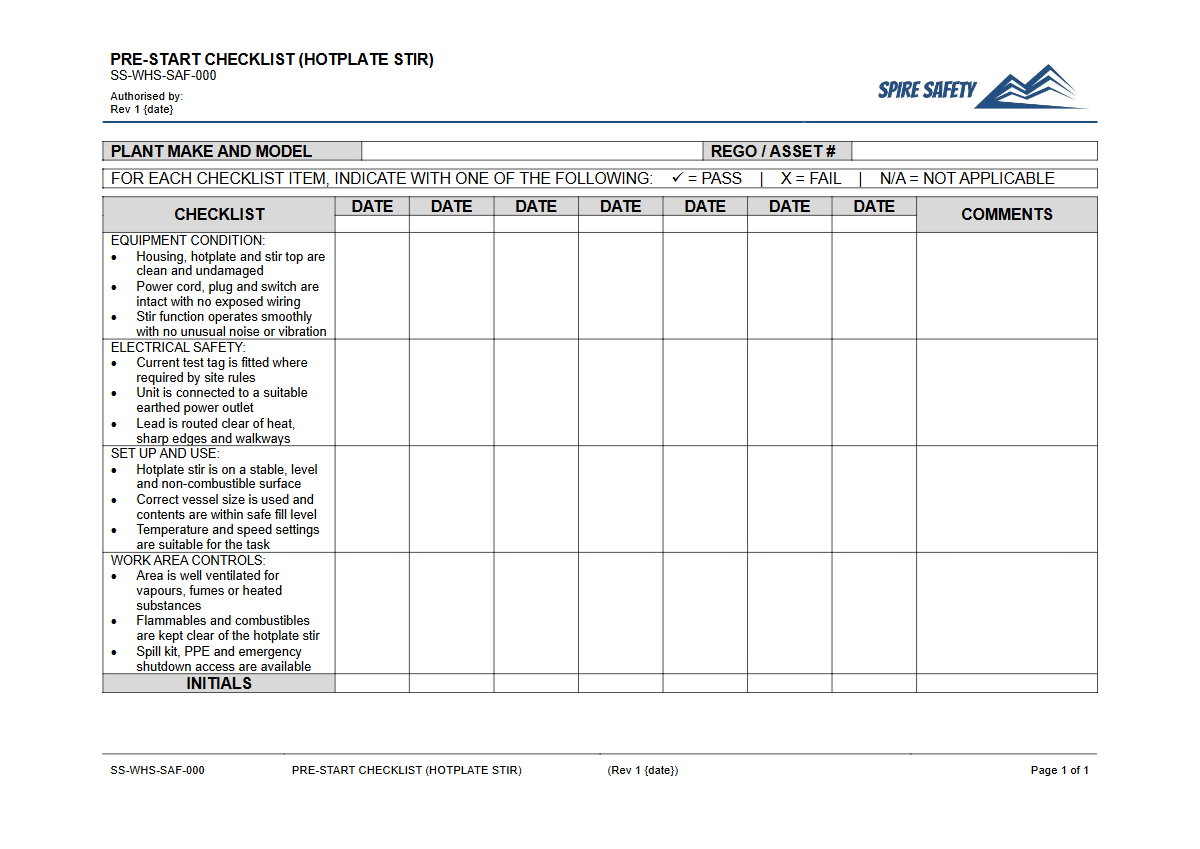
Download our free Pre-Start Checklist for Hotplate Stirrers. This DOCX & PDF template helps formalise daily safety inspections in labs and workshops.
Free Pre-Start Checklist (Hotplate Stir) Template
DOCX • 125 KB + PDF
Updated Oct 2026
No signup required
Purpose of the Free Pre-Start Checklist (Hotplate Stir) Template
A hotplate stirrer is a common piece of laboratory and workshop equipment that combines heating and mechanical agitation. Despite its simple appearance, it presents significant hazards, including thermal burns, chemical splashes, electrical shock, and fire.
Using our Free Pre-Start Checklist (Hotplate Stir) Template helps your organisation formalise the process of inspecting the equipment before each use. This systematic check encourages operators to proactively identify and report faults like cracked ceramic tops, frayed power cords, or malfunctioning controls before they can cause an incident.
Implementing consistent pre-start checks is a fundamental component of managing workplace risks associated with plant and equipment. It provides a clear record that safety verifications are being performed, demonstrating due diligence and contributing to a stronger safety culture.
Integrating this simple check into your daily procedures is a practical step towards building more robust WHS management systems that protect your workers and your organisation.
Video walkthrough
How to use the Free Pre-Start Checklist (Hotplate Stir) Template
This resource is provided as a customisable template in both DOCX and PDF formats. Download the file and adapt it to the specific requirements of your workplace and the models of hotplate stirrers you use.
The checklist guides operators through inspecting critical components, such as the power cord and plug, the heating plate surface, control knobs, and the magnetic stirring function.
IMPORTANT: This is a template, not a finished document. We cannot guarantee it covers every hazard for your specific equipment and work environment.
You MUST customise this checklist in consultation with operators, supervisors, and other relevant parties to ensure it is fit for purpose for your workplace. Consider the manufacturer’s operating manual, the types of chemicals being heated, and the specific environmental conditions of your laboratory or workshop during customisation.
When to use this Pre-Start Checklist
The pre-start checklist should be completed by the operator before every use of the hotplate stirrer. This routine takes only a minute but is one of the most effective ways to catch gradual wear and tear or sudden damage before the equipment is energised.
These daily checks are distinct from, but complementary to, scheduled periodic maintenance and electrical testing and tagging. For a broader discussion on embedding these routines, our Pre-Start Checks and Plant Maintenance Toolbox Talk Template can help reinforce their importance with your team.
Who should use this Pre-Start Checklist
This checklist is designed for any person required to operate a hotplate stirrer, including laboratory technicians, research scientists, manufacturing staff, and students in educational settings. It is crucial that anyone using the equipment is not only trained in its correct operation but also deemed competent to conduct the pre-start inspection.
Supervisors and managers can also use the completed checklists as a tool to verify that safety procedures are being followed consistently. The principles of checking for damage and correct function apply to many types of agitating equipment, and you may find our Free Pre-Start Checklist (Agitator) Template useful for similar machinery.
Ensuring your team is equipped with the right tools and procedures is a key responsibility for any person conducting a business or undertaking (PCBU). If you need assistance developing or implementing safety processes tailored to your specific operational risks, consider engaging professional WHS consulting services.
These experts can help bridge the gap between regulatory requirements and practical workplace application. You can explore a wide range of similar documents in our free WHS resources library to support your safety initiatives.
Common mistakes
Common mistakes to avoid
- Ignoring fine cracks or chips in the ceramic top, which can lead to catastrophic failure when heated.
- Using glassware that is not rated for thermal shock (e.g., standard soda-lime glass instead of borosilicate).
- Placing the unit too close to flammable materials or solvents, ignoring the significant fire risk.
- Failing to check that the power cord is free from kinks, chemical damage, or abrasion before plugging it in.
Legal references
Legal considerations
The following legal requirements may be relevant to this type of work.
- Work Health and Safety Act (Harmonised) — Provides the primary duties for protecting workers and other people from work health and safety risks.
- Work Health and Safety Regulations (Harmonised) — Sets out requirements supporting the management of workplace hazards and risks.
The following codes may be relevant to this type of work.
- Managing WHS Risks Code of Practice — Provides practical guidance on identifying hazards, assessing risks and applying effective controls.
- Work Health and Safety Consultation, Cooperation and Coordination Code of Practice — Provides practical guidance on consulting workers and coordinating with other duty holders.
- Managing the Work Environment and Facilities Code of Practice — Provides practical guidance on safe work environments, workplace facilities and related controls.
Did you know
Surface Temperature
The ceramic or aluminium top of a laboratory hotplate can reach temperatures exceeding 500°C, posing a severe burn risk long after the unit has been switched off. A pre-start check often includes verifying that warning indicators are functional.
FAQ
Frequently asked questions
01What is a hotplate stirrer pre-start checklist for?
02Are pre-start checks for lab equipment legally required in Australia?
03How often should a hotplate stirrer be inspected?
04Can I use this template for any brand of hotplate stirrer?
Share this resource
Free Pre-Start Checklist (Hotplate Stir) Template
Browse Categories
How To Use It
- 1Download and open in Word or PDF.
- 2Replace the placeholders with your business details.
- 3Get it reviewed by a WHS specialist before rollout.
Need it customised?
Our WHS consultants can adapt this template to your site, run a gap analysis, or audit what you already have in place.
Book a Free Consultation WHS consulting servicesor call 1300 156 382