
Free Pre-Start Checklist (Ironworker) Template
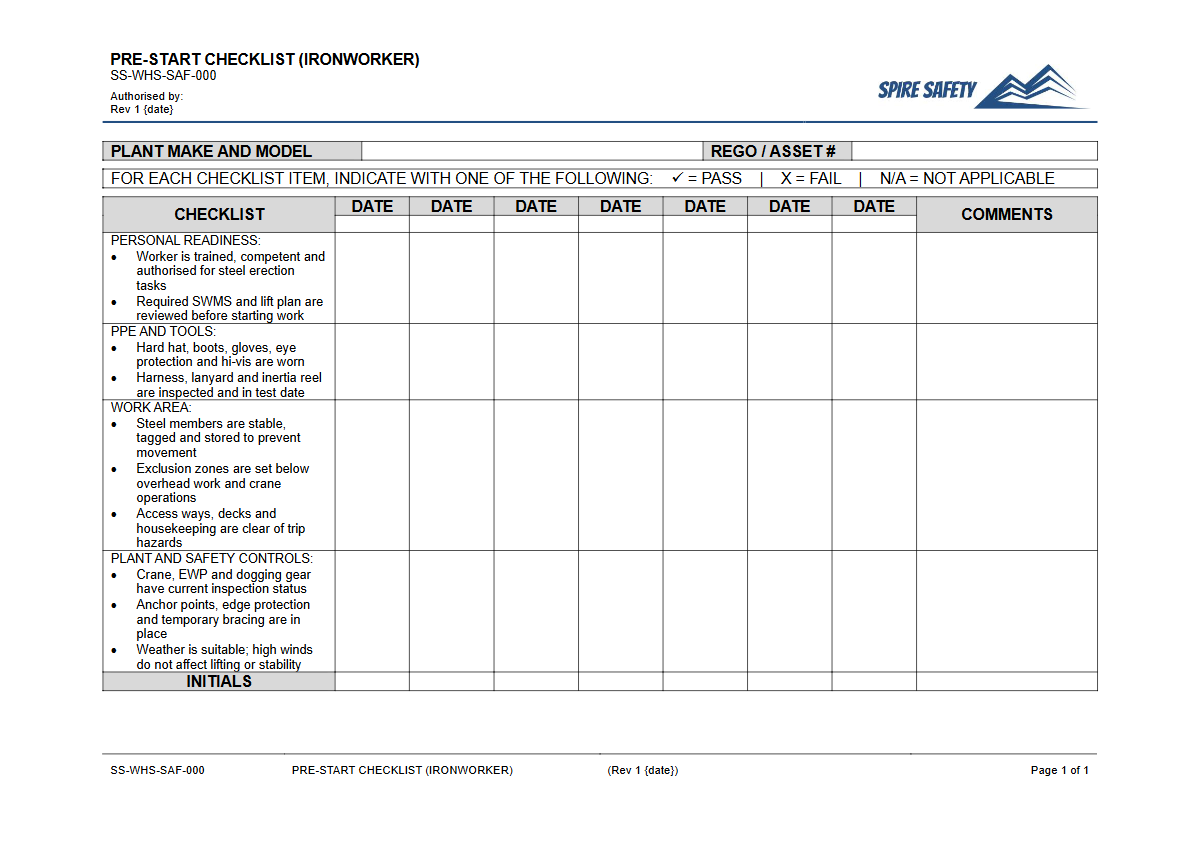
Download our free Pre-Start Checklist (Ironworker) Template. This DOCX & PDF resource provides a structured starting point for equipment safety checks.
Free Pre-Start Checklist (Ironworker) Template
DOCX • 125 KB + PDF
Updated Oct 2026
No signup required
Purpose of the Free Pre-Start Checklist (Ironworker) Template
An ironworker machine, whether hydraulic or mechanical, is a powerful piece of equipment used for punching, shearing, notching, and bending metal. Due to the high forces involved, regular safety inspections are non-negotiable.
This free Pre-Start Checklist (Ironworker) Template provides a structured framework for operators to conduct thorough, repeatable safety checks before commencing work. Using a formal checklist helps standardise the inspection process across all shifts and operators, ensuring no critical safety component is overlooked.
The primary goal is to identify and control hazards before they can cause injury or equipment damage. Regular checks on components like guards, emergency stops, hydraulic systems, and electrical connections help maintain the machine in a safe operating condition.
Documenting these checks also creates a valuable record for maintenance planning and demonstrates due diligence in managing workplace risks. Integrating this process can be a key part of a broader safety initiative, which can be discussed during a pre-start checks and plant maintenance toolbox talk.
Video walkthrough
How to use the Free Pre-Start Checklist (Ironworker) Template
This resource is provided in both DOCX and PDF formats for your convenience. The DOCX file is fully editable, allowing you to tailor it to the specific make and model of ironworker used in your operations.
It is crucial that you adapt the template to reflect your workplace environment and the specific tasks being performed.
Important: This is a template only. We have provided a solid starting point, but you must customise this document to suit the unique hazards and control measures relevant to your specific machinery, site, and operational procedures.
You should add your company branding, specific machine details, and any additional checks identified in your risk assessments.
Once customised, the checklist should be integrated into your daily operational procedures. The process should form a key part of your comprehensive WHS management system, ensuring that no ironworker is operated without a completed and signed-off pre-start inspection.
Completed checklists should be filed and reviewed periodically by supervisors or safety officers.
When to use it
The pre-start checklist for an ironworker should be completed by the operator at the beginning of every shift or before using the machine for the first time that day. If multiple operators use the same machine during a single shift, it is good practice for each new operator to conduct their own brief inspection before starting their tasks.
A check should also be performed if the machine has been idle for an extended period or after any maintenance or repair work has been carried out.
Who should use it
The primary user of this checklist is the trained and authorised operator of the ironworker. They have the hands-on responsibility for ensuring the machine is safe to use before they begin their work.
Supervisors also have a key role; they must ensure that operators are diligently completing the checks and that any reported faults are addressed promptly and effectively. These records are essential inputs for WHS compliance audits and safety reviews.
For complex issues, maintenance personnel may use the completed checklists to diagnose recurring problems and schedule preventative maintenance, improving both safety and reliability. In some organisations, assessing operator knowledge of these checks is formalised using documents like a Verification of Competency (Pipe Threader) template for other specific equipment.
For tasks involving different but related metalworking processes, other specific checks may be required. For instance, operators may also need a Pre-Start Checklist for air arc equipment if that process is also being used on site.
If you need assistance customising templates or implementing robust safety procedures, consider engaging specialist WHS consulting services to ensure your documentation aligns with your operational risks. You can also explore our full free WHS resources library for other useful templates.
Common mistakes
Common mistakes to avoid
- Failing to check the condition and sharpness of punches, dies, and blades, leading to poor quality work and increased strain on the machine.
- Ignoring minor hydraulic leaks, which can be early warnings of a potential hose rupture or system failure.
- 'Pencil-whipping' the form without physically inspecting each item, defeating the purpose of the safety check.
- Not immediately reporting identified faults to a supervisor and failing to tag the machine 'Out of Service'.
Legal references
Legal considerations
The following legal requirements may be relevant to this type of work.
- Work Health and Safety Act (Harmonised) — Provides the primary duties for protecting workers and other people from work health and safety risks.
- Work Health and Safety Regulations (Harmonised) — Sets out requirements supporting the management of workplace hazards and risks.
The following codes may be relevant to this type of work.
- Managing WHS Risks Code of Practice — Provides practical guidance on identifying hazards, assessing risks and applying effective controls.
- Work Health and Safety Consultation, Cooperation and Coordination Code of Practice — Provides practical guidance on consulting workers and coordinating with other duty holders.
- Managing the Work Environment and Facilities Code of Practice — Provides practical guidance on safe work environments, workplace facilities and related controls.
Did you know
Versatile Functions
Hydraulic ironworkers are often called the "Swiss Army knife" of the fabrication shop because they can combine multiple functions like punching, shearing, notching, and coping into a single machine.
Structural vs. Reinforcing
The term "ironworker" covers multiple trades. Structural ironworkers erect steel frames for buildings and bridges, while reinforcing ironworkers (or 'rodbusters') place steel bars (rebar) to reinforce concrete.
FAQ
Frequently asked questions
01What should be included in an ironworker pre-start checklist?
02Is this ironworker pre-start checklist compliant with Australian WHS laws?
03How often should an ironworker pre-start check be completed?
04Why is it important to document ironworker pre-start checks?
Share this resource
Free Pre-Start Checklist (Ironworker) Template
Browse Categories
How To Use It
- 1Download and open in Word or PDF.
- 2Replace the placeholders with your business details.
- 3Get it reviewed by a WHS specialist before rollout.
Need it customised?
Our WHS consultants can adapt this template to your site, run a gap analysis, or audit what you already have in place.
Book a Free Consultation WHS consulting servicesor call 1300 156 382